Power Plant Scale Model Making: A Complete Guide to Physical Power Plant Models
Power Plant Scale Model Making is an effective way to represent a complex power generation facility as a detailed three-dimensional physical model. Power plants contain buildings, machinery, pipelines, electrical systems, storage areas, cooling systems, control rooms, and supporting infrastructure. Because these facilities contain many interconnected elements, explaining the complete arrangement through drawings or digital images can sometimes be challenging.
Clients, investors, engineers, architects, and project teams often need a clear understanding of the complete plant layout. In such situations, a physical scale model can make complex project information easier to understand.
A Power Plant Scale Model converts a large industrial facility into a detailed three-dimensional representation. Viewers can examine the plant from different angles and understand the relationship between its major components.
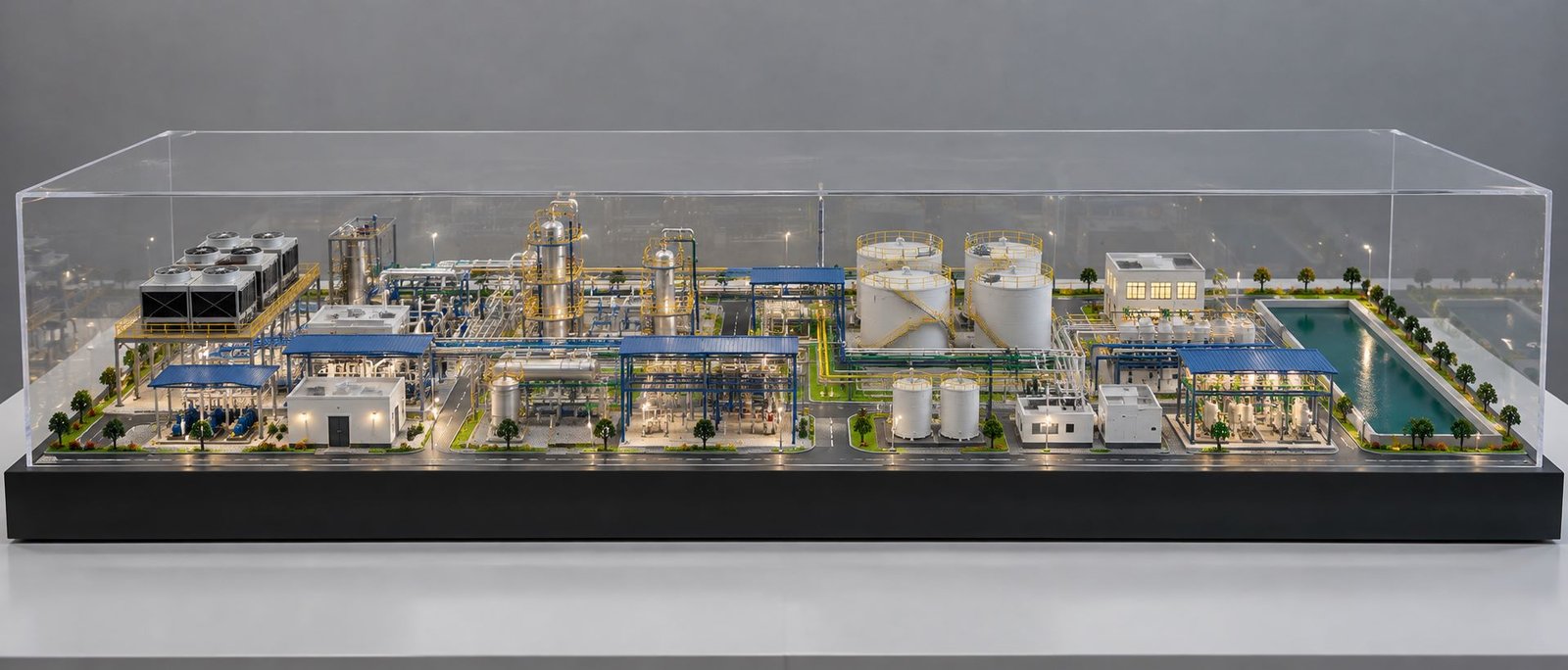
A professional model can include turbines, boilers, cooling towers, chimneys, transformers, substations, pipelines, storage tanks, control buildings, roads, landscaping, and other important elements.
More importantly, a physical model does more than reproduce buildings in miniature. It works as a visual and presentation tool that communicates the relative position of different sections of a power plant. Accurate proportions, detailed components, realistic finishes, lighting, and proper site planning can further improve the presentation.
What Is Power Plant Scale Model Making?
Power Plant Scale Model Making involves creating a physical representation of a power generation facility at a selected scale. The process begins with project information such as architectural drawings, engineering drawings, plant layouts, CAD files, and other available references.
The model maker studies this information and identifies the important structures and systems. These elements are then converted into miniature physical components using suitable materials and fabrication methods.
A model can represent an existing power plant or a proposed facility. Similarly, it can represent a plant expansion, a process arrangement, or an entire industrial site.
The required level of detail depends on the model’s purpose. For example, a presentation model usually emphasizes the overall site arrangement and visual appearance. An engineering model, by comparison, can focus more closely on equipment, piping, machinery, structures, and technical relationships.
Why Is Power Plant Scale Model Making Important?
Power plants contain many interconnected systems. Two-dimensional drawings use symbols, dimensions, elevations, and technical representations to communicate this information. However, some viewers may find it difficult to understand the complete arrangement from drawings alone.
A physical model presents the same project in three dimensions. Consequently, viewers can observe the location of buildings, equipment, roads, infrastructure, and different plant zones in one physical representation.
The model can also show relationships between different operational areas. For instance, viewers can understand the position of generation buildings, cooling systems, electrical areas, storage facilities, and internal roads.
Power Plant Scale Models for Project Presentations
A physical model can create a clear visual representation during project presentations. Clients and investors can examine the plant from different sides and understand its overall arrangement.
During project discussions, the model can also support communication between architects, engineers, planners, project managers, and other members of the project team.
Instead of referring to several drawings at the same time, the team can use the physical model as a common visual reference.
Types of Power Plant Scale Model Making
Different power generation facilities require different model-making approaches. Therefore, the model maker can select the level of detail according to the plant type, project information, display requirements, and purpose.
Thermal Power Plant Scale Models
Thermal power plants can contain boilers, turbines, generators, cooling systems, chimneys, fuel-handling systems, water-treatment facilities, electrical substations, and supporting buildings.
A thermal power plant model can represent these elements within a carefully planned industrial layout. Large structures such as cooling towers and chimneys can create strong visual features.
Smaller equipment can receive detailed miniature components to improve the overall realism of the model. Additional roads, platforms, pipe racks, and landscaping can complete the industrial setting.
Solar Power Plant Scale Models
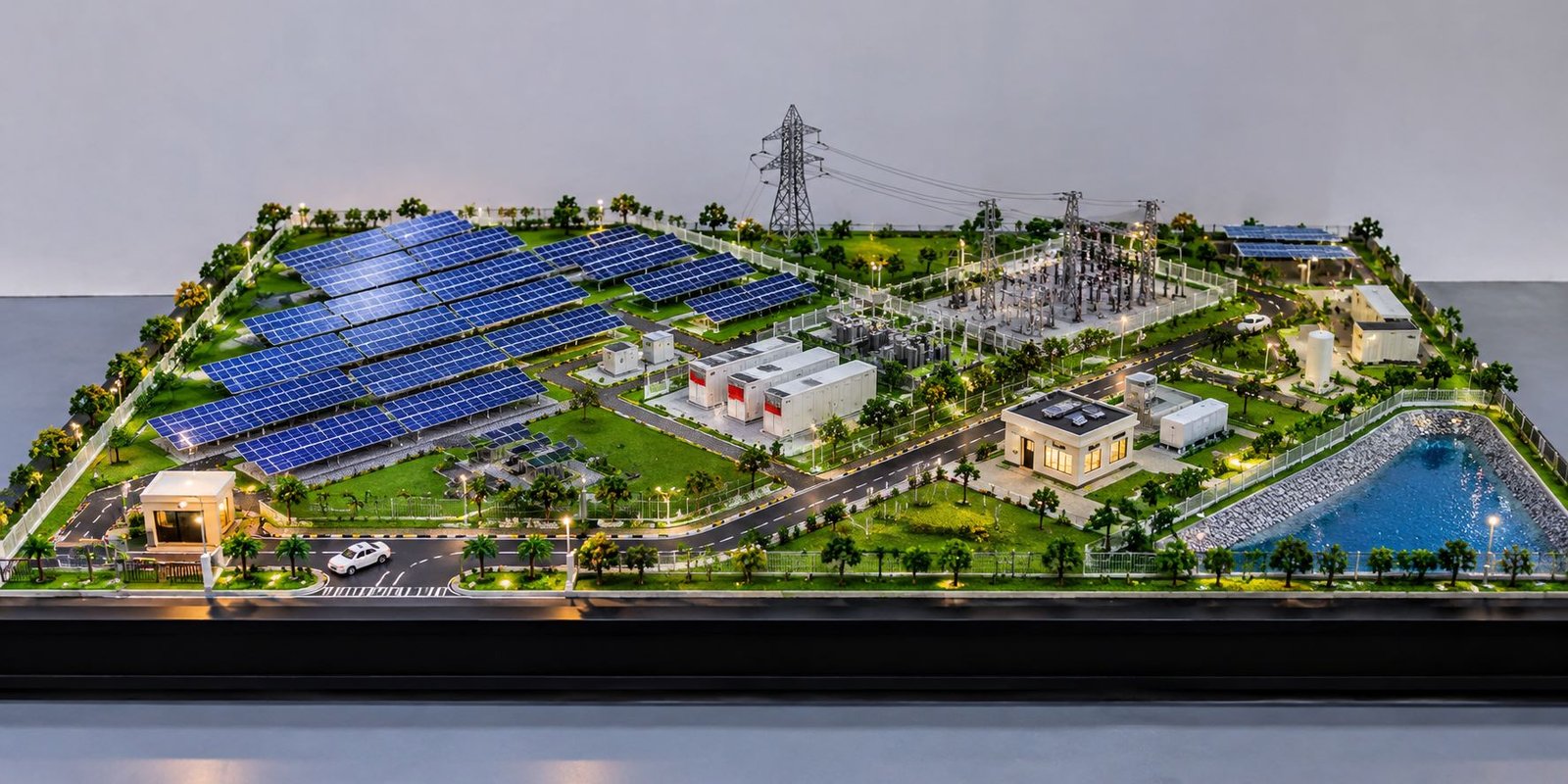
Solar power plant models can represent large areas covered with photovoltaic panels, mounting structures, inverter stations, electrical equipment, control buildings, roads, and transmission infrastructure.
Since solar plants often cover extensive areas, site planning and panel arrangement play an important role in the model.
Accurately spaced miniature solar panels can demonstrate the overall organization of the solar field. Supporting roads and electrical infrastructure can further clarify the site layout.
Hydroelectric Power Plant Scale Models
Hydroelectric power plant models can include dams, reservoirs, spillways, powerhouses, tunnels, water channels, transformers, and transmission systems.
Terrain plays an important role in this type of model. For that reason, the representation can include slopes, water bodies, rock formations, and different elevation levels.
These features help viewers understand how the power plant connects with the surrounding terrain and water system.
Nuclear Power Plant Scale Models
Nuclear power plant models can represent reactor buildings, cooling systems, turbine halls, control buildings, cooling towers, security zones, and supporting infrastructure.
Due to the complexity of these facilities, the model can divide the site into major functional zones.
Transparent sections or removable components can also explain selected internal arrangements when the project requires greater technical visualization.
Gas Power Plant Scale Models
Gas-based power plants can include turbine halls, generators, gas supply systems, cooling equipment, transformers, control buildings, and associated piping.
A physical model can show the relationship between these systems and the overall plant layout in a compact three-dimensional format.
As a result, viewers can understand the organization of the facility without depending entirely on technical drawings.
Major Components in a Power Plant Scale Model
A professional power plant model can contain many components. The exact selection depends on the available project information and the purpose of the model.
Power Generation Buildings
Power generation buildings form an important part of many power plant models. These structures can include turbine halls, generator buildings, boiler buildings, and other process structures.
The model maker can reproduce their external architecture using acrylic, MDF, foam board, sheet materials, or other suitable materials.
Windows, doors, structural elements, roof details, platforms, and other visible features can also be incorporated into the design.
Cooling Towers
Cooling towers are among the most recognizable features of many power plants. Their curved shape requires careful fabrication to achieve a realistic appearance.
Fabricated sheet components, 3D printing, or other suitable techniques can be selected according to the required size and scale.
The surrounding area can include access roads, lighting, landscaping, and supporting equipment. These additional elements can make the cooling tower section appear more complete.
Chimneys and Stacks
Industrial chimneys can use smooth cylindrical surfaces with appropriate colors or bands. Their height depends on the selected model scale.
Small warning lights can also be positioned near the top of the stacks. During presentations, these lights can create a realistic industrial appearance.
Turbines and Generators
Turbines and generators represent important technical elements within a power plant.
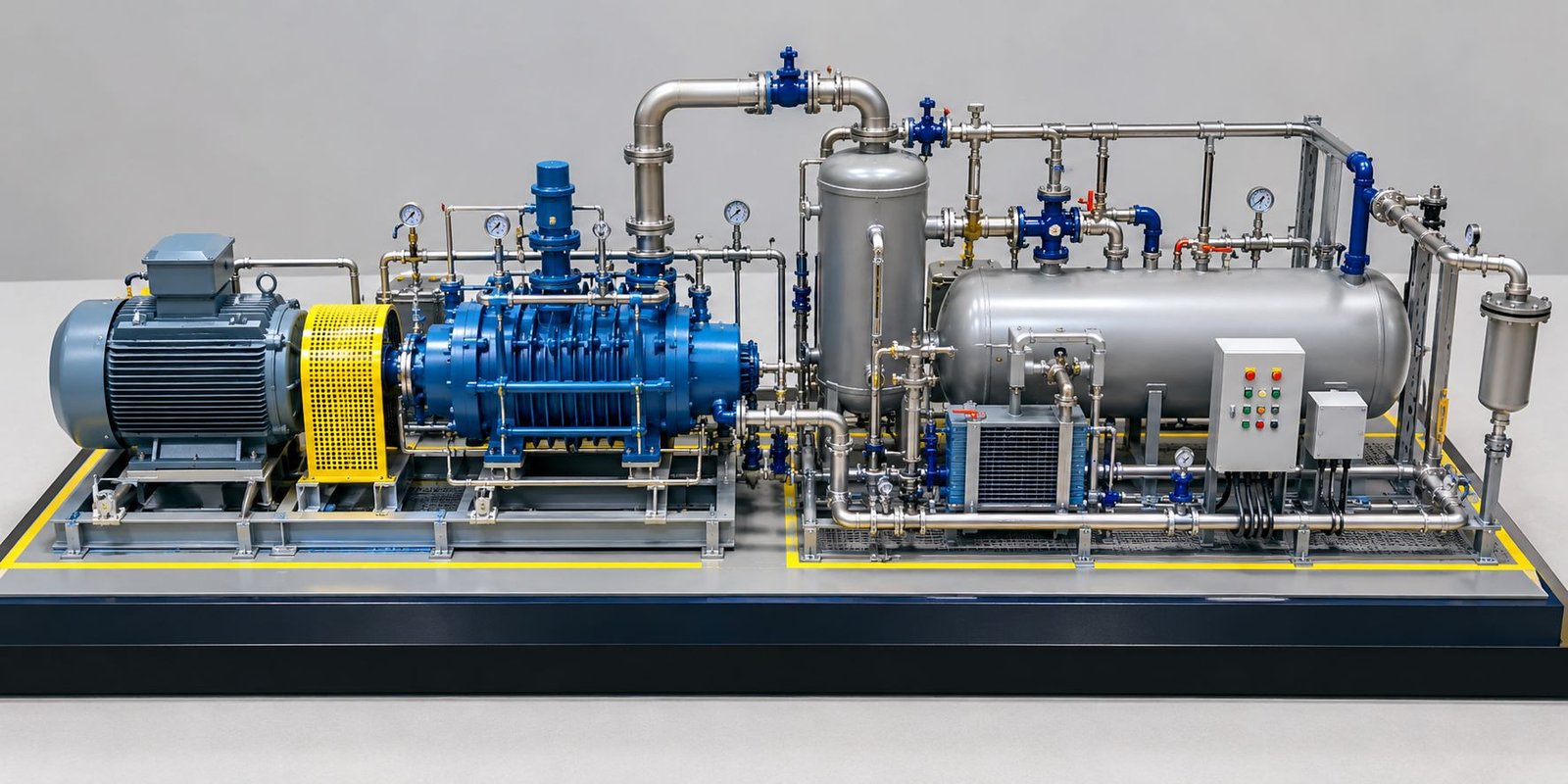
A detailed engineering model can show miniature cylindrical assemblies, housings, shafts, supports, and associated structures.
Depending on the purpose of the model, the level of technical detailing can be increased to support engineering demonstrations.
Pipelines
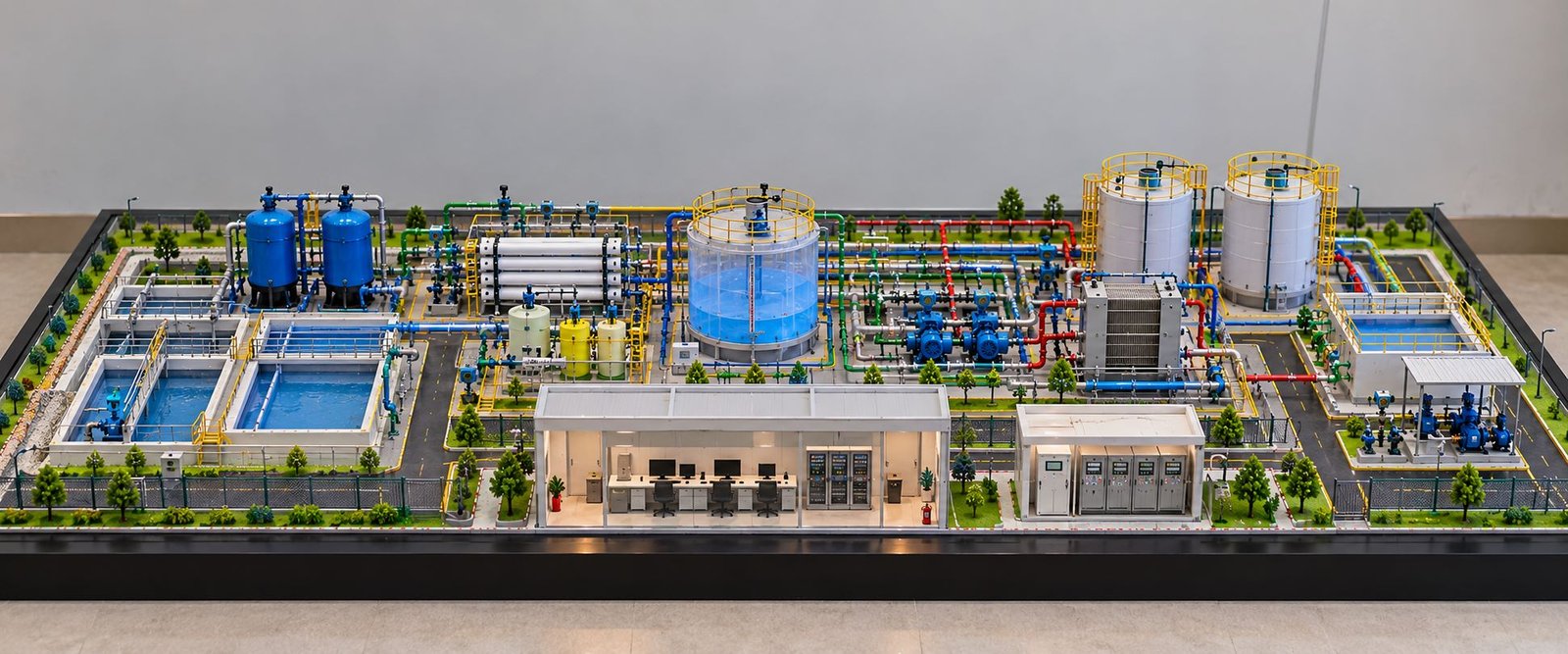
Pipelines connect different plant systems and form an important part of industrial model making.
Small-diameter pipes can follow predetermined routes across the model. Different pipe sizes, elevations, and colors can help viewers distinguish between different systems.
Pipe racks can also add another level of detail to the industrial appearance.
Storage Tanks
Fuel tanks, water tanks, chemical tanks, and other storage structures can use cylindrical or rectangular miniature forms.
Additional details such as ladders, platforms, railings, pipe connections, tank roofs, and access structures can improve realism.
Electrical Substation
The electrical substation forms another important area within a power plant site.
A detailed model can include transformers, switchgear, busbars, transmission structures, and other electrical equipment.
This section can help explain how generated electricity moves from the power generation area toward the transmission network.
Roads and Internal Circulation
Internal roads help communicate the overall plant planning.
Road markings, curbs, access points, parking areas, service roads, and pedestrian paths can be incorporated into the model.
Following the actual plant layout for road placement can create a more accurate physical representation.
Materials Used in Power Plant Scale Model Making
Material selection plays an important role in the accuracy, appearance, and durability of a physical model.
Acrylic Sheets
Acrylic works well for transparent elements, glazing, enclosures, windows, and selected structural components.
Clear acrylic can also provide protection around a finished model when the installation requires an enclosure.
MDF and Wood
MDF and wood-based materials can work well for baseboards, structural elements, buildings, and supporting components.
These materials can be cut accurately and finished according to the required design.
Foam Board
Foam board works well for lightweight architectural structures and massing components.
The material allows model makers to create certain buildings and forms efficiently while keeping the model lightweight.
PVC and Plastic Sheets
Plastic sheets can support the fabrication of pipes, tanks, industrial structures, panels, and technical components.
These materials can be shaped according to the required dimensions and design.
3D Printed Components
3D printing provides another useful method for creating detailed power plant components.
Complex equipment housings, machinery, fittings, structural elements, supports, and miniature accessories can be produced using this technology.
Furthermore, digital design helps maintain consistency when the project requires multiple similar components.
Importance of Scale Selection for Power Plant Models
Scale selection represents one of the most important stages in power plant model making.
A large power plant can cover a considerable site area. If the model uses a very large scale, the final model may become difficult to transport and display.
On the other hand, a very small scale can create another challenge because important technical details may become difficult to reproduce clearly.
Therefore, the model maker should select the scale according to the model’s purpose, available display space, required level of detail, and overall project size.
Scale for Presentation Models
A presentation model usually focuses on the complete plant arrangement. Major buildings, equipment, roads, landscaping, and site planning should remain clearly visible.
At the same time, extremely small technical details can be reduced when they do not contribute significantly to the overall presentation.
Scale for Engineering Models
An engineering model may require more visible technical details. A larger scale can provide additional space for machinery, pipes, platforms, structural elements, and other components.
Even so, the final scale should match the available display area and project requirements.
Site Planning and Landscaping
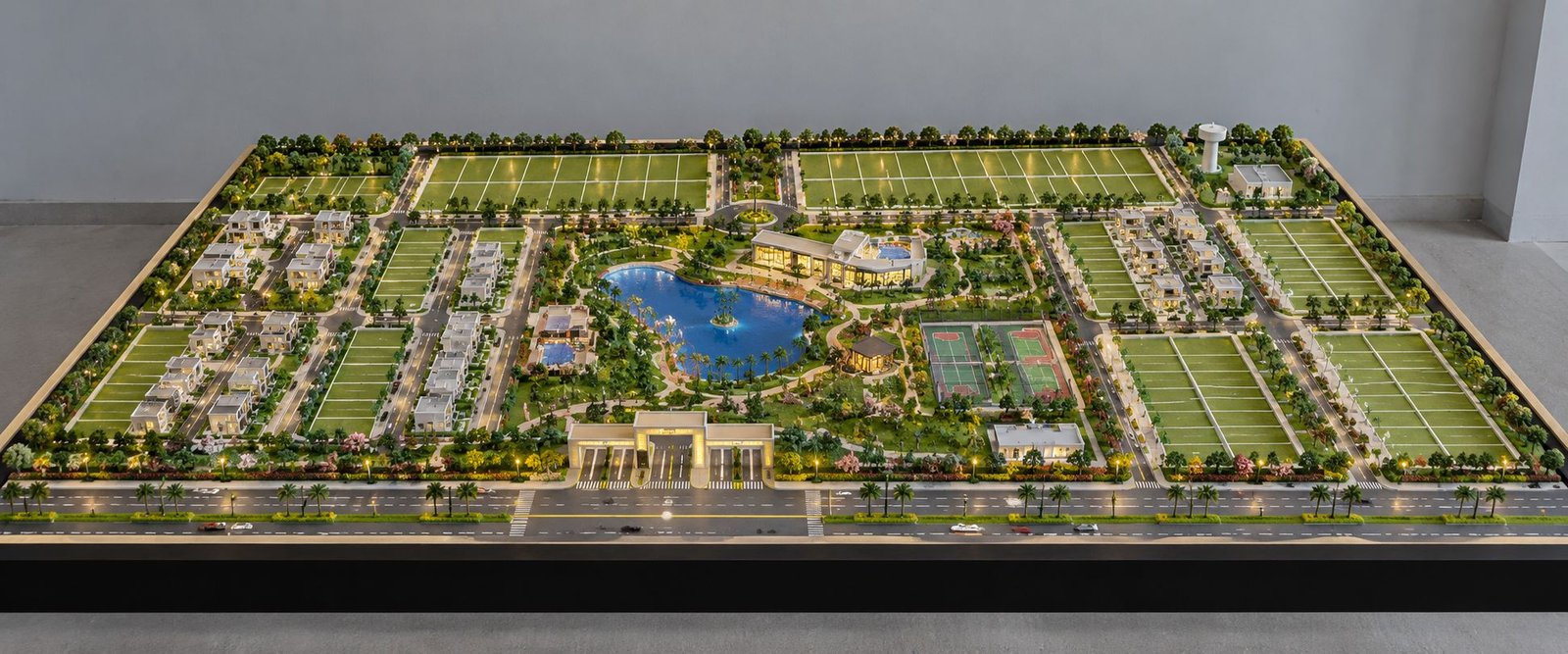
A power plant model should represent more than buildings and equipment. The surrounding site also contributes to the overall presentation.
Landscape elements can include grass areas, trees, boundary walls, service roads, parking spaces, water bodies, utility zones, and open spaces.
Miniature trees can surround administrative buildings and peripheral areas. Likewise, road markings, curbs, pedestrian paths, and safety barriers can add more visual detail.
Proper landscaping helps viewers understand how the power plant occupies its complete site.
Lighting in Power Plant Scale Models
Lighting can significantly improve the presentation quality of a physical model.
LED lighting can illuminate building interiors and highlight important areas. Small street lights can run along internal roads, while additional lights can highlight industrial structures.
Warm or neutral lighting can create different presentation effects. Therefore, the final lighting arrangement should match the purpose and visual style of the model.
Electrical wiring can be concealed inside the baseboard wherever possible. This approach keeps the finished model clean and organized.
Realistic Detailing in Industrial Scale Models
The quality of a power plant model depends heavily on its detailing.
Industrial Detailing
Small components can include:
- Industrial staircases
- Handrails
- Platforms
- Pipe racks
- Valves
- Tanks
- Cable trays
- Transformers
- Structural frames
- Service roads
- Safety barriers
- Equipment supports
- Cooling systems
- Electrical components
- Street lights
- Trees and landscaping
Together, these details can create a more realistic industrial environment.
However, the model does not need to reproduce every component at full technical detail. Instead, the model maker should prioritize elements that have visual or functional importance.
Role of CAD in Power Plant Scale Model Making
Computer-Aided Design plays an important role in modern physical model production.
CAD drawings provide dimensions, locations, and relationships between different components. The model maker can use this information to determine the required scale and prepare components for fabrication.
Furthermore, CAD data can support laser cutting, CNC machining, and 3D printing.
A properly organized digital model can improve accuracy and consistency during physical model production.
Laser Cutting and CNC Fabrication for Power Plant Models
Laser cutting can produce precise flat components such as building walls, panels, structural plates, and selected technical parts.
CNC machining can support controlled cutting, shaping, and routing operations. Such technology becomes especially useful when a project contains many repeated components.
Combining Digital and Manual Fabrication
Digital fabrication can create accurate components, while manual assembly can provide detailed finishing.
The model maker can combine laser-cut parts, CNC components, 3D-printed elements, and handcrafted details within one model.
This approach allows different fabrication methods to work together according to the requirements of each component.
How Power Plant Scale Model Making Works
The model-making process starts with project study and continues through fabrication, detailing, finishing, and quality inspection.
Project Drawings and Planning
The model maker studies the available architectural, engineering, and plant-layout drawings.
Important structures, equipment, systems, roads, and site elements are identified during this stage.
Scale Selection
A suitable scale is selected according to the overall site dimensions and display requirements.
The selected scale should provide enough space for the required details without making the final model unnecessarily large.
Base Preparation
The baseboard receives the required overall dimensions.
Roads, zones, building locations, site boundaries, and other major areas are marked on the base according to the project layout.
Major Structure Fabrication
Large buildings, cooling towers, chimneys, tanks, and other primary elements are fabricated according to the selected scale.
Each component is checked against the available project information before installation.
Technical Equipment Installation
Turbines, generators, transformers, piping systems, platforms, and other technical components are installed.
Position and alignment receive careful attention during assembly to maintain consistency across the model.
Infrastructure Installation
Internal roads, electrical networks, water systems, service areas, and other infrastructure become part of the model.
Together, these elements connect the different sections of the plant visually.
Landscaping
Trees, grass areas, boundary treatments, and other landscape elements are added around the plant.
The landscaping should follow the overall site planning and complement the industrial structures.
Lighting Installation
LED lights and electrical wiring can be installed according to the presentation requirements.
Where possible, wiring can remain concealed inside the baseboard to maintain a clean appearance.
Finishing
The components are painted and finished to create a consistent appearance.
Small details receive their final finishing before the model moves to inspection.
Quality Inspection
The completed model goes through a final inspection.
Alignment, scale consistency, finishing, structural stability, lighting, detailing, and overall presentation are checked before completion.
Physical Model for Project Presentation
Project presentation represents one of the most common applications of power plant scale models.
A physical model can sit in a boardroom, project office, exhibition space, investor meeting room, or presentation area.
The project team can use the model as a common visual reference instead of explaining every element through multiple drawings.
Viewers can examine the plant from different directions and understand the overall arrangement.
Consequently, this approach can work particularly well for large industrial projects where spatial relationships play an important role.
Power Plant Models for Engineering Demonstration
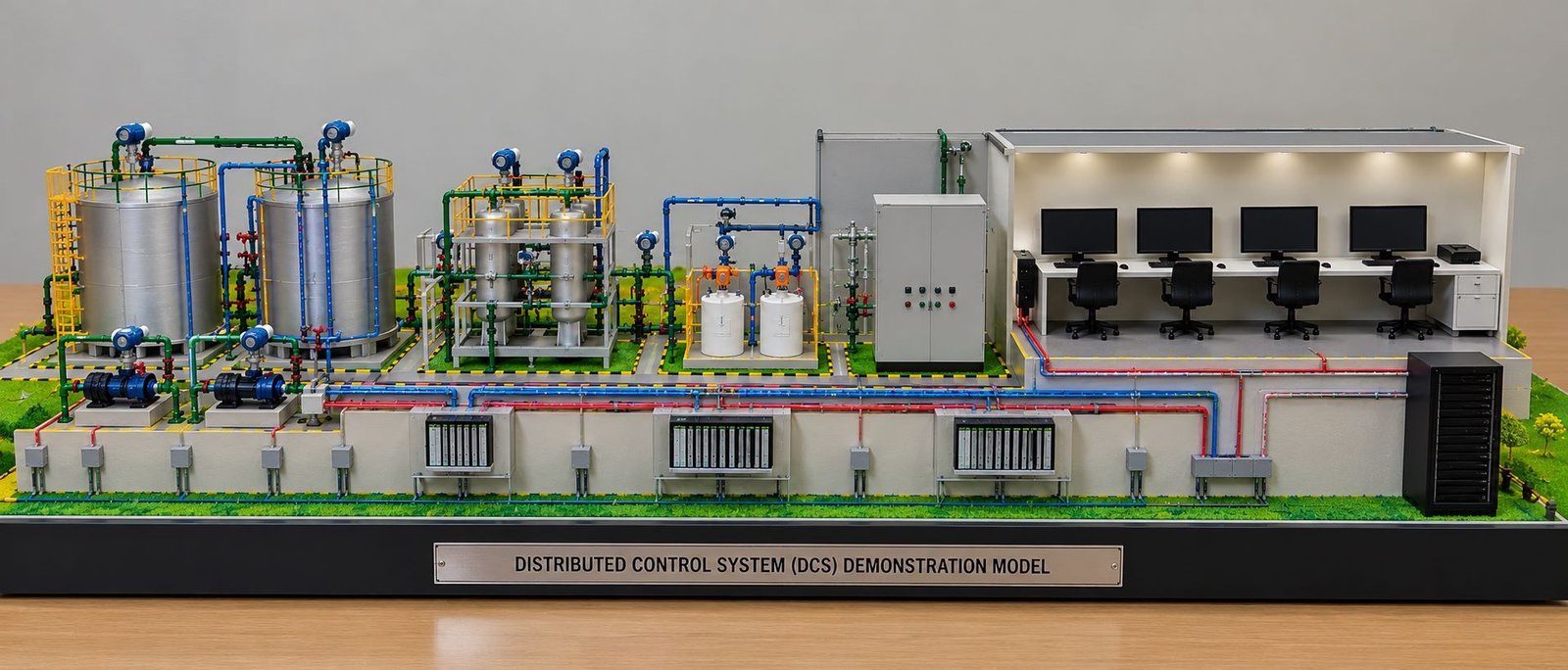
Engineering models can include greater technical detailing.
For example, the model can show how different process areas connect through pipelines and equipment.
The relationship between generation units, cooling systems, water treatment, electrical systems, and supporting infrastructure can also become easier to visualize.
Furthermore, some models can use removable sections or transparent components to explain selected internal arrangements.
This type of model can provide a physical reference during technical discussions and demonstrations.
Power Plant Models for Exhibitions
Industrial companies can use physical models at exhibitions and trade shows to present facilities, technologies, or upcoming projects.
A well-finished model gives visitors a physical representation that they can view from multiple sides.
Lighting, landscaping, accurate equipment, detailed structures, and an organized baseboard can improve the exhibition presentation.
In addition, the model can help visitors understand a large project without studying several technical drawings.
Benefits of Power Plant Scale Model Making
Physical models provide several practical benefits.
Clear Three-Dimensional Representation
A physical model can show a complex industrial project in three dimensions.
Consequently, viewers can understand the relationship between buildings, equipment, roads, and infrastructure through one physical representation.
Better Understanding of Spatial Relationships
The model can communicate distances and positions between different plant sections.
This feature can help during project discussions and presentations.
Support for Client Discussions
Clients can physically examine the model and discuss different areas of the plant.
As a result, the model can provide a common reference for design-related conversations.
Support for Design Development
A physical representation can help project teams examine the arrangement of different areas.
Furthermore, the model can help the team notice spatial relationships that may require further review during design development.
Exhibition and Marketing Use
Power plant models can support exhibitions, project offices, educational demonstrations, presentations, and marketing activities.
The physical format provides visitors with a direct visual representation of the project.
Physical Model vs Digital 3D Visualization
Digital 3D visualization and physical scale models serve different purposes.
Digital visualization allows users to explore a project from many virtual viewpoints. It works well for animations, walkthroughs, rendered images, and digital presentations.
A physical model provides a tangible representation of the project. Users can move around the model and inspect the plant from different angles.
Combining Physical and Digital Visualization
For major industrial projects, both approaches can work together.
Digital visualization can provide movement, animation, walkthroughs, and virtual experiences.
Meanwhile, a physical model can provide a tangible representation of the project’s scale, site arrangement, and spatial organization.
Using both methods can give project teams different ways to communicate the same facility.
Maintenance and Protection of Physical Models
Large industrial models require careful handling after completion.
Dust can accumulate on surfaces and small components. Regular cleaning with suitable soft methods can help maintain the model’s appearance.
Small components should receive protection from accidental impact. In addition, the model’s lighting connections should receive periodic checks.
Transportation of Large Models
Large power plant models may require special transportation arrangements.
Sectional construction can make a large model easier to transport and assemble at the final location.
Suitable protective packaging can reduce the risk of damage during movement.
Protective Enclosures
A transparent acrylic or polycarbonate enclosure can provide additional protection when the model requires permanent installation.
The enclosure can reduce exposure to dust and accidental contact while allowing viewers to see the complete model clearly.
Conclusion
Power Plant Scale Model Making provides a practical way to represent complex industrial projects as detailed three-dimensional physical models.
A professionally developed model can combine architecture, engineering, equipment, piping, electrical infrastructure, roads, landscaping, and lighting within one coordinated presentation.
Different power generation facilities require different modelling approaches. Thermal, solar, hydroelectric, nuclear, and gas power plants can all receive customized physical models according to their project requirements.
Modern fabrication techniques such as CAD-based production, laser cutting, CNC machining, and 3D printing can help create accurate and detailed components.
The success of a power plant model depends on several factors. The model maker needs to consider the correct scale, accurate site planning, realistic equipment, technical detailing, suitable materials, clean fabrication, lighting, and professional finishing.
The purpose of the model also determines its design. A presentation model can focus on overall site planning, while an engineering model can provide greater technical detailing. Exhibition models can combine strong visual presentation with realistic industrial detailing.
Whether the purpose involves project presentation, engineering demonstration, investor communication, exhibition display, or design development, a well-planned physical power plant model can make a complex facility easier to understand.
Finally, bringing buildings, machinery, infrastructure, roads, landscaping, and technical systems together in one miniature environment provides a tangible visual reference for understanding the complete power plant project.