How Industrial Scale Models Improve EPC Project Planning and Visualization
Industrial EPC projects involve large equipment, interconnected pipelines, structural frameworks, utility systems, storage facilities and several operational areas. This complexity can make project communication difficult through two-dimensional drawings and digital files alone. Industrial scale models give EPC teams, engineers, consultants, investors and clients a physical view of the complete facility and make the overall arrangement easier to understand.
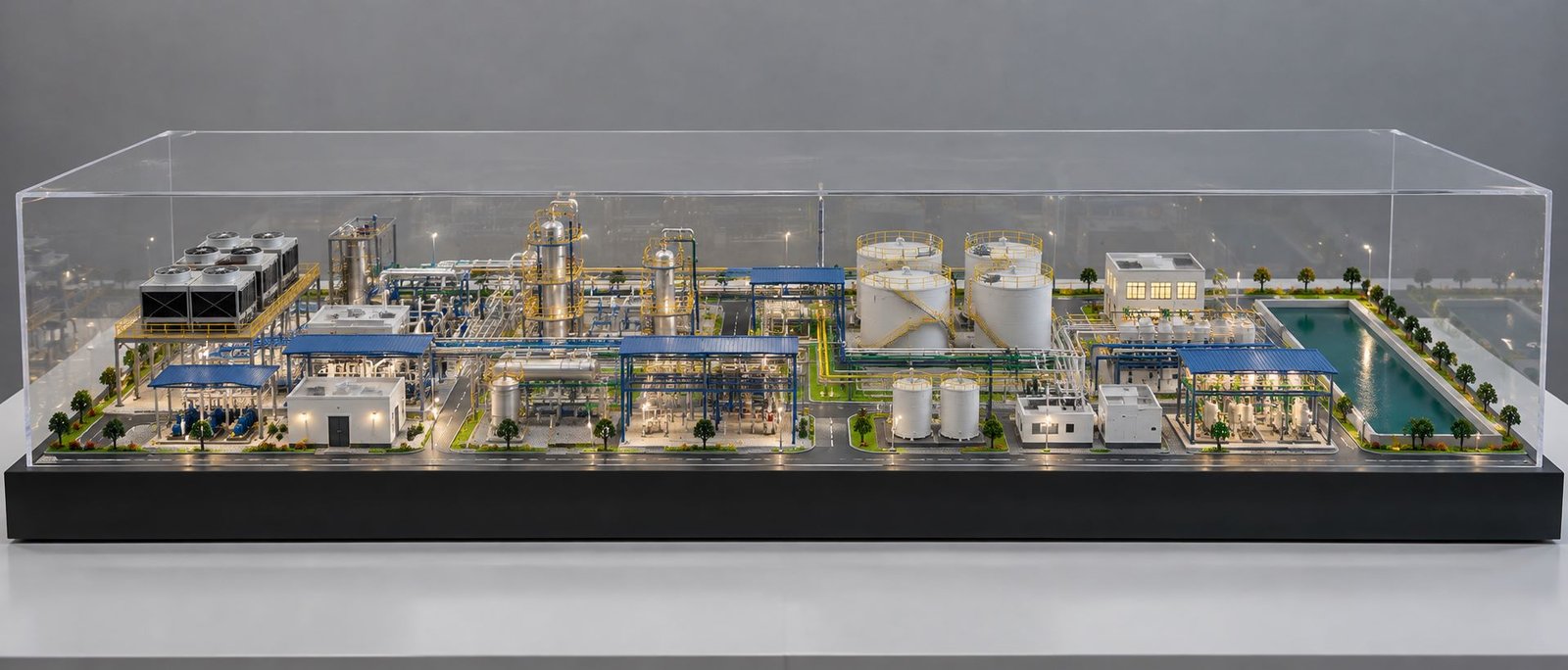
An industrial plant model can represent refineries, chemical plants, power plants, manufacturing facilities, petrochemical complexes, water treatment plants, pharmaceutical facilities and storage terminals. Model makers can include equipment, tanks, vessels, pipe racks, cooling systems, buildings, roads, landscaping, utility networks and safety areas according to project requirements.
EPC companies can use these models during design reviews, client presentations, project approvals, exhibitions and technical discussions. A well-planned model turns complicated engineering information into a clear three-dimensional presentation that different stakeholders can understand quickly.
Industrial Scale Models for EPC Projects
An industrial plant scale model represents an actual or proposed industrial facility at a selected scale. Model makers develop the model by studying engineering drawings, CAD files, 3D models, plant layouts, P&IDs and other project information. Pasted text
The main purpose goes beyond creating a miniature version of a plant. The model helps viewers understand the overall plant layout, equipment positioning, process areas, storage zones, pipe racks, structural steel, buildings, roads, utility systems, cooling systems, electrical areas, tank farms, loading areas, safety zones and landscaping. Pasted text
The project purpose determines the required level of detail. A presentation model focuses on appearance, site planning and visual communication, while a technical model focuses more strongly on equipment, piping, structures and engineering details.
Why EPC Projects Need Industrial Scale Models
EPC projects move through engineering, procurement, construction planning, project management and client coordination. Every stage requires clear communication between different teams. Large industrial facilities can contain hundreds or thousands of components, so non-technical stakeholders may find it difficult to understand their relationships through two-dimensional drawings. Pasted text
A physical model provides a simple visual reference. A client can look at the model and identify the main process unit, storage tanks, pipe racks, access roads and supporting facilities.
The model also helps technical teams explain spatial relationships. Instead of switching between multiple drawings, the team can point directly to the relevant area on the physical model.
This approach improves communication between technical and commercial stakeholders and creates a common visual reference for project discussions.
3D Plant Models for Project Presentations
EPC contractors regularly present project concepts and engineering capabilities to clients, consultants, authorities and investors. An industrial plant model can strengthen these presentations by giving viewers a complete three-dimensional view of the facility. Pasted text
A presentation model brings different project zones together in one display. Viewers can see equipment, buildings, tanks, infrastructure and site development at the same time.
Lighting can further improve the presentation. Model makers can install LED systems around process units, buildings, roads, tank farms, control rooms, utility areas, entry gates and selected equipment. Separate lighting zones can help presenters focus attention on specific sections. Pasted text
An illuminated model also creates a professional appearance for exhibitions, client meetings and management presentations.
Types of Industrial Scale Models
Industrial model making supports many EPC project categories. Each facility requires a different combination of equipment, structures, buildings, utilities and site elements. Pasted text
Oil Refinery Models
Oil refineries contain process units, storage tanks, pipe racks, distillation equipment, flare systems and utility infrastructure. A refinery scale model brings these elements together and shows their relationship within the overall plant layout.
Model makers can represent major refinery areas with suitable equipment, structural frameworks and piping details.
Petrochemical Plant Models
Petrochemical plants often contain reactors, vessels, towers, pumps, compressors, storage tanks and extensive piping networks. A physical model gives viewers a clear understanding of the position of these process units within the overall plant arrangement.
Detailed pipe racks can connect different sections and show the movement of pipelines between process and utility areas.
Power Plant Models
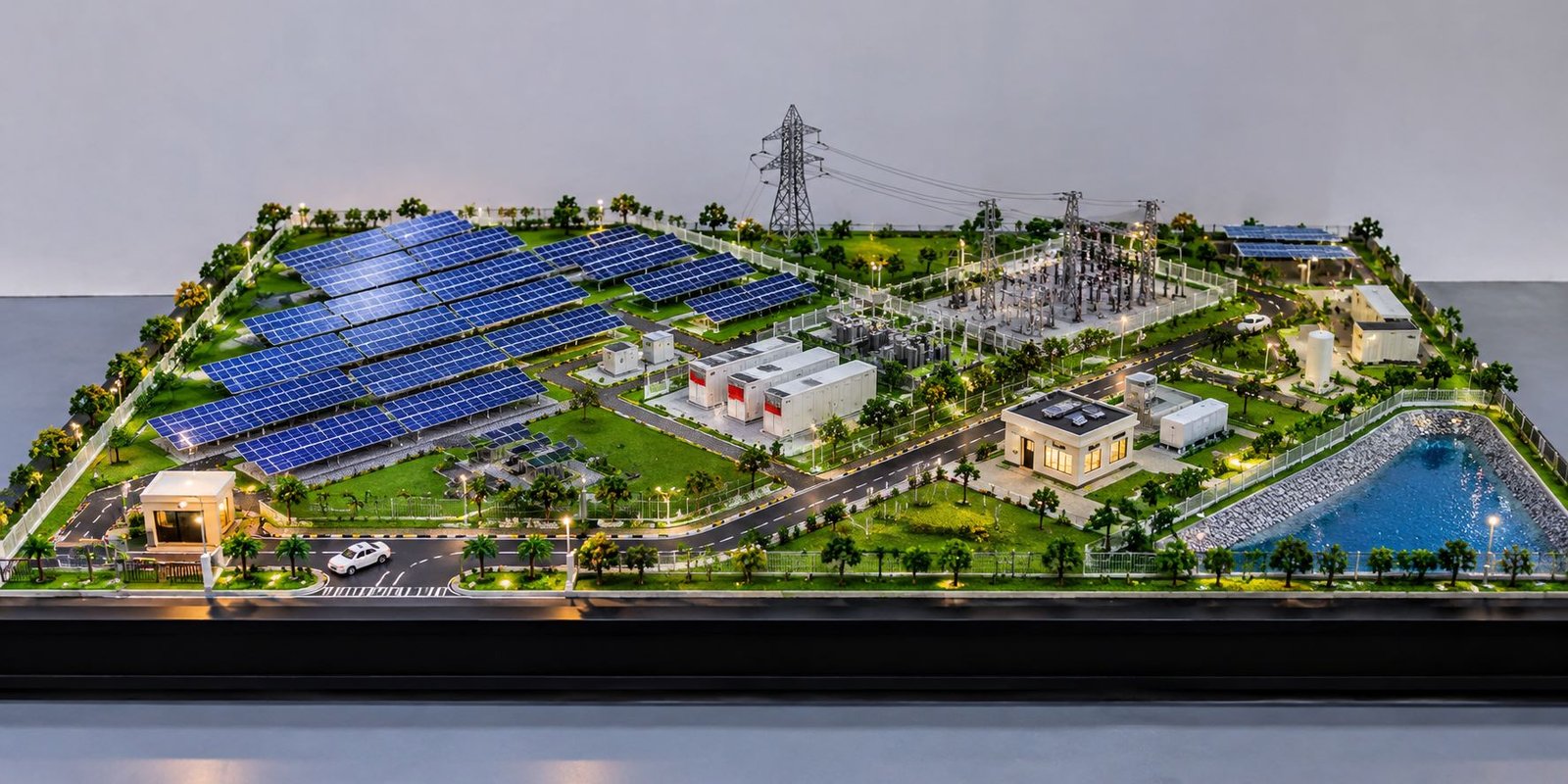
Power plant models can include boilers, turbines, generators, cooling towers, transformers, control buildings, fuel-handling systems and electrical infrastructure.
The model helps explain the relationship between generation equipment and supporting utilities. It also provides a useful visual reference during presentations and project discussions.
Chemical Plant Models
Chemical plants require careful planning of reactors, storage vessels, columns, pumps, heat exchangers and interconnected pipelines.
A scale model brings these components together and helps stakeholders understand their physical arrangement. Technical teams can use detailed models to discuss equipment positioning and spatial relationships.
Manufacturing Facility Models
Manufacturing facilities can include production buildings, warehouses, material-handling areas, assembly spaces, offices, loading zones and internal roads.
A physical model communicates both industrial architecture and operational planning. It allows viewers to understand how production areas connect with storage, transportation and supporting facilities.
Water Treatment Plant Models
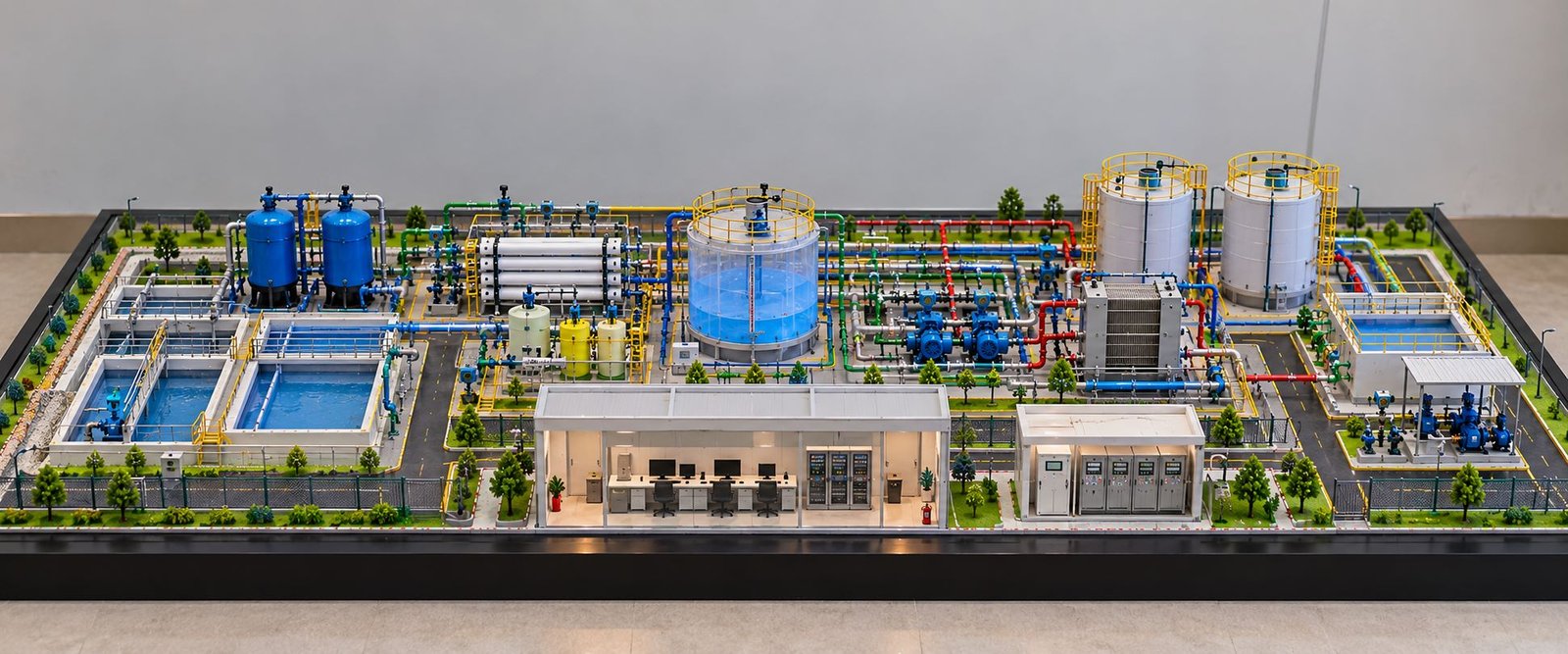
Water treatment plant models can show treatment tanks, filtration systems, pumps, pipelines, chemical dosing systems and administrative buildings.
The model helps explain the overall site arrangement while giving viewers a simple visual understanding of different treatment and utility areas.
Pharmaceutical Facility Models
Pharmaceutical facilities require careful planning for production areas, utility zones, storage facilities, cleanroom areas and supporting infrastructure.
A detailed model brings these spaces together in a compact physical display. It helps management teams, consultants and other stakeholders understand the overall facility arrangement.
Equipment Details in Industrial Scale Models
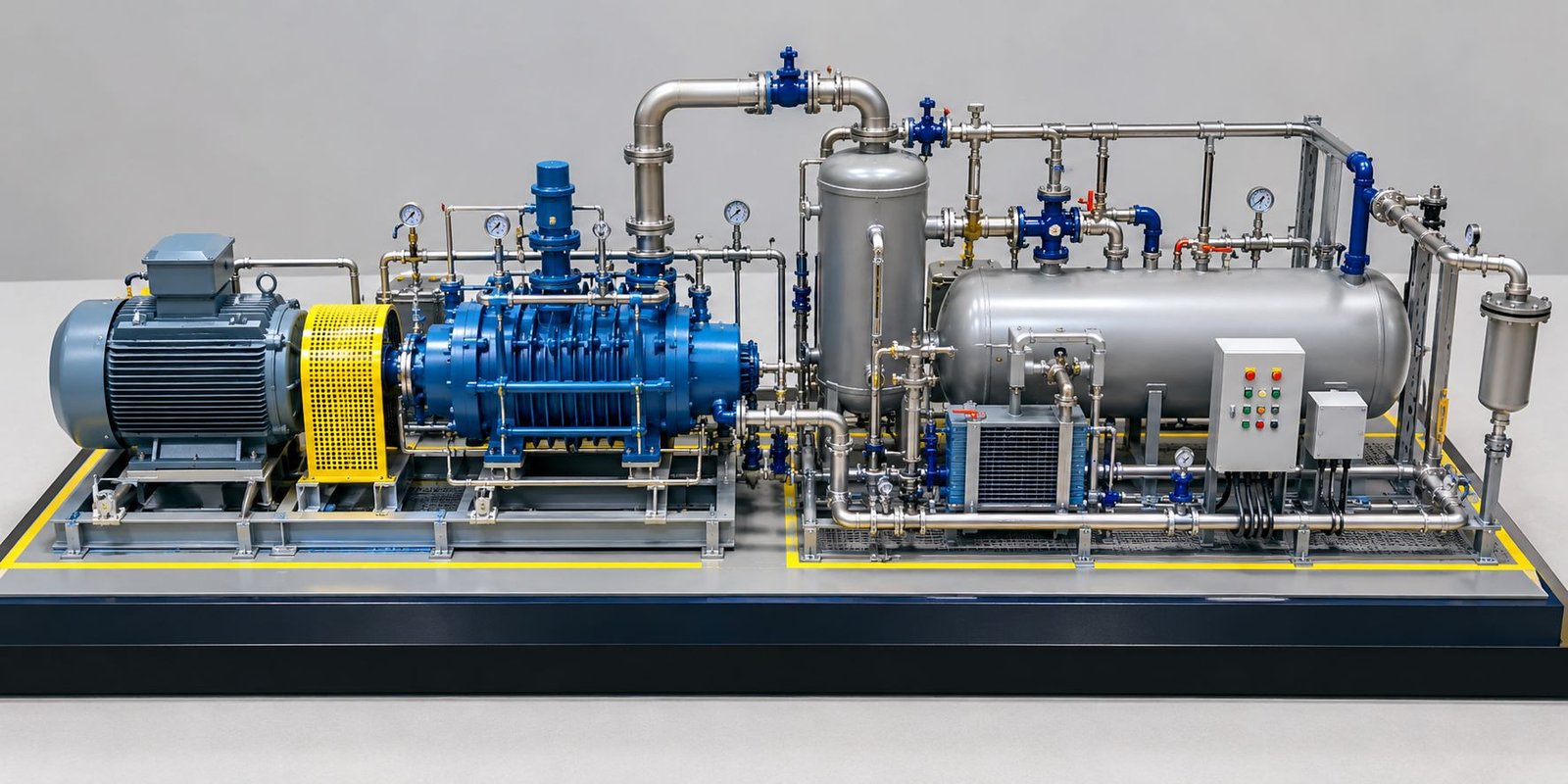
Industrial equipment forms one of the most important parts of an EPC model. Model makers select equipment details according to the project scale and presentation requirements.
A model can include pressure vessels, reactors, heat exchangers, pumps, compressors, columns, boilers, turbines, generators, storage tanks, silos, cooling towers, scrubbers, filters, separators and furnaces. Pasted text
The model maker needs to maintain visual accuracy while keeping every component practical for the selected scale. CAD drawings and three-dimensional engineering data can provide the required equipment geometry.
Model makers can fabricate customized components with acrylic, PVC, metal, resin and other suitable materials. Pasted text
Piping Systems in Industrial Scale Models
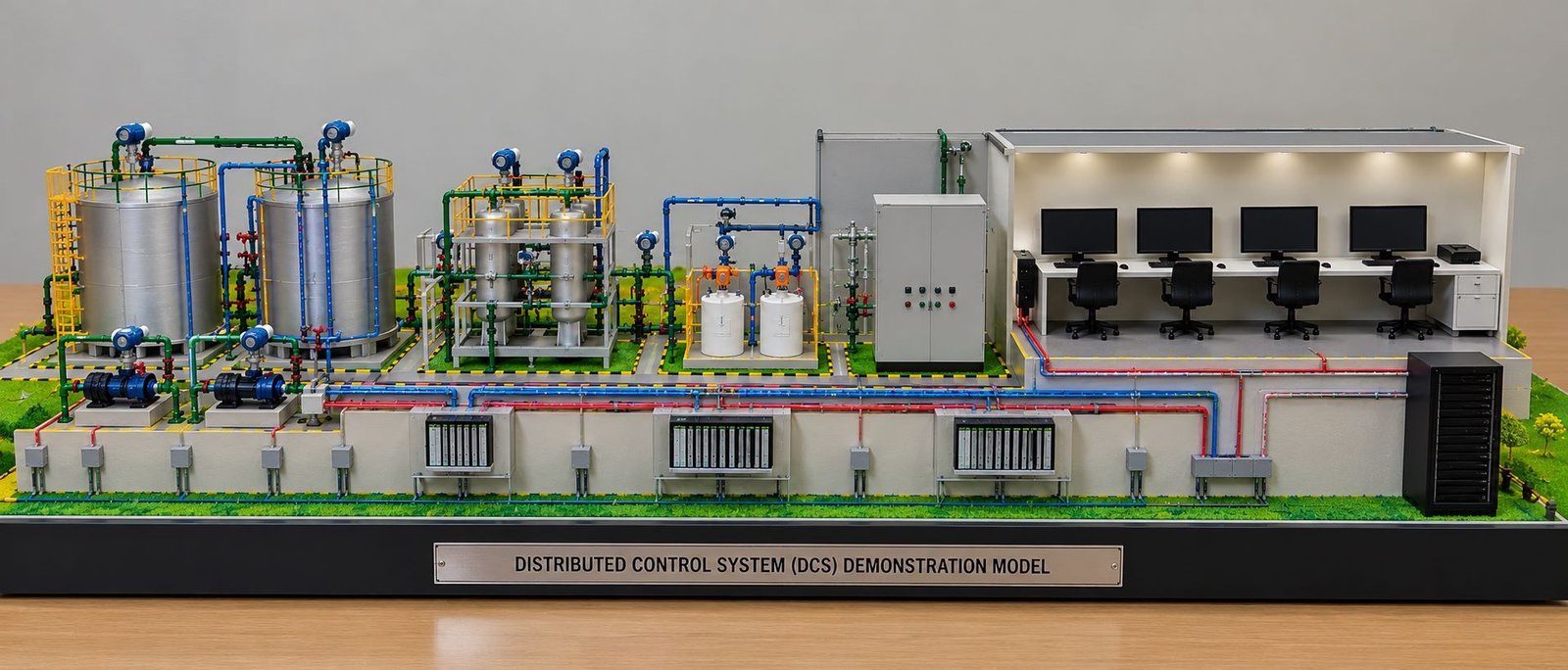
Piping plays a major role in industrial plant models. Large facilities contain process pipelines, utility lines, service pipelines, fire-fighting networks and several other interconnected systems. Pasted text
Model makers can use different pipe diameters to create clear visual differentiation. The model can show process pipelines, utility pipelines, steam lines, water lines, fire-fighting lines and product transfer lines.
Detailed technical models can also include valves, flanges, supports and vertical risers. These details help engineers and clients understand how the piping network connects different plant sections. Pasted text
Pipe Rack and Pipeline Details
Pipe racks form an important part of many industrial facilities. They carry pipelines, cables and utilities between process areas and supporting facilities.
A detailed pipe rack model can show multiple levels and miniature structural members. It can demonstrate how pipelines move horizontally between different process units and vertically between different elevations.
The pipe rack therefore helps viewers understand plant connectivity and the way different systems occupy available space.
Storage Tank Farm for Industrial Scale Models
Storage tanks commonly appear in refineries, chemical plants, petrochemical facilities, terminals and manufacturing projects.
A tank farm model can include large cylindrical tanks, smaller tanks, foundations, bund walls, transfer pipelines, access roads, pumps, loading areas and safety systems. Pasted text
Model makers can represent different tank sizes according to the project layout. They can also add surrounding roads and safety zones to create a complete representation of the storage area.
Structural Steel and Support Systems
Industrial plants use extensive structural steel to support equipment, platforms, pipe racks and maintenance areas. Pasted text
A detailed model can include platforms, stairs, walkways, equipment supports, pipe rack structures, maintenance platforms, tower structures, handrails and ladders.
These miniature structural elements improve realism and help viewers understand how equipment and piping occupy the physical space.
Buildings and Supporting Facilities
Industrial facilities also contain several supporting buildings. These buildings form an important part of the complete site layout.
A model can include control rooms, administrative buildings, warehouses, workshops, electrical buildings, security cabins, laboratories, maintenance facilities, pump houses and utility buildings. Pasted text
Model makers can add windows, doors, roof structures and external finishes to these buildings. This creates a complete industrial site representation instead of focusing only on process equipment.
Roads and Internal Plant Planning
Internal roads support plant movement, maintenance access and emergency response. An industrial scale model can show the road network around process areas and supporting buildings.
Model makers can add miniature road markings, pedestrian pathways, safety barriers, parking areas and entry gates.
These elements help viewers understand how vehicles and personnel move throughout the facility. Road planning also creates clear separation between different plant zones and improves the overall appearance of the model.
Landscaping and Site Development
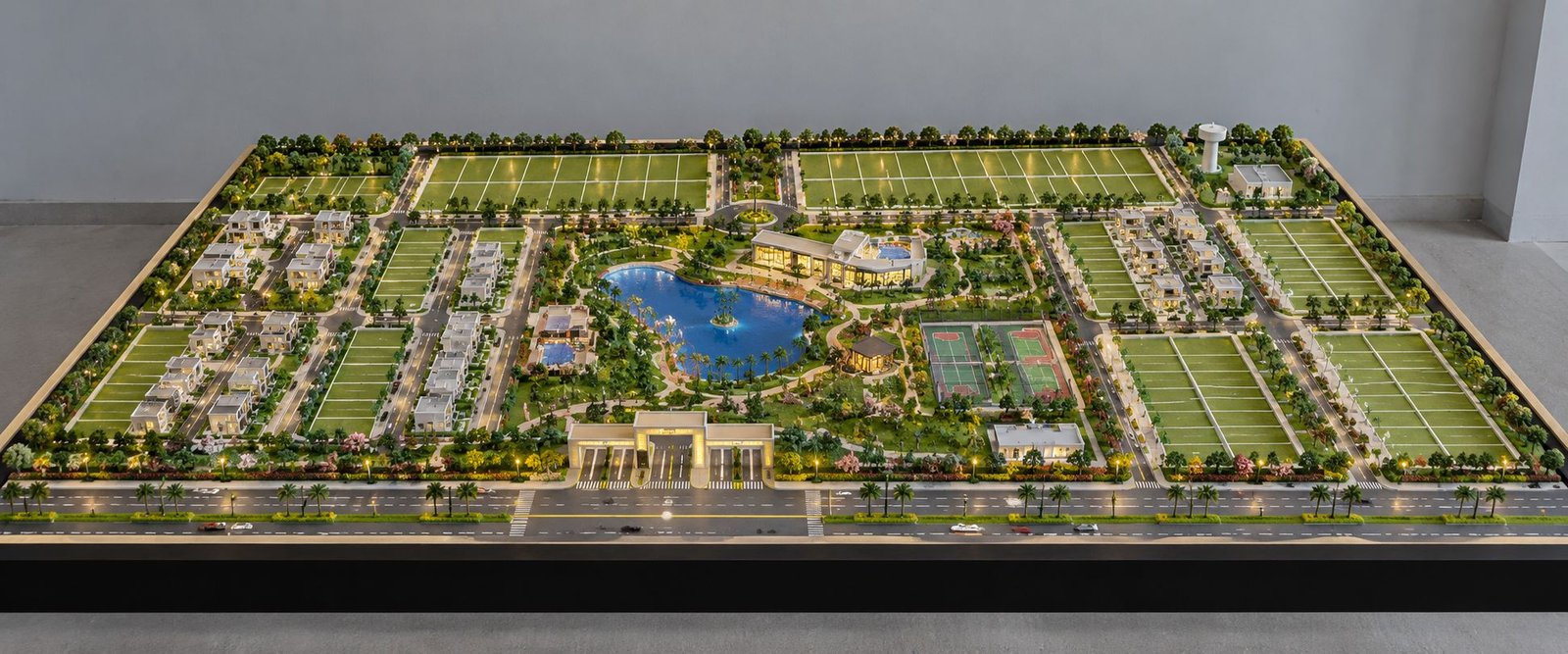
Landscaping adds visual balance to an industrial plant model. Green areas, miniature grass surfaces, trees, shrubs and landscaped zones can distinguish open areas from process and utility sections.
Trees can also help define the project boundary and improve the visual presentation of the baseboard.
LED Lighting for Industrial Scale Models
Integrated lighting can transform the appearance of an industrial model. Small LED lights can illuminate buildings, roads, process areas, tank farms and other important sections.
Road lighting can create a realistic night presentation, while building lighting can highlight control rooms, offices and other supporting facilities.
Model makers can divide the lighting system into separate zones. A presenter can then control process-area lighting, road lighting, building lighting, tank farm lighting, entry gate lighting and special equipment lighting independently. Pasted text
Materials Used for Model Making
Material selection depends on the model scale, component type, required detail and durability. Common materials include acrylic, PVC, MDF, foam board, resin, metal components and 3D-printed parts. Pasted text
Acrylic works well for transparent structures and clean architectural elements. PVC and similar sheet materials can help create miniature equipment and building components. Metal works well when the model requires strength and fine structural detailing.
3D Printing for Industrial Scale Models
3D printing has become an important part of modern industrial model making. Digital equipment geometry allows model makers to produce customized components at the required scale. Pasted text
3D printing works particularly well for pumps, valves, equipment housings, towers, flanges, machinery, structural details and special project equipment.
The technology also helps maintain consistency when a project contains several similar components.
Using CAD Data for Model Development
Engineering drawings and CAD files provide important information for industrial model development. Model makers can work with general arrangement drawings, plot plans, equipment layouts, structural drawings, piping layouts, Plant 3D models, architectural drawings, utility layouts and site development drawings. Pasted text
The model maker studies the available information and determines an appropriate scale. The selected scale must balance the overall model size with the required level of detail. Pasted text
Accurate CAD information helps model makers maintain the required Industrial Scale and proportion throughout the physical model.
Choosing the Right Model Scale
The project size and model purpose determine the appropriate scale.
A large refinery or petrochemical complex may require a smaller scale so the complete facility can fit on a practical baseboard. A smaller equipment demonstration may benefit from a larger scale that allows the model maker to include more technical details.
The team should consider plant dimensions, available display space, equipment detail, transportation requirements, presentation requirements, budget and intended use before selecting the scale.
Technical and Presentation Industrial Scale Models
Industrial models can serve different purposes. A presentation model focuses on overall appearance, site planning and visual communication. Model makers can use clean finishes, landscaping and integrated lighting to create a professional display.
A technical model focuses more strongly on equipment, piping, structures and engineering accuracy. Such a model can include additional technical details to support engineering discussions.
Some EPC projects need a combination of both approaches. In these cases, the model should communicate engineering information while maintaining a clean and professional presentation.
Benefits of Industrial Scale Models for Client Meetings
An industrial scale model can make client meetings more effective. Instead of explaining every process area through separate drawings, the project team can point directly to the relevant section of the physical model.
Clients can quickly understand the plant arrangement, equipment relationships, access routes, process areas, building locations, storage zones and utility connections.
The model creates a common visual reference for technical and non-technical stakeholders. This makes discussions easier and reduces confusion around the physical arrangement of the project.
Design Coordination for EPC Projects
Large EPC projects involve mechanical, civil, structural, electrical, instrumentation, piping and architectural teams. Each discipline contributes different information to the final facility.
A physical model gives these teams one common visual reference. They can examine different systems together and understand how those systems occupy the same physical space.
Industrial Scale Models for Project Review Meetings
Project managers can use industrial models during project review meetings to discuss the arrangement of different areas.
The team can focus on specific plant zones while discussing equipment positions, access routes, utility connections and overall site planning.
Models for Exhibitions and Events
EPC companies often participate in industrial exhibitions, conferences and business events. An illuminated industrial plant model can attract attention at an exhibition booth and communicate the company’s project capabilities.
Visitors can understand the type of facility represented by the model without studying extensive technical documents.
Industrial Scale Models for Investor Presentations
Senior management and investors may not always have detailed engineering knowledge. A physical model gives them a simple visual way to understand the scale and complexity of a proposed facility.
Presenters can highlight important areas while explaining project capacity, site utilization, process zones and infrastructure.
Interactive Model Features
Advanced industrial models can include interactive features such as touch controls, LED indicators and sectional lighting.
For example, a presenter can activate the lighting for a process unit while explaining that area and then switch to the utility section during the next part of the presentation.
Baseboard and Display Design
The baseboard supports the entire industrial model and contributes significantly to its presentation quality. A well-designed baseboard can include the project boundary, roads, landscaping, labels, lighting controls, transparent enclosure and nameplate area.
Transparent Acrylic Enclosures
Large industrial models often benefit from transparent acrylic protection. An acrylic enclosure protects miniature equipment from dust, accidental contact and transportation-related damage.
The transparent enclosure also allows viewers to see the complete model from different angles.
Accuracy and Attention to Detail
A professional industrial model needs more than an attractive appearance. The model maker should maintain the correct relationship between equipment positioning, plant arrangement, road layouts and major structural elements.
Small details can strongly influence the overall quality of the model. Consistent equipment finishes, aligned pipe racks, clean road layouts and organized landscaping create a more professional presentation.
Industrial Scale Models as a Communication Tool
The biggest advantage of a physical industrial model comes from its communication value. Drawings use lines, symbols and dimensions to communicate engineering information, while digital 3D models provide a virtual representation. A physical scale model gives stakeholders another way to understand the project because they can physically view the facility from different angles.
The model gives viewers an immediate sense of scale, proportion, space, connectivity, equipment arrangement, site planning and infrastructure.
A properly developed Industrial Scale model can support technical discussions, presentations and better understanding of large EPC facilities.
Future of Industrial Model Making
Industrial model making continues to combine traditional craftsmanship with modern digital technologies. CAD, 3D printing, laser cutting, CNC fabrication and LED systems allow model makers to create increasingly detailed physical representations. Pasted text
Digital engineering information can provide accurate component geometry, while traditional fabrication techniques can handle assembly, finishing and presentation.
As industrial projects become more complex, physical models will continue to support project presentation, coordination and communication.
Conclusion
An industrial scale model for EPC projects provides much more than a miniature representation of a facility. It gives project teams and stakeholders a physical communication tool that makes complex engineering information easier to understand.
Refineries, petrochemical plants, power stations, manufacturing facilities, chemical plants, water treatment facilities and other industrial developments can all benefit from professionally developed scale models.
A detailed model can bring equipment, piping, structures, buildings, storage tanks, roads, utilities and landscaping together in one coordinated display. EPC companies can use these models during client presentations, design coordination, project reviews, exhibitions, investor meetings and technical discussions.
The combination of engineering data, CAD-based development, miniature fabrication, 3D printing, structural detailing, lighting and professional display design can create an effective project presentation.
For large and technically demanding EPC developments, an industrial scale model gives stakeholders a clear physical understanding of how different systems fit together. It simplifies complex spatial information and creates a common reference for technical as well as non-technical discussions.
A properly planned model can therefore become both a professional presentation asset and a practical visual reference throughout the project lifecycle.