Conveyor-Based Mining System Model: Complete Engineering Design, Working Process and Applications
Introduction to Conveyor-Based Mining System Models
A Conveyor-Based Mining System Model shows how mining equipment, crushers, conveyor belts, screening units, and storage facilities work together. This engineering model represents the complete material handling process, from excavation to transportation. It helps mining companies, engineering consultants, equipment manufacturers, and project developers understand complex industrial layouts through a realistic physical display.
Modern mining operations handle large quantities of coal, iron ore, limestone, bauxite, and other minerals. Therefore, companies need efficient systems to transport these materials between different production stages. Conveyor belts play an important role because they move materials continuously along planned routes. Moreover, when engineers combine conveyors with crushers, hoppers, and screening equipment, they can create an integrated material handling system.
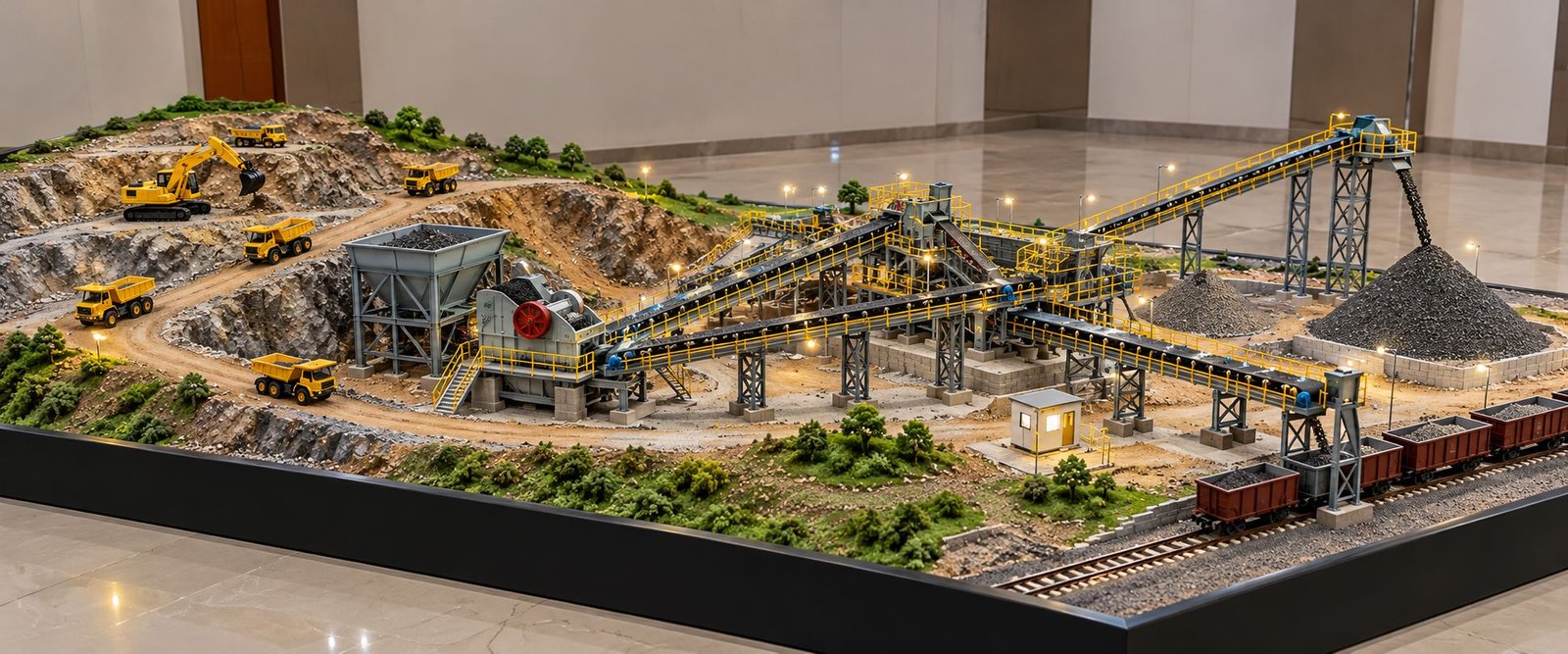
A physical Conveyor-Based Mining System Model brings this industrial process into a compact display. It combines realistic mining terrain, miniature excavators, dump trucks, crushers, steel conveyor structures, transfer stations, stockpiles, and dispatch facilities. As a result, viewers can understand how different components connect within a mining operation.
For example, a mining company can use this model to present a proposed facility to investors, project partners, or technical teams. Similarly, engineering consultants can use it to explain the relationship between mining equipment and transportation infrastructure. PAL Design Models offers a relevant service context for custom physical models used in industrial presentations and project visualization.
What Is a Conveyor-Based Mining System Model?
A Conveyor-Based Mining System Model is a miniature engineering representation of a mining facility that uses conveyor belts to transport extracted materials between operational areas. It presents the equipment arrangement and material flow in a single physical layout.
A typical design begins with an open-pit mining area. First, excavators collect material and load it into dump trucks. Next, the trucks deliver the material to a receiving hopper, which feeds a crusher. After crushing, conveyor belts transport the material toward screening equipment, stockpiles, or additional processing units.
However, the exact arrangement depends on the type of mine and its production requirements. For instance, a coal handling system may use different equipment from an iron ore processing facility. Likewise, a limestone quarry may connect its conveyor network directly to a cement plant.
A professional scale model represents these differences through suitable equipment, realistic structures, and a carefully planned layout. In addition, it may include access roads, railway tracks, service buildings, electrical equipment, and maintenance platforms.
The model can remain static or include working components. A static model emphasizes physical appearance and engineering layout. In contrast, a working model uses moving conveyor belts, rotating machinery, indicator lights, or other functional features to demonstrate selected operations.
Importance of Conveyor Systems in Mining
Mining companies must move materials safely and efficiently between excavation areas and processing facilities. Consequently, conveyor systems provide a practical solution for many bulk material transportation requirements.
Continuous Material Movement
Conveyor belts move material along a defined route while the system operates. This arrangement supports a continuous flow between connected equipment.
For example, a conveyor can transport crushed stone from a primary crusher to a screening plant. Meanwhile, another belt can carry the screened material toward a storage area.
The physical model demonstrates this sequence by connecting each machine through clearly visible conveyor sections. Therefore, viewers can understand how material travels through the facility.
Better Equipment Coordination
Mining operations depend on the correct arrangement of several machines. Excavators, trucks, hoppers, crushers, screens, and conveyors must work together to maintain material flow.
A scale model shows how these components connect. Furthermore, it helps viewers understand the relationship between individual machines and the complete facility.
For this reason, engineers can use the model to present the proposed layout before explaining individual equipment specifications.
Long-Distance Transportation
Some mines require conveyors that travel over considerable distances or across changes in ground elevation. Engineers may use horizontal, inclined, or curved conveyor arrangements according to project requirements.
A wide physical model can represent these routes with elevated steel supports, transfer towers, and realistic conveyor structures. As a result, the display can communicate the overall transportation arrangement in one view.
Efficient Use of Space
A carefully planned conveyor layout can connect different operational areas without requiring every material transfer to depend on truck transportation. However, the actual benefits depend on site conditions, investment costs, maintenance requirements, and material characteristics.
The model helps communicate the proposed arrangement before viewers examine the detailed engineering drawings.
Major Components of a Conveyor-Based Mining System Model
A realistic mining model should include the major equipment and structures that define the selected operation. Each component needs suitable proportions, recognizable details, and a logical position within the overall layout.
Mining Excavation Area
The excavation area establishes the starting point of the mining process. An open-pit layout may include stepped benches, exposed rock faces, sloping haul roads, and different ground elevations.
Model makers can create these features using lightweight base materials, textured compounds, miniature stones, and carefully applied surface finishes. Additionally, they can add small patches of vegetation where the surrounding landscape requires them.
Miniature excavators and haul trucks help communicate the scale of the operation. Their placement should show how workers and equipment would move material from the mining face toward the receiving station.
A realistic quarry surface adds depth to the model. Nevertheless, the terrain should not become so tall or dense that it hides the conveyor system.
Excavators and Dump Trucks
Excavators collect material from the mining face and load it into haul trucks. These machines form an important visual connection between excavation and material transportation.
A detailed model can include tracked excavators, articulated booms, buckets, operator cabins, and hydraulic cylinders. Similarly, dump trucks can appear on quarry roads or near the receiving hopper.
Their orientation should support the process flow. For example, an excavator can face a truck at the loading area while another truck approaches the hopper.
These miniature vehicles can remain stationary or include limited movement in an interactive display. Therefore, the model maker should select the appropriate level of functionality before fabrication begins.
Receiving Hopper and Feeder
The receiving hopper collects material from haul trucks and directs it toward the next stage. A feeder controls the flow of material into the crusher or conveyor system.
A well-detailed miniature hopper includes sloping walls, a strong supporting frame, a discharge opening, and a visible connection to the feeder.
In addition, the surrounding area may include access platforms, safety railings, and maintenance ladders. These details make the structure resemble industrial equipment.
The hopper should connect clearly to the next processing stage. Consequently, viewers can follow the material flow without confusion.
Primary Crusher
The primary crusher reduces the size of large material before it enters the downstream transportation system. Depending on the mining operation, the actual facility may use a jaw crusher, gyratory crusher, or another suitable design.
The model can show the crusher housing, feed opening, discharge chute, motor enclosure, and support frame. Furthermore, small access platforms and protective guards can improve its appearance.
The crusher should sit directly after the receiving system when the selected process uses that arrangement. A visible conveyor connection makes the relationship between the two components easy to understand.
Conveyor Belts and Steel Supports
Conveyor belts form the main transportation network of the model. They connect crushers, screens, transfer towers, stockpiles, and dispatch facilities.
A realistic conveyor section includes a belt surface, pulley housings, idler rollers, support frames, and loading or discharge points. Elevated sections require suitable steel trestles and cross-bracing.
Yellow safety railings and narrow maintenance walkways can improve the industrial appearance. Moreover, model makers can include drive units, motor housings, and protective covers.
Inclined conveyors help represent elevation changes across the mining site. Meanwhile, horizontal conveyors show how material travels between distant operational areas.
The design should maintain consistent belt alignment. In addition, each conveyor should connect logically to the next machine rather than ending at an unclear point.
Transfer Towers and Material Chutes
Transfer towers allow material to move between conveyors at different heights or directions. They often contain transfer chutes, supporting structures, access platforms, and maintenance facilities.
These towers add important engineering detail to the physical model. They also explain how the system transfers material without requiring a separate truck at every stage.
A detailed miniature transfer station should include visible structural supports and clear connections to the incoming and outgoing conveyor belts. As a result, the transportation route becomes easier to follow.
Screening and Secondary Crushing Equipment
Screening equipment separates material according to particle size. Some mining operations also use secondary or tertiary crushers to achieve the required product specifications.
The model can include an inclined screen, a supporting frame, feed and discharge chutes, and multiple conveyor routes. For instance, one conveyor may carry larger particles toward additional crushing, while another transports the finished material toward storage.
This arrangement demonstrates how a single mining facility can manage different material sizes. However, not every project requires secondary crushing or screening.
Therefore, the model should follow the actual process design rather than include unnecessary equipment.
Stockpiles and Storage Facilities
Stockpiles provide temporary storage for extracted or processed material. A mining model can represent them using realistic aggregate textures, different pile sizes, retaining walls, and access roads.
Conveyors should discharge material at suitable points above or beside the stockpiles. Additionally, larger facilities may require reclaim hoppers, storage bunkers, or additional loading conveyors.
These elements help complete the material transportation sequence. They also make the model more useful for explaining the relationship between processing and storage.
Railway Loading and Dispatch
Some mines send their products to customers, processing plants, or ports through railway networks. A physical model can therefore include tracks, loading chutes, miniature rail wagons, and conveyor discharge structures.
Other projects may use truck loading points, storage silos, or direct conveyor connections to a nearby industrial facility.
The final dispatch arrangement should match the intended mining project. Furthermore, the railway or loading area should remain visible from the main viewing direction.
Electrical and Control Equipment
Electrical systems control conveyor drives and coordinate the operation of associated machinery. A detailed model can include motor-control cabinets, cable trays, junction boxes, control rooms, and simplified monitoring equipment.
A working display may use indicator lights and switches to demonstrate the operation of selected components. However, these features should remain proportionate to the rest of the model.
How a Conveyor-Based Mining System Works
The working sequence depends on the mine’s design. Nevertheless, a typical system follows several connected stages.
Excavation and Loading
First, excavators remove material from the designated mining area. They load the material into dump trucks or feed a receiving system directly where the equipment arrangement permits.
The model should show the excavation face, loading equipment, and haul road as parts of the same operation. This arrangement establishes the beginning of the material handling process.
Hopper Feeding
Next, the trucks deliver material to the receiving hopper. A feeder then controls the flow toward the primary crusher.
The physical layout should show a clear connection between the hopper, feeder, and crusher. Consequently, viewers can understand how the system receives and prepares the material.
Primary Crushing
The crusher reduces large pieces of material to a suitable size for downstream transportation. After crushing, the material leaves through a discharge chute and enters the conveyor network.
Conveyor Transportation
The conveyor system carries the material across the mining facility. Engineers may use several connected belts to reach different elevations, cross access routes, or connect separate processing areas.
Transfer towers guide material between conveyor sections. Furthermore, support structures maintain the intended belt alignment throughout the route.
Screening and Further Processing
Where required, screens separate material into different sizes. Secondary crushers may reduce larger particles, while separate conveyors transport the resulting products.
For example, a plant may send different material grades to separate storage areas. As a result, the model can demonstrate how conveyor branches support several operational requirements.
Stockpiling and Dispatch
Finally, conveyors deliver the material to stockpiles, silos, processing plants, or loading terminals. Railway wagons or trucks may then transport the product to its next destination.
This complete sequence helps viewers understand how a conveyor-based mining operation connects extraction with material delivery.
Engineering Design and Model Dimensions
The quality of a mining model depends on the scale, overall proportions, structural detailing, and accuracy of the equipment arrangement.
Wide and Low-Height Layout
A wide, low-height design works particularly well for a conveyor-based mining model because the conveyor network often extends horizontally across the site.
The excavation area can occupy one end of the baseboard, followed by the receiving hopper, crusher, screening equipment, and stockpiles. Meanwhile, long conveyor routes can connect these sections without making the model excessively tall.
This arrangement also suits website feature images because the complete mining process remains visible in a panoramic composition. In addition, a lower profile can make the main machinery easier to view.
The final width and height should depend on the project drawings, equipment count, display area, and required viewing distance.
Suitable Scale Selection
The model scale determines the size of the miniature equipment and the amount of detail that the fabrication team can include.
A scale such as 1:100 may suit some presentation models, while other projects may require a larger or smaller scale. Therefore, the team should select the scale after reviewing the site layout and the dimensions of the major structures.
Consistency matters throughout the model. Conveyor widths, support heights, trucks, crushers, and other equipment should appear proportionate to one another.
Structural Accuracy
Conveyor towers should include convincing supports, cross-bracing, and suitable platform arrangements. Similarly, crushers, hoppers, and screens should have appropriate foundations and connections.
Although a scale model does not replace engineering calculations, a coherent layout helps communicate the intended industrial arrangement. For this reason, the fabrication team should study the available drawings before building the physical components.
Material Selection
Model makers can use different materials for individual components.
- Acrylic sheets can form transparent covers and selected enclosures.
- PVC sheets and foam boards can create lightweight terrain and structural panels.
- Laser-cut materials can produce platforms, guards, and small structural parts.
- Metal sections can represent selected steel supports.
- Resin or 3D-printed parts can reproduce complex machinery and mechanical details.
- Fine gravel and textured compounds can create quarry surfaces and stockpiles.
The fabrication team should choose materials according to the scale, required finish, expected handling, and functional requirements. In addition, each material should suit the component it represents.
Realistic Surface Finishing
Mining terrain should combine natural-looking rock, soil, gravel, and selected vegetation. Industrial equipment needs consistent surface finishes, while steel structures should have clean edges and convincing connections.
Furthermore, miniature roads, retaining walls, equipment foundations, and service areas can make the complete layout more realistic.
The model should look like a physical engineering installation rather than a collection of toy vehicles. Therefore, accurate proportions and careful finishing are essential.
Lighting and Display Quality
Small industrial lights can highlight conveyor routes, transfer towers, and processing areas. Carefully placed lighting also helps viewers identify important equipment without distracting from the physical detailing.
A clean baseboard with a neat edge gives the model a professional finish. If the client requires technical labels, the team can add them separately without overcrowding the main display.
Static and Working Mining Conveyor Models
A static mining model presents the site layout and equipment in a fixed arrangement. It suits corporate presentations, exhibitions, project proposals, and engineering displays.
In contrast, a working model adds selected functional elements, such as moving belts, rotating pulleys, indicator lights, and controlled material movement.
For example, a small motor can drive a miniature conveyor that transports lightweight demonstration material between a hopper and a stockpile. Additionally, a simple control system can operate the conveyor and display its status through indicator lights.
However, working models require careful planning. The fabrication team must consider belt alignment, tension, drive motors, electrical wiring, material size, and access for maintenance.
Consequently, the choice depends on the purpose of the display, the required level of interaction, and the available budget.
Applications of Conveyor-Based Mining System Models
Coal Mining Operations
Coal mining models can show excavation areas, coal handling facilities, crushers, conveyor networks, stockpiles, and railway loading points.
These models help communicate the relationship between mining and bulk material transportation. Moreover, they can demonstrate how different facilities connect within a larger coal handling operation.
Iron Ore Mining Projects
Iron ore models may include open-pit benches, excavators, primary crushers, screening equipment, stockyards, and connections to mineral processing facilities.
A detailed layout can show how conveyors connect different stages of the operation. As a result, viewers can understand the overall material transportation route.
Limestone Quarry and Cement Plants
Limestone mining models can demonstrate quarry excavation, crushing, material transportation, and connections to cement manufacturing facilities.
The design can also include raw material storage and plant receiving points. Therefore, the model can show the relationship between quarry operations and industrial production.
Bauxite and Other Mineral Mines
Bauxite and other mineral mining models can represent extraction, material transfer, screening, storage, and transportation infrastructure.
The equipment arrangement should reflect the particular mineral processing requirements. Similarly, the conveyor network should follow the intended site layout.
EPC and Industrial Infrastructure Projects
Engineering, procurement, and construction companies may use scale models to explain proposed industrial layouts and the relationship between different equipment packages.
A conveyor-based model can highlight the routes, structures, and interfaces that connect mining equipment with processing facilities. Furthermore, it can help project teams communicate the overall arrangement during presentations.
Technical Education and Training
Engineering colleges and training institutions can use physical models to demonstrate conveyor systems, crushing equipment, bulk material handling, and industrial process flow.
A working model can provide additional value by allowing students to observe selected mechanical operations. Consequently, it can support practical explanations alongside drawings and classroom instruction.
Benefits of Professional Engineering Model Making
A professional physical model brings a large industrial installation into a compact, understandable display. It helps project teams visualize the relationship between mining equipment, conveyor routes, storage areas, and dispatch facilities.
The model can support technical discussions, corporate presentations, exhibitions, project reviews, and educational demonstrations. In addition, it gives non-specialist audiences a clearer understanding of the proposed facility.
For equipment manufacturers and industrial consultants, a detailed model can demonstrate how different machinery components fit into a coordinated system.
The quality of the final presentation depends on accurate project information, suitable scale selection, realistic fabrication, and a clear overall layout. Therefore, the design should reflect the intended project rather than rely on generic equipment placement.
Why Choose PAL Design Models for Engineering Model Making?
Engineering model making requires more than placing miniature equipment on a baseboard. It involves layout interpretation, scale selection, component fabrication, structural detailing, surface finishing, and careful assembly.
A conveyor-based mining project needs particular attention to long conveyor routes, elevated support towers, transfer points, crushers, hoppers, and the connections between excavation and processing areas.
PAL Design Models provides a relevant service context for custom engineering and industrial scale models. A project-specific design can be planned around the intended display area, required level of detail, physical dimensions, and presentation objectives.
Before fabrication begins, the project team should review available drawings, equipment references, process layouts, and client requirements. This approach helps establish a consistent design and reduces the risk of including equipment or connections that do not match the intended project.
Moreover, a wide baseboard, realistic machinery, clear conveyor routing, and carefully finished terrain can improve the model’s presentation. The final design should balance technical detail with visual clarity.
Conclusion
A Conveyor-Based Mining System Model demonstrates how excavation, loading, crushing, screening, conveyor transportation, stockpiling, and dispatch connect within a mining operation.
A realistic physical model can include quarry terrain, miniature excavators, dump trucks, receiving hoppers, crushers, conveyor belts, steel support towers, transfer stations, stockpiles, and railway loading facilities. Each component should have suitable proportions and a clear relationship with the rest of the system.
A wide, low-height layout offers an effective way to display the complete mining process while keeping the conveyor network and machinery visible. Furthermore, realistic textures, structural detailing, clean fabrication, and optional working features can improve the model’s presentation.
For mining companies, engineering consultants, equipment manufacturers, EPC contractors, and educational institutions, a professionally designed model offers a practical way to communicate complex mining infrastructure.