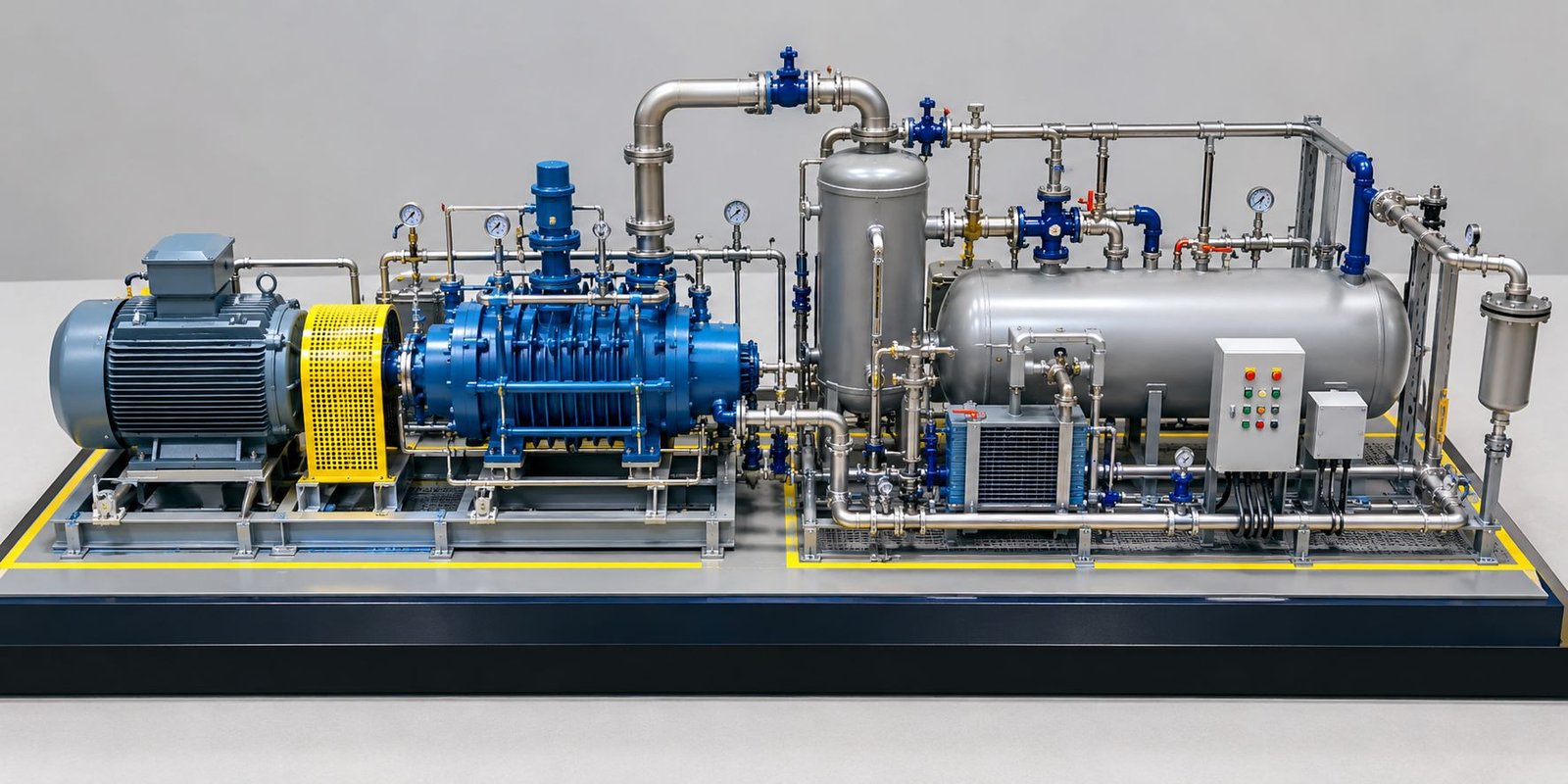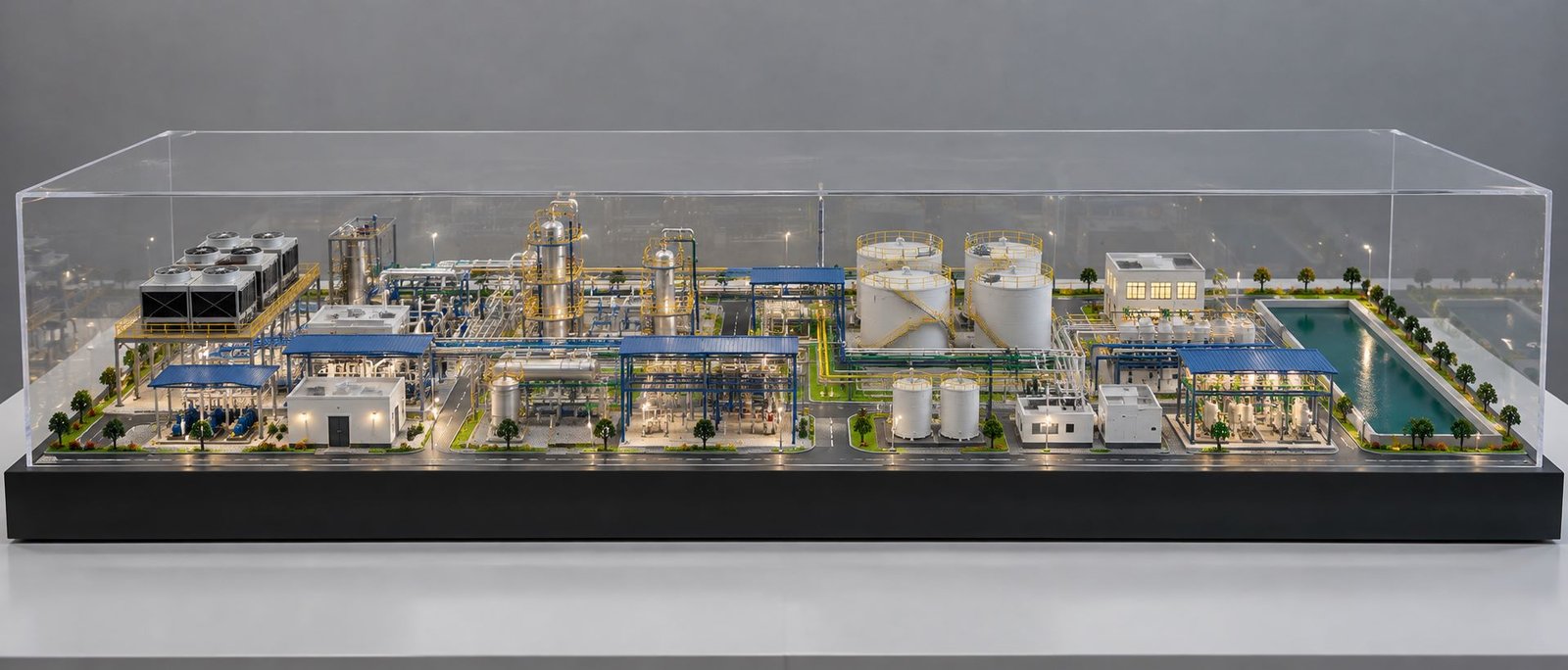
Battery Energy Storage Cabinet Model: Design, Components and Working
A Battery Energy Storage Cabinet Model provides a clear physical representation of a modern battery energy storage system. It can show battery modules, electrical connections, safety equipment, cooling systems, control panels and other important components. Instead of explaining the complete system only through drawings, a physical model allows viewers to understand how different components fit together and work with each other. Therefore, engineers, designers and students can use these models for technical presentations, industrial exhibitions, education, training and project visualization.
A Battery Energy Storage Cabinet forms an important part of a Battery Energy Storage System (BESS). The cabinet stores electrical energy and supplies that energy when required. Depending on the system design, it can contain battery modules, battery racks, a Battery Management System, power conversion equipment, electrical protection devices, communication equipment, cooling systems and fire-safety equipment. In this way, a scale model can bring normally enclosed components into view and make the complete system easier to understand.
What Is a Battery Energy Storage Cabinet?
A Battery Energy Storage Cabinet houses battery modules along with the equipment that controls, protects and manages the battery system. The cabinet keeps the different components in an organized enclosure. As a result, the system can maintain a clear and structured arrangement.
A typical cabinet contains several battery modules. These modules can sit one above another or inside multiple racks. Each module contains several battery cells connected in a specific arrangement. In addition, electrical protection and monitoring equipment connects with these modules. Sensors can monitor important values such as voltage and temperature, while the Battery Management System helps monitor battery operation.
A physical model can reproduce both the outside cabinet and selected internal components. For example, the model maker can create front doors that open or use transparent acrylic panels. Therefore, viewers can see the battery modules, wiring and electrical equipment without opening an actual industrial cabinet.
Importance of Battery Energy Storage Cabinet Model Making
Battery systems normally stay inside closed metal cabinets. Because of this, people cannot easily see the internal arrangement. A physical model solves this problem by presenting the complete system in a simple visual format.
A detailed Battery Energy Storage Cabinet Model can show the relationship between battery modules, BMS equipment, power conversion components, cooling systems and electrical protection. Moreover, viewers can understand the position and purpose of each section without depending only on technical drawings.
The model can also support technical presentations. For instance, engineers can use transparent panels, removable covers, LED lighting and miniature labels to highlight important sections. As a result, clients, students, project teams and visitors can understand the cabinet more easily.
For industrial projects, a model can represent a proposed cabinet design before production. Therefore, the project team can review the overall dimensions, equipment position, access points and external appearance before manufacturing the final equipment.
Battery Energy Storage Cabinet Model Design
The cabinet structure forms the foundation of the model. First, the model maker creates a clean rectangular enclosure with front, side, top and bottom sections. Depending on the presentation requirement, the model can show one or more doors in an open position.
Next, the maker plans the internal arrangement. Several horizontal battery modules can sit on vertical rails. Small connectors and cables can add more detail and make the battery rack look closer to industrial equipment. In addition, consistent positioning of the modules gives the model a clean and professional appearance.
The cabinet can also include a separate electrical control section. This section can contain miniature circuit breakers, contactors, fuses, control boards and displays.
Furthermore, another section can represent the power conversion system. A larger BESS cabinet may contain converters, inverters and related electrical equipment. The model can represent these components with miniature housings, ventilation openings and cable connections.
Battery Modules and Racks in an Energy Storage Cabinet
Battery modules form the main visual section of a Battery Energy Storage Cabinet Model. The model maker can arrange several modules vertically to create a battery rack.
Each module can use a rectangular enclosure with a dark or metallic finish. Small cables can represent the high-voltage connections. In addition, warning symbols can identify electrical areas and improve the technical appearance of the model.
The model should maintain equal spacing between the battery modules. Consequently, the cabinet receives a clean industrial appearance. At the same time, the spacing shows how technicians can install and access the modules.
For a detailed presentation model, the maker can create removable module covers. In this way, viewers can see the cells or smaller battery units inside a module.
Battery Cell Representation in the Storage Cabinet
Battery cells store energy inside each battery module. Depending on the required scale, the model can show cylindrical, prismatic or pouch-cell arrangements.
For example, an educational model can display several individual cells to explain the internal structure. However, an industrial presentation model can show a complete battery module and use labels or transparent sections to explain the cell arrangement.
Battery Management System in a Battery Energy Storage Cabinet
The Battery Management System (BMS) plays an important role in a modern battery energy storage system. It monitors battery conditions and helps manage battery operation.
The model can represent the BMS with a control panel, electronic control box or miniature circuit-board enclosure. In addition, small communication cables can connect the battery modules with the BMS section.
The model can show BMS monitoring functions through voltage, temperature and operating-status indicators. Moreover, it can show communication between battery modules and the main control system.
A small LCD-style display can make the model more informative. For example, the screen can show battery status, voltage, temperature, charging status and system condition. Therefore, viewers can understand the purpose of the BMS more easily.
Battery Energy Storage Cabinet Charging and Discharging
Charging and discharging form two important parts of an energy storage system. A working model can show both processes through simple visual indicators.
During charging, the system sends electrical energy into the battery. The battery stores this energy within its cells. On the other hand, during discharging, the battery sends stored electrical energy toward the connected load or electrical network.
A working model can use LEDs, small meters, switches and arrows to show the energy flow. For example, one indicator can represent charging, while another can represent discharging.
The model does not need a high-voltage circuit for demonstration. Instead, a low-voltage electrical circuit can safely represent the charging and discharging concept. As a result, the model can demonstrate the basic process while keeping the presentation simple.
Power Conversion System in Battery Energy Storage Cabinet
A Battery Energy Storage Cabinet can work with power conversion equipment that manages the flow of electrical energy between the battery and an external electrical system.
A model can include a separate power conversion section with miniature inverter or converter housings. In addition, the maker can add ventilation openings and cable connections to create a realistic industrial appearance.
The model can connect the battery rack to the power conversion section with DC cable representations. Similarly, another group of cables can represent the AC side of the system.
This arrangement helps viewers understand that stored battery energy can pass through power electronics before it reaches an external electrical system. Therefore, the power conversion section becomes an important part of the technical model.
Electrical Protection System for Battery Energy Storage Cabinet
Electrical protection plays an important role in a battery storage cabinet. A detailed model can show circuit breakers, fuses, contactors, disconnect switches and emergency shutdown controls.
The model maker can place these components inside a separate electrical compartment. Small labels can identify each component. At the same time, the labels should remain limited so that the cabinet does not look crowded.
The front panel can also include an emergency stop button. In a working demonstration model, the button can disconnect the low-voltage demonstration circuit.
As a result, viewers can understand the basic idea of system isolation during an emergency. This feature can also make a working model more interactive.
Battery Energy Storage Cabinet Cooling System
Battery cells produce heat during operation, especially while charging and discharging. Therefore, thermal management forms an important part of a battery energy storage system.
A Battery Energy Storage Cabinet Model can show cooling fans, ventilation openings, heat exchangers or simplified liquid-cooling components.
For an air-cooled model, the maker can install miniature fans near the battery modules or cabinet ventilation sections. In addition, arrows or LED indicators can show the airflow direction.
For a liquid-cooling model, small pipes can represent coolant movement between the battery modules and cooling equipment.
In this way, the model helps viewers understand how the system manages heat around the battery modules.
Thermal Management in Battery Storage Cabinets
Thermal management focuses on monitoring and controlling battery temperature. The model can include miniature temperature sensors near the battery modules.
The sensors can connect visually to the BMS section. Furthermore, a small display can show representative temperature values.
For an educational working model, the system can simulate temperature values instead of measuring a real high-energy battery system. Therefore, the model can demonstrate the concept in a controlled way.
This arrangement helps explain the connection between temperature sensors, the BMS and the cooling system.
Fire Safety Features in Battery Energy Storage Cabinets
Safety features can add important technical details to a battery storage cabinet model. The model can represent fire detection, emergency shutdown and fire-protection equipment.
For example, a presentation model can include miniature fire-suppression cylinders, smoke or temperature sensors, warning lights and emergency buttons.
The model does not need to reproduce a complete industrial fire-protection installation. Instead, it should show the position and purpose of important safety equipment.
Moreover, warning symbols and safety labels can appear on battery compartments and electrical sections. As a result, the model can communicate important safety information visually.
Battery Cabinet Ventilation Design
Ventilation forms another important part of the cabinet design. Model makers can reproduce ventilation openings with perforated panels, grills and miniature fans.
The maker can install ventilation grills on cabinet doors or side panels. At the same time, arrows can show how air enters and leaves the cabinet.
For a technical exhibition model, transparent arrows or illuminated airflow paths can make the airflow easier to understand.
Therefore, viewers can see the connection between battery modules, cooling equipment and cabinet ventilation.
Cabinet Doors and Internal Accessibility
The model can use openable cabinet doors with miniature hinges, handles and locking mechanisms. These small details give the cabinet a realistic industrial appearance.
Alternatively, transparent acrylic panels can provide another solution. They allow viewers to see the internal components while the cabinet still looks like an enclosed industrial unit.
For presentation models, the maker can combine solid doors with transparent sections. In this way, the model can maintain both realistic appearance and internal visibility.
Wiring and Cable Arrangement in Energy Storage Cabinets
Cables form an important part of a realistic battery storage model. The maker can use thicker cables for major battery connections and thinner cables for communication and control wiring.
The model should keep the cables organized. Therefore, cable trays, brackets and routing channels can improve both appearance and technical presentation.
Different colors can help distinguish different connection types. However, the selected colors should match the intended technical representation rather than act as universal electrical rules.
In addition, miniature plastic or metal connectors can add further detail to the wiring system.
Battery Energy Storage Cabinet Control Panel
The front control panel can contain a display, status indicators, push buttons, emergency stop, selector switches and warning indicators.
A miniature screen can show representative system information such as:
- Battery Status
- Voltage
- Temperature
- State of Charge
- Charging Status
- Discharging Status
- System Condition
Furthermore, a working model can use programmable LEDs to represent different operating conditions. This feature can make the model more interactive and easier to understand.
LED Lighting for Battery Storage Cabinet Models
LED lighting can improve the visibility of a Battery Energy Storage Cabinet Model. Small LED strips can illuminate the internal compartments and battery modules.
Warm or neutral lighting can highlight the battery sections, while small indicator LEDs can show system conditions.
However, the maker should use lighting in a controlled way. Excessive lighting can make the model look decorative instead of technical. Therefore, the main purpose of the lighting should remain clear visibility of important components.
Materials Used for Battery Energy Storage Cabinet Models
Model makers can select materials according to the required scale, strength and level of detail. Acrylic works well for transparent doors and viewing windows. Meanwhile, PVC sheets, MDF, foam board and laser-cut plastic can form the cabinet panels and internal structures.
3D printing provides a useful option for small customized parts. For example, the maker can 3D print handles, brackets, fan housings, cable connectors, warning signs and equipment enclosures.
Metal sheets or aluminum profiles can provide a stronger industrial appearance when the project requires additional structural detail.
For miniature battery modules, the maker can use acrylic, ABS, PVC or 3D-printed parts according to the required dimensions. As a result, the model can achieve both accuracy and visual detail.
Battery Energy Storage Cabinet Scale and Dimensions
The model maker should select the scale according to the project purpose. A tabletop model can focus on the overall cabinet structure, while a larger exhibition model can include more internal details.
For example, an actual cabinet may measure approximately 1800 mm in height, 700 mm in width and 400 mm in depth.
1:5 Scale Battery Cabinet Model
At a 1:5 scale, the model would measure approximately:
Height: 360 mm
Width: 140 mm
Depth: 80 mm
1:10 Scale Battery Cabinet Model
At a 1:10 scale, the model would measure approximately:
Height: 180 mm
Width: 70 mm
Depth: 40 mm
Therefore, the final scale should match the available display area and the level of detail that the project requires. A larger scale gives the maker more space for battery modules, wiring, control panels, cooling systems and other components.
Working Battery Energy Storage Cabinet Model
A Battery Energy Storage Cabinet Model can become a working demonstration model when the maker adds low-voltage electrical components.
A basic setup can include a rechargeable low-voltage battery, LEDs, switches, a small display and a controller. The model can use indicator lights to represent charging and discharging conditions.
In addition, a small fan can demonstrate the cooling function. A temperature sensor can connect to a controller and activate the fan when the simulated temperature reaches a selected level.
As a result, viewers can understand the connection between battery monitoring, cooling and system operation.
Battery Energy Storage Cabinet Model for Industrial Presentation
Industrial presentation models help teams explain complex equipment to clients and project members. A Battery Energy Storage Cabinet Model can show the complete cabinet structure without requiring viewers to inspect actual industrial equipment.
For example, the model can keep one cabinet door closed while another section remains open. This arrangement allows viewers to see both the external design and internal components at the same time.
Labels can identify the battery modules, BMS, inverter, cooling system, protection equipment and control panel.
For detailed presentations, the maker can also create an exploded or sectional model. In this design, selected components sit slightly apart, making their arrangement easier to understand.
Battery Storage Model for Educational Demonstration
An educational model can focus more on the working principle than on the external appearance. A transparent cabinet can expose the battery modules, connections and control systems.
Arrows can show the movement of energy from the electrical source into the battery and from the battery toward the load.
In addition, students can use the physical model to understand battery storage, charging, discharging, voltage monitoring, temperature monitoring and energy conversion.
Therefore, a physical working model can make technical concepts easier to explain than a simple two-dimensional drawing.
Applications of Battery Energy Storage Cabinet Models
Battery Energy Storage Cabinet Models can support many types of presentations and demonstrations. Engineering exhibitions can use them to display battery technology in a compact physical format. Similarly, industrial exhibitions can use them to explain equipment structure and component arrangement.
Educational institutions and technical training centers can use these models to demonstrate battery storage concepts. Corporate presentations and project offices can also use them when teams need to explain an energy storage system to visitors or project stakeholders.
Furthermore, the model can support product launches, trade shows and client presentations where a compact representation of a large energy storage system can provide a clearer explanation.
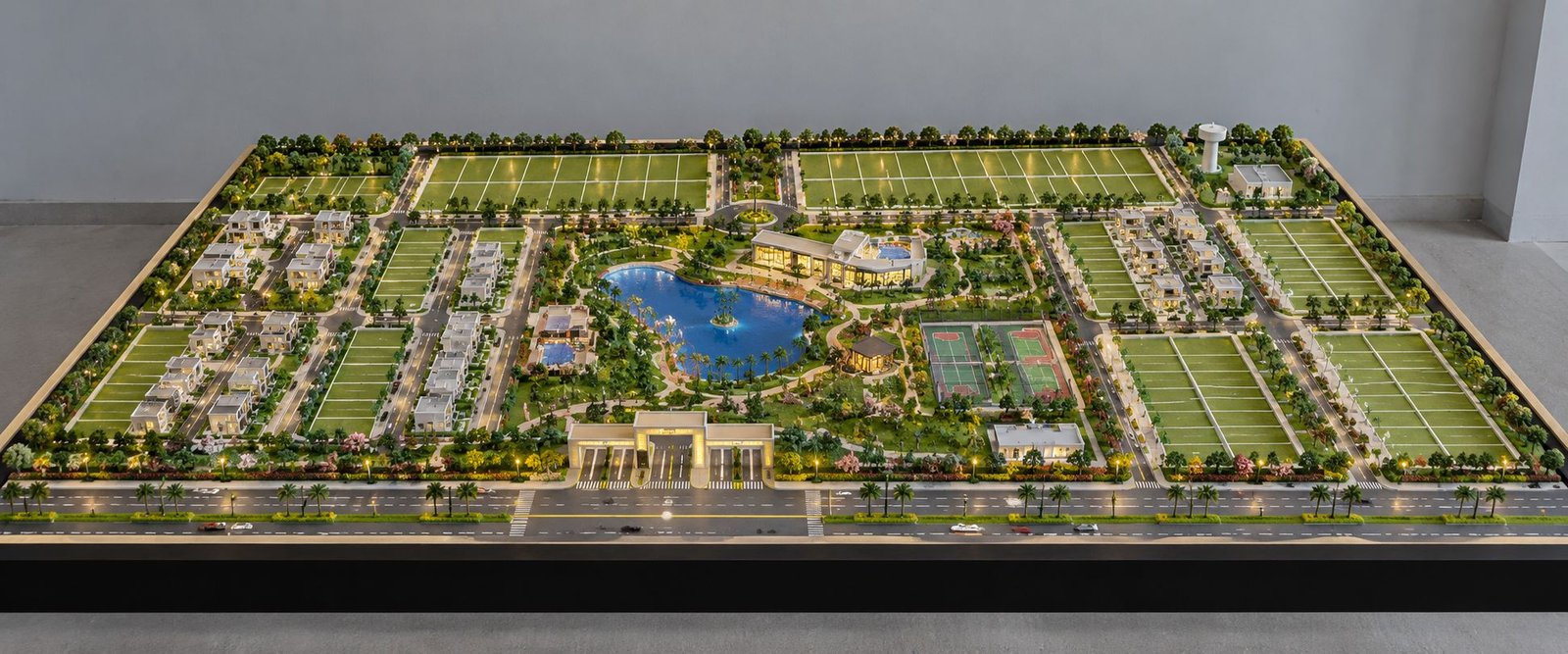
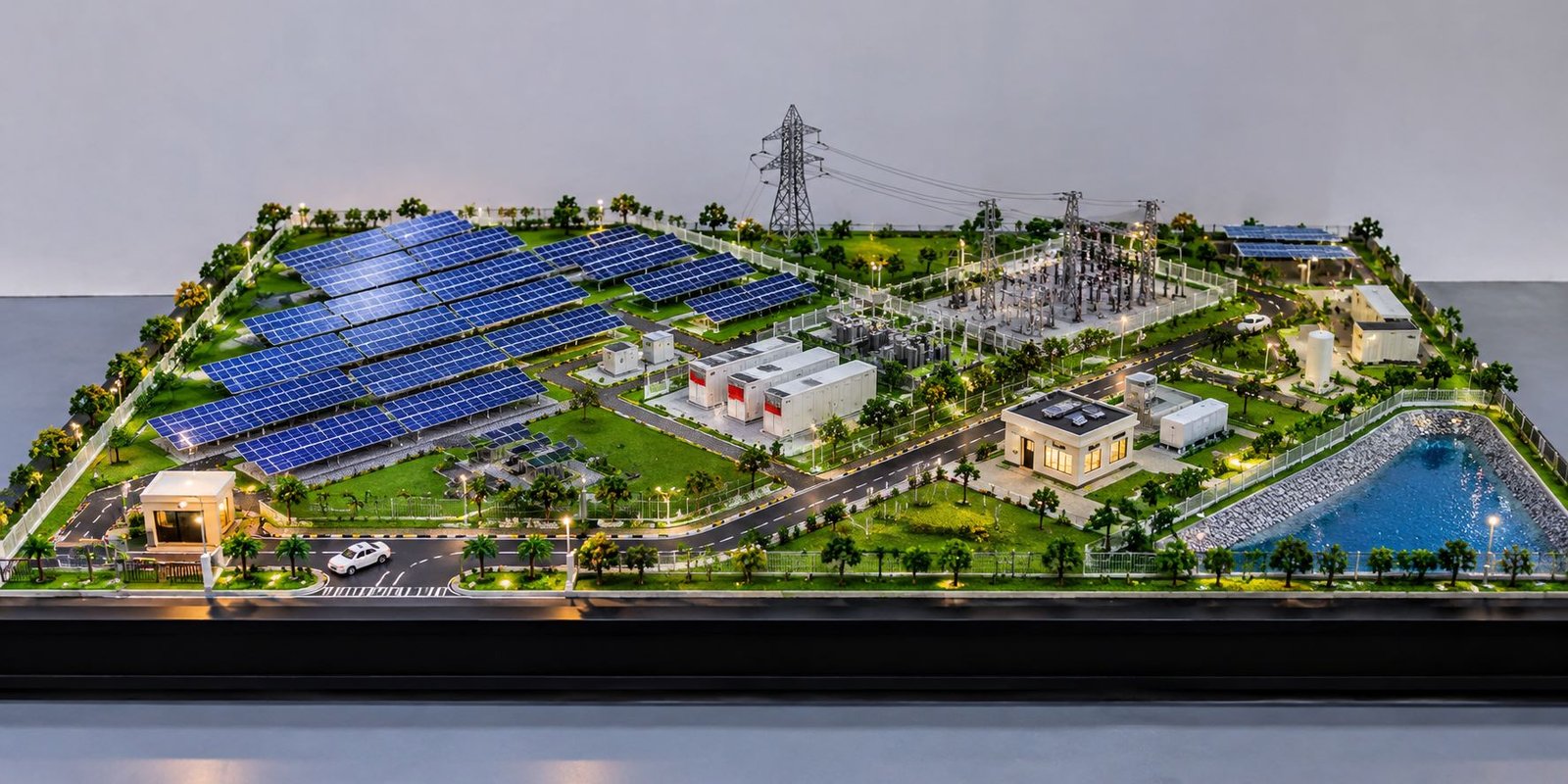
For industrial and architectural visualization, the model can show how energy storage equipment can appear within a larger facility.
Battery Energy Storage Cabinet Model for Exhibition
An exhibition model needs strong visual clarity. The cabinet should have a clean exterior finish, while selected internal sections should remain visible.
A raised baseboard can provide stability and improve the presentation. In addition, LED lighting around the cabinet can highlight the battery modules and internal equipment.
A small information panel can explain the major components and energy flow. However, the model should avoid excessive text because the physical design should communicate the main information visually.
Quality and Detailing of Battery Storage Cabinet Models
Accuracy, clean fabrication and proper component arrangement strongly influence the quality of an industrial battery model. Uneven panel gaps, poorly aligned modules and disorganized wiring can reduce the professional appearance of the model.
Therefore, every battery module should maintain consistent spacing. Doors should align with the cabinet frame. Cable routes should remain organized, and the maker should mount each component securely.
Small details can make a major difference. For example, hinges, handles, ventilation grills, warning symbols, control switches and labels can add realism and make the model look closer to actual industrial equipment.
Final Considerations for Battery Energy Storage Cabinet Model Making
A successful Battery Energy Storage Cabinet Model combines industrial design, engineering visualization and detailed fabrication. The model should do more than reproduce the outside shape of a cabinet. Instead, it should clearly explain the internal structure and show how the major components work together.
The main sections should include the battery modules, battery rack, BMS, electrical protection, power conversion equipment, cooling system, ventilation, control panel, safety features and cable arrangement.
A simple presentation model may only require the external cabinet and battery modules. On the other hand, a technical working model can include additional sensors, LEDs, fans, displays and low-voltage control circuits.
In this way, a well-designed model turns a complex enclosed energy storage system into a clear physical representation. Therefore, it can support technical presentations, engineering education, industrial exhibitions, project visualization and product demonstrations.
Conclusion
Battery Energy Storage Cabinet Model Making provides a practical way to present modern energy storage technology through a detailed physical model. The model can combine battery modules, racks, BMS components, power conversion equipment, cooling systems, electrical protection, safety features and control panels to create a clear representation of the cabinet.
Moreover, acrylic, PVC, MDF, 3D-printed components, miniature electrical parts, LED lighting and detailed wiring can help create a realistic technical presentation. The maker can select the model scale according to the display area and the level of detail required.
Finally, a properly planned Battery Energy Storage Cabinet Model makes complex battery technology easier to explain. It gives viewers a clear understanding of the cabinet structure, component arrangement and energy-management concept. As a result, the model can serve as a useful tool for engineering presentations, education, industrial exhibitions and technical visualization.