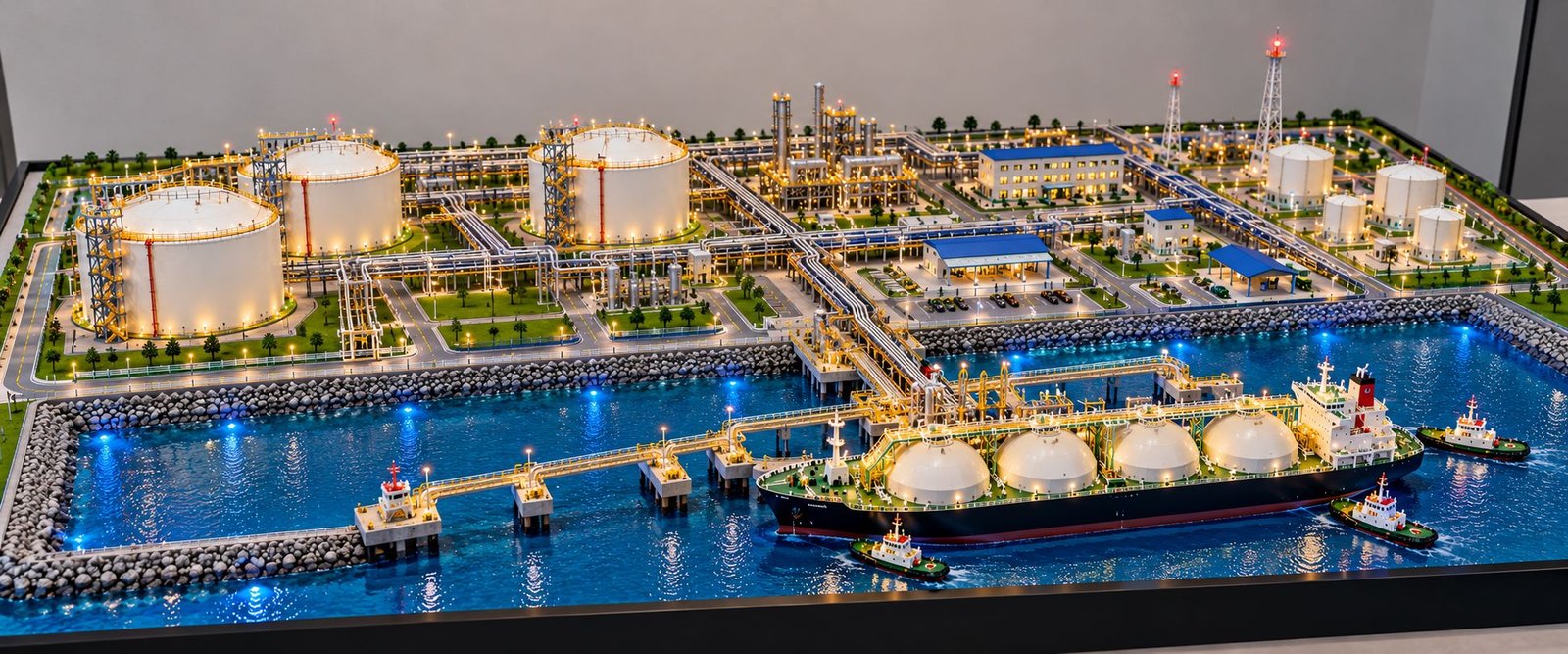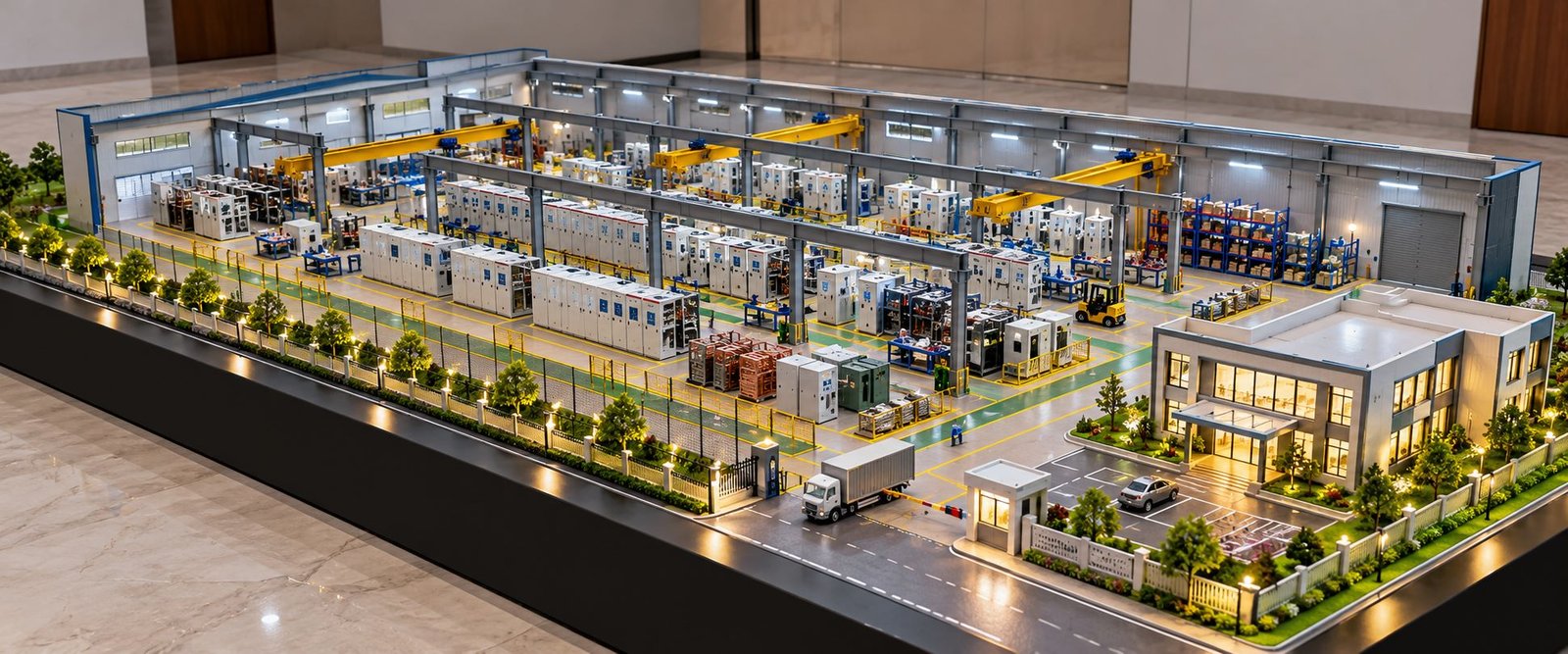
Lithium Processing Plant Model Making for Industrial Engineering Projects
Introduction to Lithium Processing Plant Industrial Model
Lithium plays an important role in modern energy storage, electric vehicles, renewable energy systems, and advanced electronic devices. As demand for lithium-based batteries continues to grow, companies are developing facilities for lithium extraction, mineral processing, refining, and battery-grade material production.
A Lithium Processing Plant Industrial Model provides a detailed physical representation of an industrial facility. It helps engineers, project developers, investors, and technical teams understand the overall plant layout and the relationship between different processing sections. Moreover, a professionally designed lithium processing plant scale model presents complex industrial infrastructure in a clear, three-dimensional format.
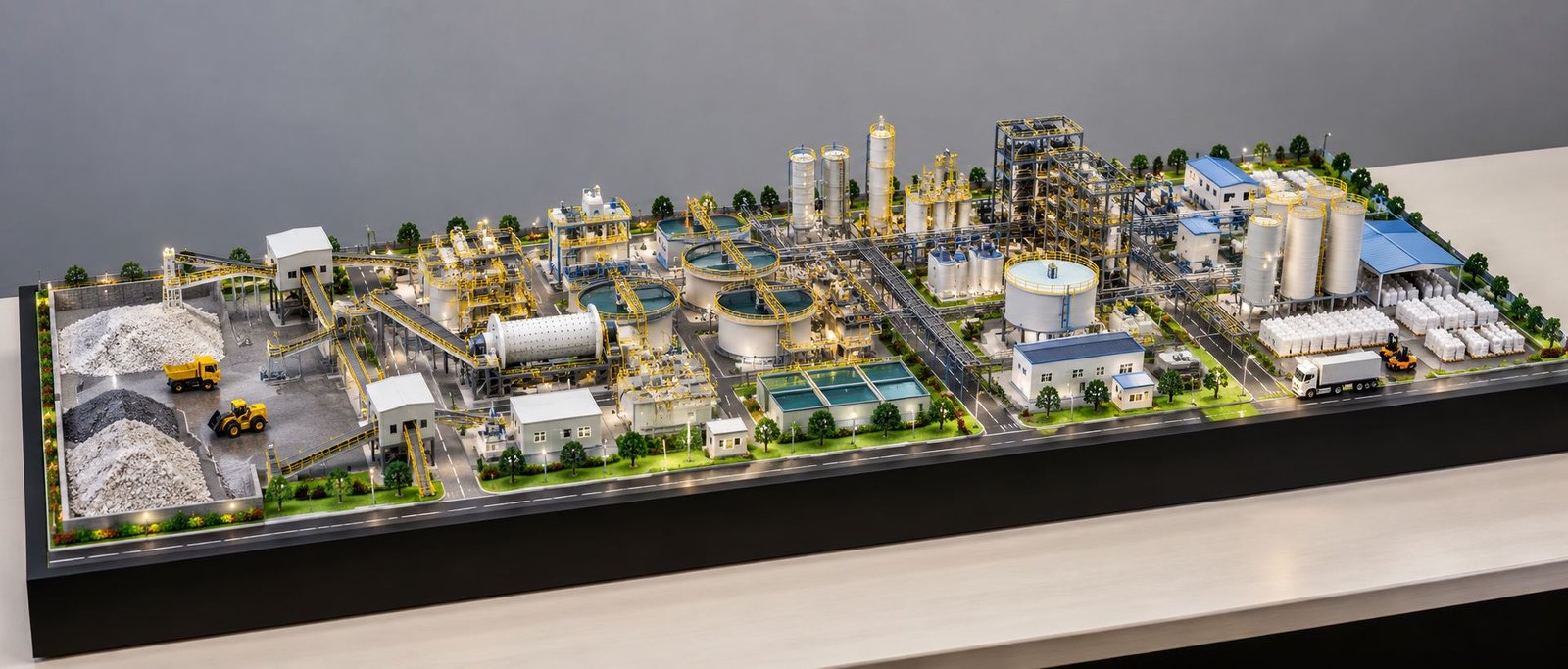
PAL Design Models creates customised physical scale models for industrial, architectural, and engineering projects. For a lithium processing facility, the model can include processing equipment, conveyors, storage tanks, pipe racks, industrial buildings, material handling systems, utility structures, and internal roads.
The final design depends on the available engineering drawings, plant layout, equipment references, and project requirements. Therefore, each model should reflect the actual facility rather than follow a generic industrial arrangement.
What Is a Lithium Processing Plant Model?
A lithium processing plant model represents a facility that processes lithium-bearing raw materials into an intermediate or refined product. Depending on the project, the plant may process hard-rock minerals such as spodumene or extract lithium from mineral-rich brines.
The model shows the physical arrangement of major equipment and supporting infrastructure. For example, it can display raw material receiving areas, crushing units, conveyors, processing buildings, tanks, filtration equipment, storage facilities, and dispatch zones.
Unlike a flat drawing, a physical industrial scale model presents the facility as a three-dimensional miniature. Consequently, viewers can understand the height, position, and relationship of different components from multiple viewing angles.
Companies can use lithium processing plant models for industrial project presentations, engineering reviews, investor meetings, exhibitions, project proposals, corporate displays, and technical training. Furthermore, the model can range from a simple conceptual layout to a highly detailed industrial miniature with platforms, railings, pipelines, structural frames, and realistic surface finishes.
Importance of Industrial Scale Model Making
Lithium processing facilities often contain several interconnected buildings, complex machinery, storage systems, and utility networks. As a result, technical drawings alone may not communicate the entire project effectively to every audience.
A physical industrial model brings the main components together in one view. In addition, it helps teams discuss the arrangement of different plant sections.
Clear Visualization of the Plant Layout
A detailed lithium processing plant scale model displays the arrangement of major processing areas. For instance, designers can show crushing equipment near the material receiving zone and position storage facilities close to the relevant handling areas.
Moreover, the model can display internal roads, access routes, maintenance spaces, and supporting buildings. This arrangement helps viewers understand the facility’s overall organisation.
Improved Communication Between Project Teams
Engineers, project managers, contractors, consultants, and investors may have different levels of technical knowledge. However, a physical model gives everyone a common visual reference.
Teams can identify major plant sections, discuss equipment placement, and review the proposed layout more easily. Consequently, the model supports clear communication during presentations and design discussions.
Professional Industrial Project Presentations
A professionally crafted lithium processing plant model can become the main visual feature of a project presentation. Its three-dimensional details attract attention while helping viewers understand the facility’s scale and complexity.
Furthermore, companies can display the model at exhibitions, in meeting rooms, or inside corporate visitor centres. As a result, the model can support both short-term presentations and long-term corporate displays.
Better Understanding of Equipment Relationships
A physical model can show how conveyors connect different processing areas, where tanks sit in relation to process buildings, and how vehicles access loading zones.
However, the model serves as a visual communication tool rather than a replacement for engineering calculations, construction drawings, or process simulations.
Types of Lithium Processing Plant Models
Different lithium facilities require different equipment and layouts. Therefore, the model design should reflect the raw material, processing technology, project scope, and intended use.
Hard-Rock Lithium Processing Plant Model
Hard-rock lithium facilities process lithium-bearing minerals extracted from geological deposits. Their layouts may include ore receiving, crushing, screening, grinding, separation, concentrate handling, and storage areas.
A physical model may feature ore receiving zones, primary and secondary crushers, vibrating screens, grinding mills, conveyor networks, mineral separation equipment, concentrate storage areas, dust collection systems, maintenance workshops, and utility buildings.
In addition, these elements help viewers understand how the facility organises material handling and processing operations.
Spodumene Processing Plant Model
Spodumene is an important lithium-bearing mineral used in hard-rock lithium production. Depending on the process design, a spodumene facility may include crushing, grinding, separation, and concentrate storage sections.
Furthermore, a plant that includes downstream chemical conversion may require additional buildings, reactors, tanks, filtration units, and product handling systems.
The model maker should follow the supplied engineering drawings to represent the correct equipment arrangement. Consequently, the final model can reflect the specific project rather than a standardised plant layout.
Lithium Brine Processing Plant Model
Lithium extraction from brine follows a different route from conventional hard-rock processing. Depending on the technology, the facility may include brine collection systems, pumping stations, pipelines, pretreatment equipment, separation units, and chemical processing areas.
Some projects also use evaporation ponds, storage tanks, and dedicated transfer infrastructure. Meanwhile, facilities that use direct lithium extraction may require a different arrangement of equipment.
Therefore, the model should reflect the actual extraction technology selected for the project.
Lithium Refining Plant Industrial Model
Lithium refining facilities process suitable feed materials to produce refined lithium compounds or intermediate products. Depending on the process route, the plant may contain reaction vessels, mixing tanks, heating equipment, filtration systems, crystallizers, dryers, and packaging areas.
A lithium refining plant model can highlight these major components while maintaining a clear and balanced overall layout. Moreover, carefully arranged equipment makes the miniature easier to understand during presentations.
Lithium Carbonate Production Plant Model
Lithium carbonate plays an important role in the lithium battery supply chain. A model of a lithium carbonate production facility may include reaction and purification sections, precipitation tanks, filtration equipment, drying units, storage silos, and packaging areas.
In addition, the model can represent access roads, utility buildings, and product dispatch zones. However, the final arrangement should follow the actual plant design because not every lithium facility produces lithium carbonate.
Lithium Hydroxide Production Plant Model
Lithium hydroxide is another important material used in battery manufacturing. A lithium hydroxide production plant model may feature process buildings, reaction equipment, purification units, crystallization systems, dryers, storage facilities, and packaging areas.
Consequently, this type of industrial scale model suits projects involving lithium chemical conversion and downstream material production.
Key Components of a Lithium Processing Plant Scale Model
A realistic industrial model requires careful detailing of the main structures and their relationships. The following components can be included according to the client’s drawings and project specifications.
Raw Material Receiving Area
The raw material receiving section usually connects with the site’s material handling route. It may contain unloading bays, hoppers, stockpiles, and transfer conveyors.
For hard-rock facilities, miniature ore piles and receiving equipment help illustrate the initial stage of the process. Additionally, clear positioning of these elements helps viewers identify the material entry point.
Crushing and Screening Section
Crushing and screening equipment reduces material size and separates particles according to process requirements. These units may include crushers, vibrating screens, transfer chutes, support frames, and conveyors.
Moreover, adding structural supports, access platforms, and safety railings improves the visual detail of this section. As a result, the model presents a more realistic industrial appearance.
Grinding and Mineral Separation Equipment
Some hard-rock facilities require grinding mills and mineral separation equipment. The model can include grinding units, separation machines, structural frames, platforms, and access ladders.
However, the equipment selection should match the project’s mineral processing flowsheet rather than an assumed configuration.
Conveyor Belt and Material Handling System
Conveyors transport raw materials, intermediate products, or finished materials between plant sections. A detailed model can feature elevated conveyor structures, support legs, transfer towers, chutes, and protective covers.
Correct conveyor routing is particularly important because it helps viewers understand the connection between processing areas. Furthermore, realistic support frames improve the overall industrial detailing.
Processing Tanks and Reactors
Chemical processing facilities may use tanks, reactors, and mixing vessels. The model can represent these components with miniature cylindrical structures, support frames, access platforms, ladders, and connected pipes.
In addition, carefully selected colours and surface finishes help distinguish individual equipment units.
Filtration and Separation Area
Filtration and separation equipment supports purification and product recovery in relevant processing routes. The model may feature filter units, separation vessels, pumps, pipelines, and service platforms.
A well-organised layout keeps these components visible without overcrowding the baseboard. Therefore, the design should balance the number of details with the available display area.
Storage Silos and Product Handling
Storage areas may include silos, tanks, warehouses, loading zones, and product packaging facilities. These elements show how the facility stores and prepares materials for dispatch.
For refined lithium products, the model may also include enclosed storage and packaging buildings. Moreover, loading areas can help communicate the plant’s material dispatch arrangements.
Pipe Racks and Utility Networks
Industrial plants require pipes and supporting infrastructure to connect different process areas. A model can display selected process piping, pipe bridges, cable trays, and utility connections.
Different pipe sizes and consistent colours can improve visibility. However, the model should follow the project’s colour legend wherever one is available.
Electrical and Control Buildings
Electrical rooms, substations, and control buildings support plant operations. Including these structures makes the model more complete and shows the supporting infrastructure around the main process equipment.
Internal Roads and Site Development
Internal roads, vehicle access routes, parking spaces, boundary walls, pedestrian paths, and landscaped strips create a realistic industrial environment.
In addition, these details help separate different plant areas and improve the overall presentation.
Design and Detailing of a Physical Lithium Processing Plant Model
A high-quality industrial model requires more than miniature buildings. Its proportions, equipment placement, materials, and finishing must work together.
Wide Layout With Low Overall Height
For website feature images, industrial presentations, and exhibition displays, a wide, low-height model can show a large portion of the facility in one view.
A long rectangular baseboard provides space for processing buildings, tanks, conveyors, storage areas, and roads. Meanwhile, the design can position taller equipment carefully to prevent it from blocking important details.
The final dimensions depend on the plant footprint, selected scale, equipment heights, and display requirements. Therefore, the model maker should determine the proportions after reviewing the project drawings.
Realistic Industrial Equipment
Miniature equipment should have recognisable shapes and appropriate proportions. Cylindrical tanks, structural steel frames, conveyor belts, processing buildings, and machinery platforms help create an authentic industrial appearance.
Where detailed engineering drawings are available, the model maker should use them to guide the dimensions and positioning of each component. As a result, the finished model can better reflect the intended facility.
Accurate Colour Coordination
Industrial models often use neutral building colours, metallic finishes, and selected accent colours. White, grey, steel, blue, and yellow safety details can create a clean, professional appearance.
Moreover, consistent colour coordination helps viewers distinguish the different plant sections without unnecessary visual distractions.
Detailed Baseboard and Site Finishing
The baseboard provides a stable foundation for the miniature facility. A black or dark neutral edge can create a professional finish, while the upper surface can represent concrete yards, paved roads, equipment foundations, and landscaped areas.
The model should have a neat outer edge and a clean presentation. Additional labels or nameplates should only appear when the client requests them.
Lighting and Visual Presentation
Optional miniature LED lighting can highlight selected buildings, roads, processing units, and site boundaries. However, the lighting should improve visibility rather than overpower the equipment details.
For photography, a clean background and a slightly elevated viewing angle help viewers see more of the plant layout. Consequently, the model can work effectively in both presentations and website imagery.
Materials Used in Lithium Processing Plant Model Making
Material selection depends on the model’s scale, complexity, display requirements, and budget.
Acrylic and Transparent Materials
Acrylic can create transparent enclosures, display covers, protective panels, and selected components that require a smooth finish.
PVC and Sheet Materials
PVC sheets and similar modelling materials can form miniature buildings, platforms, walls, equipment housings, and structural details.
Metal Components
Thin metal elements can represent railings, ladders, support structures, frames, and other components that require a fine appearance or additional strength.
3D-Printed Components
3D printing can produce complex miniature equipment, unusual fittings, custom machine housings, and small components that conventional fabrication may find difficult to reproduce.
Lighting and Electrical Components
Miniature LEDs and wiring can provide optional illumination. The design should conceal wiring as much as practical while maintaining suitable access for maintenance.
Overall, the material selection should balance appearance, durability, fabrication complexity, and the required level of detail.
Industrial Model Making Process for a Lithium Processing Plant
A systematic workflow helps maintain consistency from the initial design through final presentation.
Project Brief and Reference Collection
First, the model-making team reviews the project requirements and intended use. The client may provide plant layout drawings, general arrangement drawings, equipment lists, CAD files, process diagrams, photographs, and site plans.
Next, the team identifies the major structures and the essential visual features that the model must include.
Layout Planning and Scale Selection
The team reviews the plant footprint before selecting an appropriate model scale. The selected scale must fit the facility onto the available baseboard while keeping important equipment details visible.
For a wide industrial complex, the designers should consider the baseboard dimensions and viewing angle together. In addition, they should account for taller structures that may affect visibility.
Digital Planning and Component Development
Where necessary, CAD drawings and digital layouts support the planning of buildings, equipment positions, roads, and structural elements.
The team can also develop custom components separately before assembling them on the baseboard. This approach helps organise the fabrication work.
Fabrication of Buildings and Equipment
Model makers fabricate the buildings, platforms, tanks, machinery, conveyors, and other components according to the approved design.
The fabrication method depends on each element’s size, shape, and complexity. For example, the team may use 3D printing for intricate equipment and sheet materials for building structures.
Assembly and Detailing
Next, the team positions the main structures on the baseboard. Model makers then add conveyors, pipe racks, access roads, support frames, and smaller details according to the plant layout.
Meanwhile, the team checks alignment, visibility, and overall balance throughout the assembly process.
Finishing and Quality Review
Finally, the team checks the model’s stability, proportions, paint finish, equipment placement, and overall appearance. Where applicable, they also inspect lighting and removable display covers.
After the review, the team prepares the completed model for photography, transportation, or installation.
Applications of Lithium Processing Plant Industrial Models
Engineering and Technical Reviews
A physical model helps engineering teams discuss the site arrangement, access routes, equipment positions, and relationships between different processing areas.
However, technical teams should continue to use approved engineering drawings for detailed design decisions.
Investor and Client Presentations
Industrial projects often involve complex infrastructure. Therefore, a detailed physical model can help project developers communicate the facility’s layout to investors, clients, and stakeholders.
Moreover, the three-dimensional presentation can make the proposed development easier to understand.
Industrial Exhibitions
A wide lithium processing plant model can attract attention at industrial exhibitions, trade shows, and technology events. Its physical details allow visitors to examine the facility from different viewing angles.
In addition, a carefully designed baseboard helps present the plant as one complete industrial development.
Corporate Display and Visitor Centres
Companies can display a scale model in reception areas, meeting rooms, technical centres, and visitor facilities. Furthermore, the model can support corporate presentations and explain the scope of an industrial project.
Technical Training and Education
A model can help students and technical teams recognise major plant sections. For example, instructors can use it to explain material handling, equipment placement, and the overall organisation of an industrial facility.
On the other hand, a presentation model does not replace detailed engineering drawings or process calculations.
Project Development Proposals
During the planning stage, a physical model helps communicate the proposed appearance and arrangement of an industrial development. Its accuracy depends on the quality and maturity of the supplied design information.
Factors That Affect the Cost of a Lithium Processing Plant Model
The cost of a lithium processing plant scale model depends on several project-specific factors.
These include the overall baseboard dimensions, selected model scale, number of buildings and processing units, complexity of machinery and pipework, level of equipment detailing, use of custom 3D-printed components, lighting, baseboard finish, display enclosure, drawing availability, packaging, and transportation.
For example, a basic conceptual model usually requires less fabrication than a highly detailed industrial miniature. Similarly, complex pipe racks, realistic conveyors, custom machinery, and integrated lighting increase the amount of work involved.
Therefore, clients should share the plant layout, approximate dimensions, reference images, required scale, and intended display purpose when requesting a quotation.
Why Choose PAL Design Models for Industrial Model Making?
PAL Design Models creates customised physical scale models for architectural, industrial, engineering, and infrastructure projects. For a lithium processing facility, the team can develop a model that reflects the project’s layout and presentation requirements.
The design can include processing equipment, industrial buildings, storage systems, conveyors, pipelines, access roads, and supporting infrastructure based on the available references.
Furthermore, a project-specific approach helps maintain the relationship between the main plant sections and the surrounding facilities. It also allows the team to plan the model for a particular exhibition stand, meeting room, corporate display, or project presentation.
The objective is to produce a physical representation that looks professional, communicates the facility’s layout clearly, and meets the intended display requirements.
To discuss a lithium processing plant model, share the available plant layout, equipment drawings, reference photographs, approximate model dimensions, and required level of detail.
Visit the website: https://paldesignmodels.com/
Frequently Asked Questions
What is a lithium processing plant industrial model?
A lithium processing plant industrial model is a physical miniature representation of a lithium extraction, mineral processing, or refining facility. It can show equipment, buildings, conveyors, tanks, pipelines, roads, and supporting infrastructure.
What details can a lithium processing plant scale model include?
Depending on the project, the model can include crushers, screens, grinding equipment, conveyors, processing tanks, reactors, filtration units, storage silos, warehouses, pipe racks, utility buildings, and internal roads.
Can the model have a wide and low-height layout?
Yes. A long rectangular baseboard can accommodate a wide industrial layout with a relatively low overall profile. The final proportions depend on the plant footprint, equipment heights, selected scale, and display requirements.
Can you make the model according to CAD drawings?
Yes. CAD drawings, plant layouts, general arrangement drawings, equipment details, and reference photographs can guide the model’s design. The accuracy depends on the quality and completeness of the supplied information.
Can the lithium processing plant model include lighting?
Yes. Optional miniature LED lighting can highlight selected buildings, roads, equipment areas, and site boundaries. Clients should discuss lighting requirements during the design stage.
How much does a lithium processing plant model cost?
The price depends on the dimensions, scale, number of components, equipment complexity, material selection, lighting, and finishing requirements. A project-specific quotation can follow a review of the available drawings and specifications.
How long does it take to make an industrial lithium plant model?
The production timeline depends on the model’s dimensions, design complexity, drawing availability, fabrication requirements, and approval process. The model-making team can estimate the schedule after reviewing the project scope.
Who can use a lithium processing plant model?
Mining companies, lithium processors, engineering consultants, EPC contractors, industrial developers, equipment manufacturers, investors, and educational institutions can use these models for presentations, planning discussions, exhibitions, and technical communication.
Conclusion
A Lithium Processing Plant Industrial Model provides an effective way to present the layout and major components of a complex lithium processing facility. From raw material handling and mineral separation to chemical processing, storage, and supporting utilities, a detailed physical model brings the important plant elements together in one clear, three-dimensional representation.
The best results combine an appropriate scale, a well-planned rectangular baseboard, realistic equipment detailing, accurate component placement, and professional finishing. Moreover, the model should reflect the actual project requirements rather than rely on a generic industrial arrangement.
PAL Design Models can develop customised industrial scale models based on available engineering drawings, plant layouts, and reference material. As a result, a carefully designed lithium processing plant model can support technical presentations, industrial exhibitions, project proposals, and corporate displays while communicating the facility’s overall layout professionally.