3D Printed Industrial Model: Design, Materials, Features and Manufacturing
A 3D printed industrial model is a physical replica of an industrial plant, factory, processing facility, or engineering project. It helps architects, engineers, manufacturers, clients, and project teams understand a complete industrial layout in a simple and visual way.
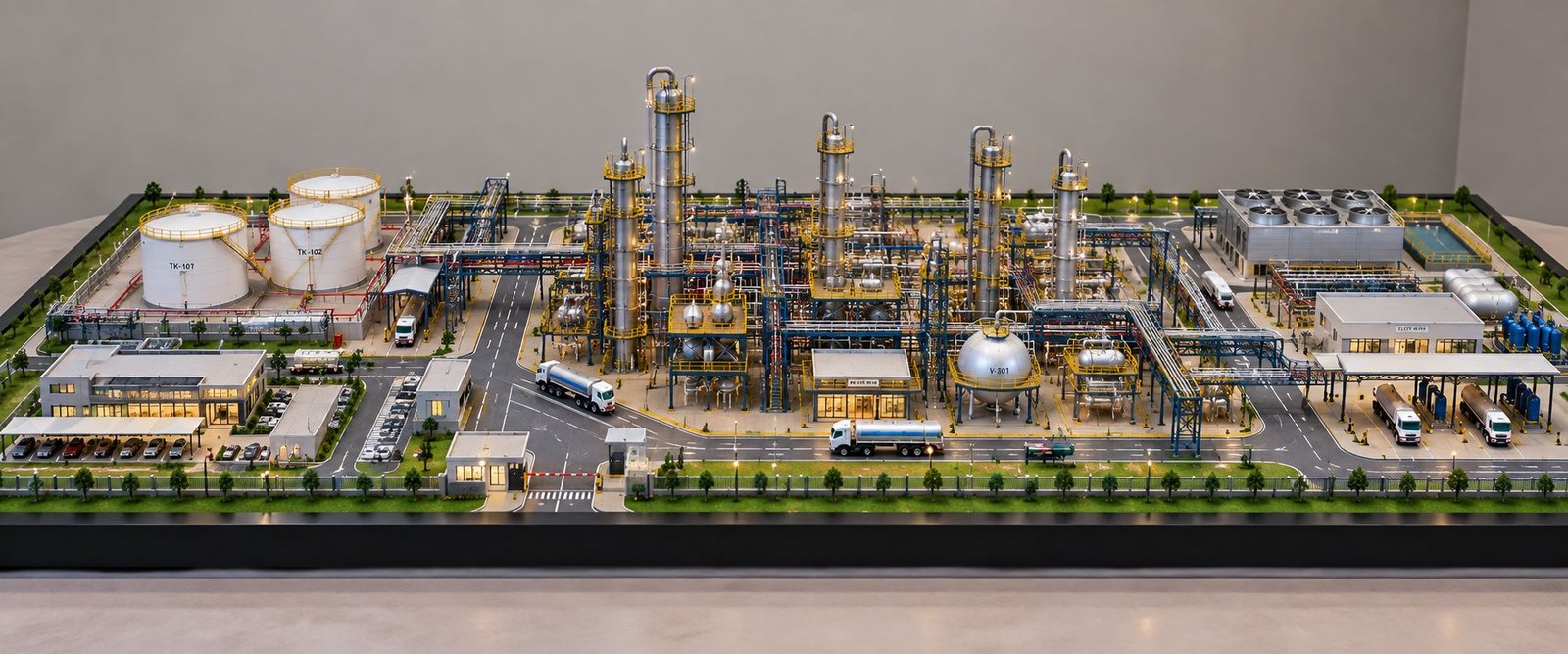
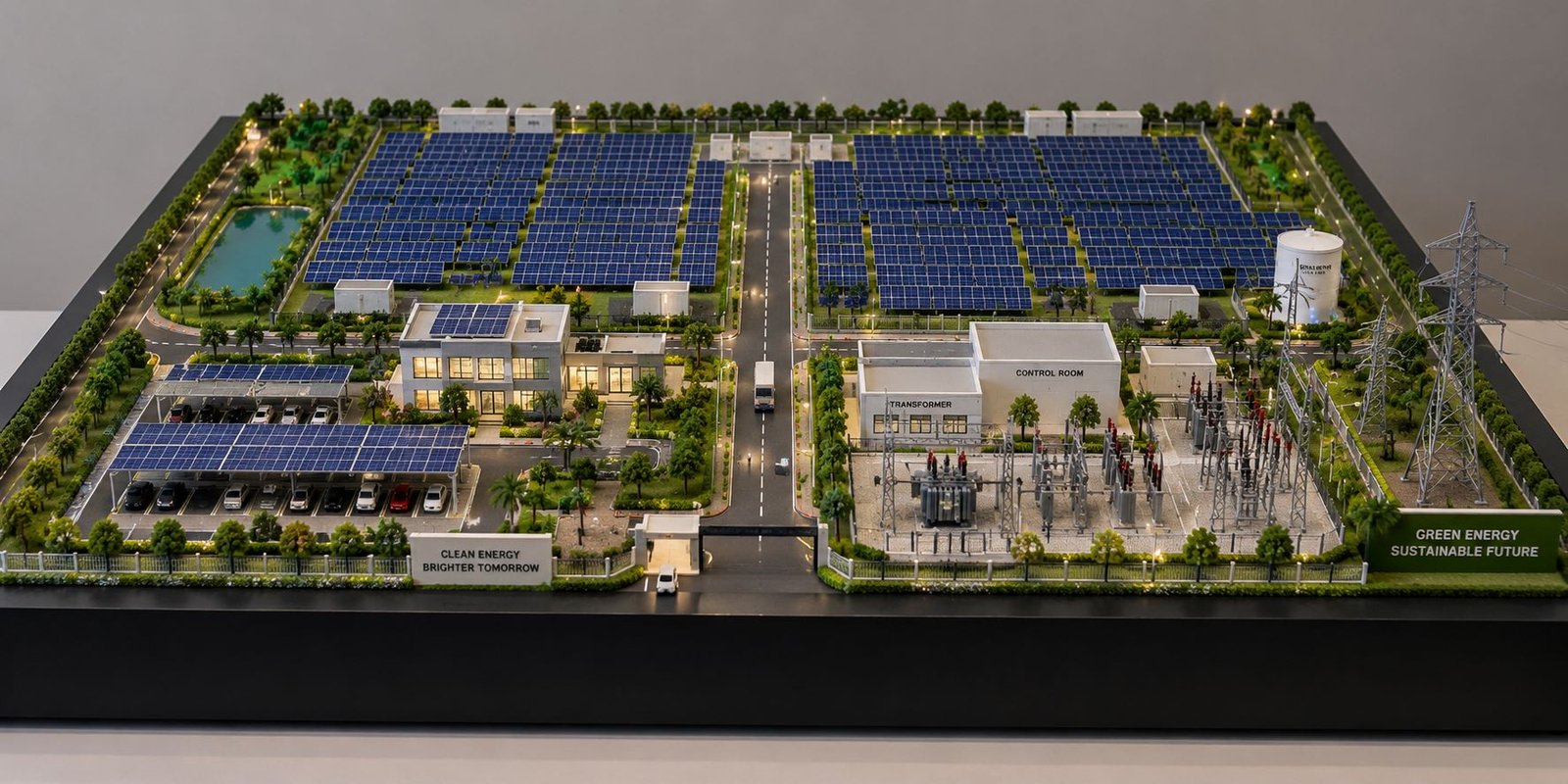
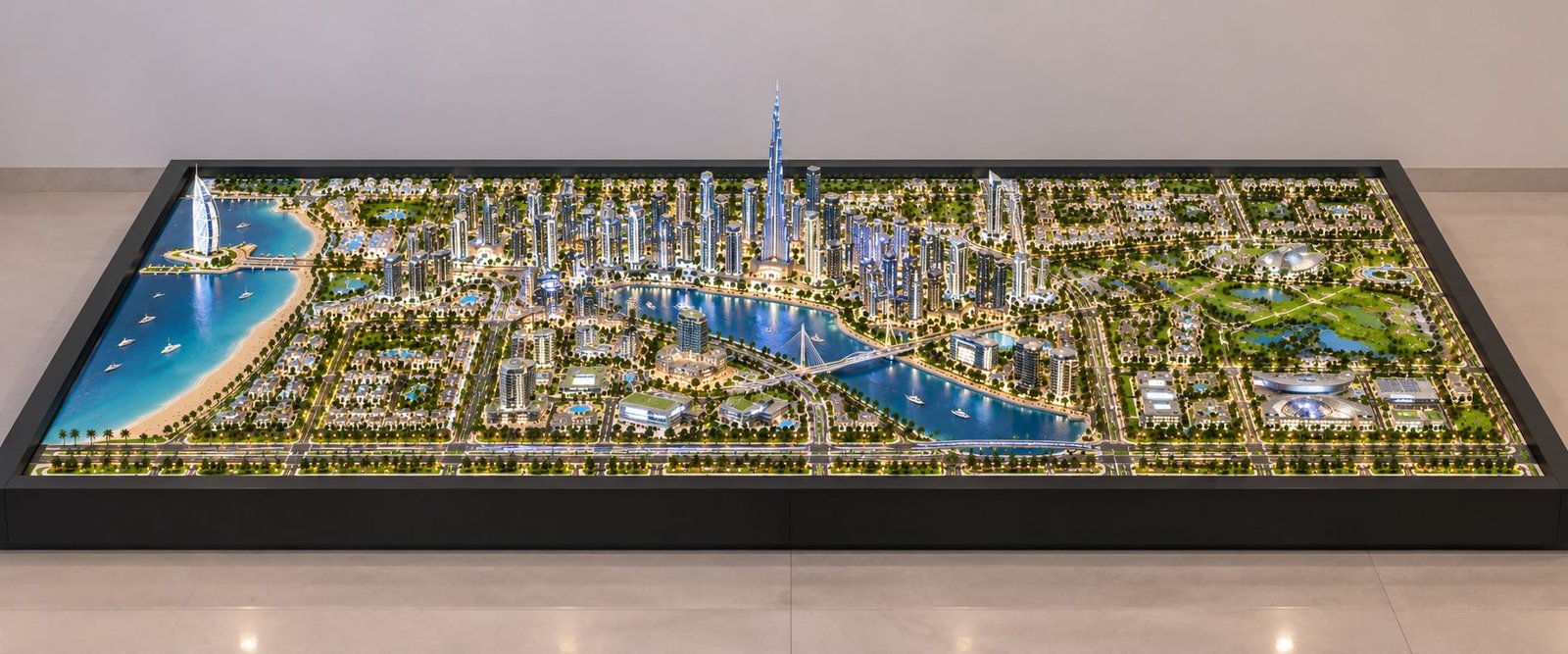
The industrial model presented here shows a detailed plant made with 3D printing technology. It includes industrial equipment, storage tanks, processing units, pipe networks, platforms, structures, buildings, roads, landscaping, and other site details. Together, these parts form a complete industrial facility.
One major feature of this model is its 3D printed construction. The industrial components use filament and resin based on their size and level of detail. Meanwhile, the main baseboard uses wood, while acrylic supports selected presentation elements.
3D Printed Industrial Model Overview
A 3D printed industrial model is a scaled physical replica of an industrial facility. It uses additive manufacturing to turn a digital 3D design into physical components.
First, the designer prepares the components digitally. Next, a 3D printer makes each part layer by layer. After printing, the model maker assembles the individual parts to form the complete industrial layout.
For example, an industrial model can represent:
- Storage tanks
- Processing equipment
- Industrial buildings
- Pumps
- Pipe networks
- Processing towers
- Platforms
- Stairs
- Railings
- Equipment supports
- Cooling equipment
- Control rooms
- Roads
- Boundary structures
- Vehicles
- Landscape elements
As a result, this process can show a complex industrial project as a detailed physical model.
The Production of This Industrial Model
The production of a 3D printed industrial model includes several stages. Each stage helps create an accurate and organized final model.
Digital 3D Design
The process begins with the digital design of the industrial facility.
Each building, machine, tank, pipe, platform, and other component needs a specific scale. By creating individual parts, the model maker can print and assemble them more easily.
In addition, digital design makes changes easier. If a component needs an update, the designer can change that specific part instead of adjusting the complete model.
Preparation of Individual Components
An industrial plant consists of many different components. Therefore, printing the complete plant as one piece may not be practical.
Instead, the model maker divides the plant into individual printable parts. Large components can use separate sections, while smaller parts can have their own digital designs.
This method also supports easier assembly. Moreover, it gives the model maker better control over the finishing of each component.
3D Printing
Once the components have a digital design, the model maker selects a suitable printing method for each part.
For example, filament printing works well for larger components, while resin printing suits smaller parts with fine details.
After selecting the method, the printer produces each component according to the required size and scale. The finished parts then move to the post-processing stage.
Post-Processing
Some components need additional finishing after printing.
Depending on the printing method, this work can include:
- Removing support material
- Cleaning the printed components
- Sanding selected surfaces
- Checking dimensions
- Applying primer
- Painting components
- Adding finishing details
After finishing, the model maker assembles the components according to the industrial layout.
The tanks, machinery, pipe networks, buildings, platforms, towers, and other elements need the correct positions. In this way, the complete arrangement shows the relationship between different areas of the industrial facility.
Materials Used in This 3D Printed Industrial Model
Material selection is an important part of industrial model making. The model maker can select a suitable material based on the size, shape, strength, and detail needed for each component.
For this model, the main industrial components use 3D printing filament and resin. Meanwhile, the supporting baseboard uses wood, while acrylic can support selected base or presentation elements.
3D Printing Filament
Filament is one of the most common materials for FDM or FFF 3D printing.
A 3D printer feeds continuous plastic filament into the printer head. The machine then places the material layer by layer to create the required component.
Common filament materials include:
- PLA
- ABS
- PETG
- ASA
- TPU for flexible applications
For architectural and industrial model making, PLA works well for larger and simple components. It is also easy to print and can provide clean results.
Filament printing can be used for:
- Large tanks
- Buildings
- Equipment housings
- Structural components
- Platforms
- Supports
- Large pipe sections
- Machinery bodies
Therefore, filament provides a useful option for many larger components of an industrial model.
3D Printing Resin
Resin provides another option for 3D printed model components.
The resin printing process uses liquid photosensitive resin. During printing, the machine cures the material layer by layer to create the required component.
Resin printing works especially well for small parts that require fine details.
It can be used for:
- Small industrial equipment
- Detailed fittings
- Small valves
- Miniature machinery
- Pipe connections
- Small structural components
- Detailed accessories
In addition, resin printing can provide smooth surfaces and fine details for small industrial model components.
Using Filament and Resin 3D Printing Technology
A detailed industrial model does not need to rely on only one printing method. Instead, the model maker can select filament or resin for each component.
For instance, larger parts can use filament printing, while smaller parts can use resin printing. This combination provides more flexibility during production.
As a result, each component can use a suitable printing method based on its size and detail requirements.
Wooden Baseboard
The wooden baseboard provides the main foundation for the industrial model.
It supports the printed plant components and defines the overall site boundary. In addition, the baseboard can include roads, landscaping, fencing, entry areas, and other supporting elements.
Furthermore, the wooden base makes the completed model easier to transport and display.
Acrylic Elements
Acrylic can also form part of the base or presentation structure.
It provides a clean appearance and works well when a transparent element is required. However, the main industrial components in this model remain 3D printed using filament and resin.
Therefore, wood and acrylic mainly support the baseboard and presentation structure.
Major Components of This Industrial Model
An industrial model does more than show individual machines. It also explains how different components connect and work together within the overall site layout.
Storage Tanks
Storage tanks are important elements in many industrial facilities.
A 3D printed tank can include a cylindrical body, legs, top components, pipe connections, and other structural details. Its location within the plant also helps show the equipment layout.
Processing Towers
Processing towers add a vertical element to an industrial plant.
A detailed 3D printed tower can include multiple platforms, access stairs, railings, pipes, equipment sections, and structural supports.
Because these parts can be small and detailed, 3D printing helps create them at the required scale.
Pipe Networks
Pipe networks are some of the most detailed components of an industrial model.
They connect different pieces of equipment and show the relationship between various processing areas.
A detailed scale model can include:
- Main pipelines
- Pipe connections
- Vertical pipes
- Pipe bends
- Supports
- Fittings
- Equipment connections
Moreover, 3D printing allows the model maker to create these components according to the required layout and scale.
Pumps and Machinery
Pumps and machinery provide important technical details to an industrial model.
The model maker can print these parts separately and place them near tanks, processing equipment, and pipe networks. For smaller machinery and detailed fittings, resin printing can provide useful results.
Platforms, Stairs and Railings
Many industrial facilities use platforms and access structures.
A scale model can include:
- Platforms
- Stairs
- Ladders
- Railings
- Walkways
- Equipment supports
Although these components are small, they add useful detail to the complete model. At the same time, they provide insight into access areas within the industrial facility.
Cooling Equipment
Cooling equipment can form an important part of an industrial facility.
The model can include cooling towers, fans, supporting structures, pipes, and related equipment. Together, these parts can show different functional areas of the plant.
Industrial Buildings
Industrial buildings can vary according to the function and layout of the facility.
They can include:
- Control rooms
- Pump houses
- Production buildings
- Maintenance areas
- Storage structures
- Utility buildings
3D printing can create these structures according to the required design and scale.
3D Printed Industrial Model Advantages
3D printing allows the model maker to produce complex industrial components with controlled dimensions and detailed shapes.
Accurate Digital Production
The process begins with a digital design. Therefore, the model maker can create individual components with controlled dimensions and repeatable shapes.
Detailed Components
The model maker can design and print many small components with the required level of detail.
For example, this feature works well for pipe fittings, machinery, railings, platforms, and small industrial equipment.
Custom Manufacturing
Every industrial facility can have a different layout.
Because of this, 3D printing allows the model maker to produce components with specific characteristics instead of relying on standard model-making parts.
Easy Design Changes
Digital components can change when the project requires updates.
For example, if one component needs a change, the model maker can update that part instead of redesigning the complete physical model.
Consistent Components
Some industrial facilities require multiple similar components.
A single digital design can produce identical parts. In this way, the model maker can maintain consistency across the complete model.
Importance of Scale in Industrial Model Making
Scale plays an important role in industrial model making. Industrial facilities contain equipment of many different sizes, so the model needs a consistent relationship between these elements.
For example, a large storage tank, small pump, building, vehicle, and pipe should all follow the same scale.
A properly scaled industrial model gives viewers a clearer understanding of:
- Equipment size
- Plant layout
- Equipment spacing
- Building relationships
- Access routes
- Pipe connections
- Overall site planning
Therefore, the correct scale makes the physical model easier to understand.
Industrial Model Baseboard and Site Planning
The baseboard provides the foundation for the complete industrial layout.
The wooden baseboard can include various site elements around the 3D printed plant components.
These elements can include:
- Internal roads
- Main entrance
- Security gate
- Walkways
- Parking areas
- Boundary fencing
- Green areas
- Landscaping
- Equipment zones
- Service areas
Together, these details show how the industrial facility relates to the surrounding site.
Applications of a 3D Printed Industrial Model
A 3D printed industrial model can support a variety of professional applications.
Engineering Presentations
Engineers can use a physical model to explain complex plant layouts to clients, management teams, and other stakeholders.
The physical format makes equipment positions and their relationships easier to view. As a result, technical discussions become easier to follow.
Project Planning
A scale model can support project planning by showing the relationship between equipment, buildings, access routes, and other site areas.
In addition, it provides a physical reference when teams discuss the entire layout.
Client Demonstrations
A physical model can help clients understand a proposed industrial project when technical drawings are difficult to visualize.
As a result, the model can make project discussions more direct and easier to understand.
Exhibition Displays
Detailed industrial models can also appear in exhibitions, offices, engineering events, showrooms, and corporate spaces.
Furthermore, their physical form allows visitors to view the entire project from different angles.
Educational Use
Industrial models can help students and trainees understand plant layouts, equipment relationships, and industrial environments.
They can also provide a clear visual reference for learning about different industrial components.
Benefits of a Fully 3D Printed Industrial Model
One key benefit of this approach is the ability to create individual industrial components using 3D printing technology.
The use of both filament and resin provides flexibility for different component sizes and detail levels. Filament works well for many larger components, while resin supports smaller parts that need fine details.
At the same time, the wooden baseboard provides a stable foundation. Acrylic can support selected presentation elements.
Together, these materials create a detailed physical industrial model while keeping the main plant components focused on 3D printed production.
What Makes This 3D Printed Industrial Model Special?
The major feature of this model is its detailed 3D printed construction.
Rather than using conventional handmade materials for the main industrial components, the model uses digital 3D modeling and printing technology to produce tanks, equipment, structures, pipe networks, buildings, platforms, and other parts.
Each component can first receive a digital design. Then, the model maker can print it according to the required scale.
As a result, the finished model combines 3D modeling, filament printing, resin printing, detailed assembly, and professional baseboard presentation.
Final Thoughts
A 3D printed industrial model provides an effective way to present a complex industrial facility in a physical and easy-to-understand format. It combines digital design with physical model making to represent industrial equipment, structures, buildings, pipe networks, roads, and site elements.
For this type of model, filament and resin serve as the primary 3D printing materials for the industrial components. Filament can handle larger parts, while resin works well for smaller components that require a higher level of detail.
The wooden baseboard provides the main foundation, while acrylic can support selected presentation elements. Most importantly, the industrial components remain focused on 3D printed production.
With detailed equipment, tanks, processing towers, pipe networks, platforms, machinery, buildings, and site planning elements, this type of model can clearly communicate the structure and layout of an industrial project.
Overall, 3D printing offers a flexible and detailed approach to industrial model making. Therefore, this type of model can support engineering presentations, project planning, client demonstrations, exhibitions, educational use, and professional industrial displays.