Solar Power Plant Model: Solar Energy, Engineering Plan and Power Infrastructure
Introduction
A solar power plant brings many systems together in one large project. These systems include solar panels, roads, control facilities, electrical equipment, transmission lines, parking areas, and green spaces.
However, it can be difficult to understand all these parts through drawings alone. A detailed Solar Power Plant Model gives a clear three-dimensional view of the complete project.
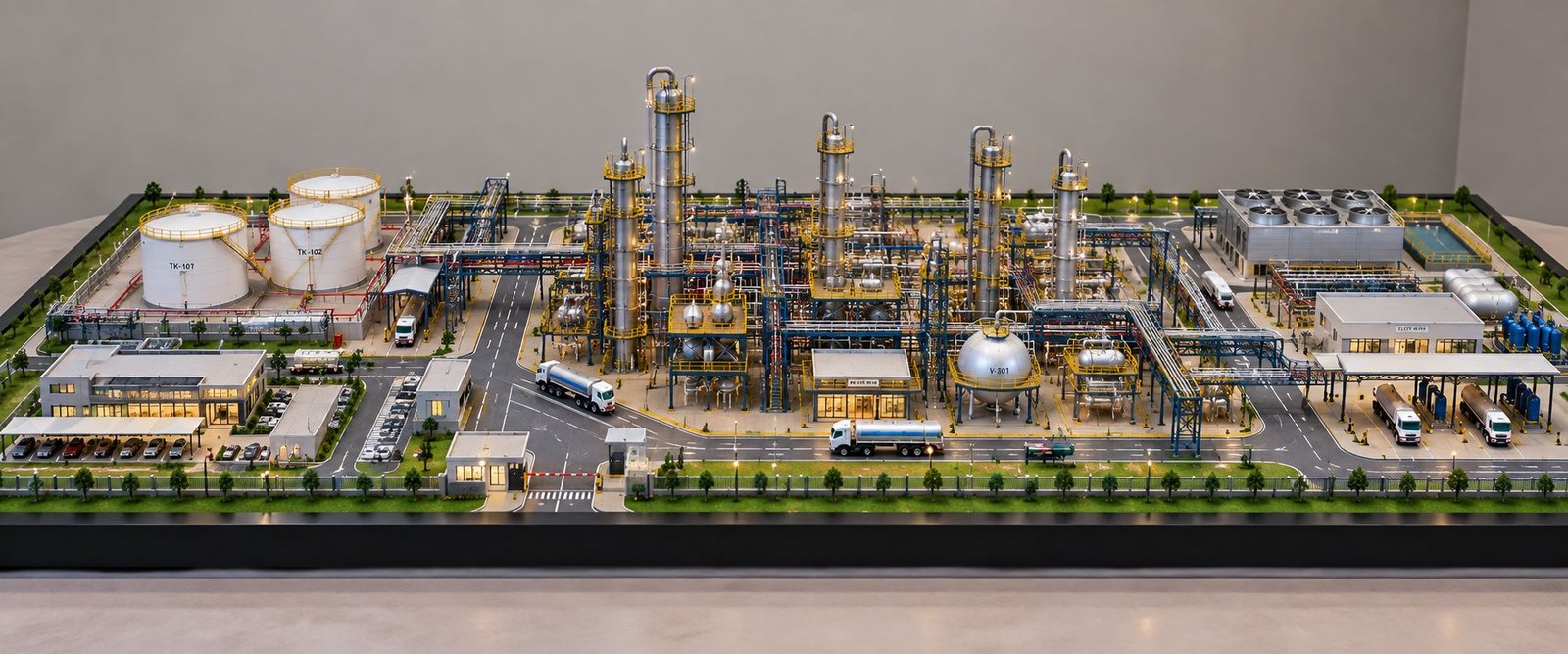
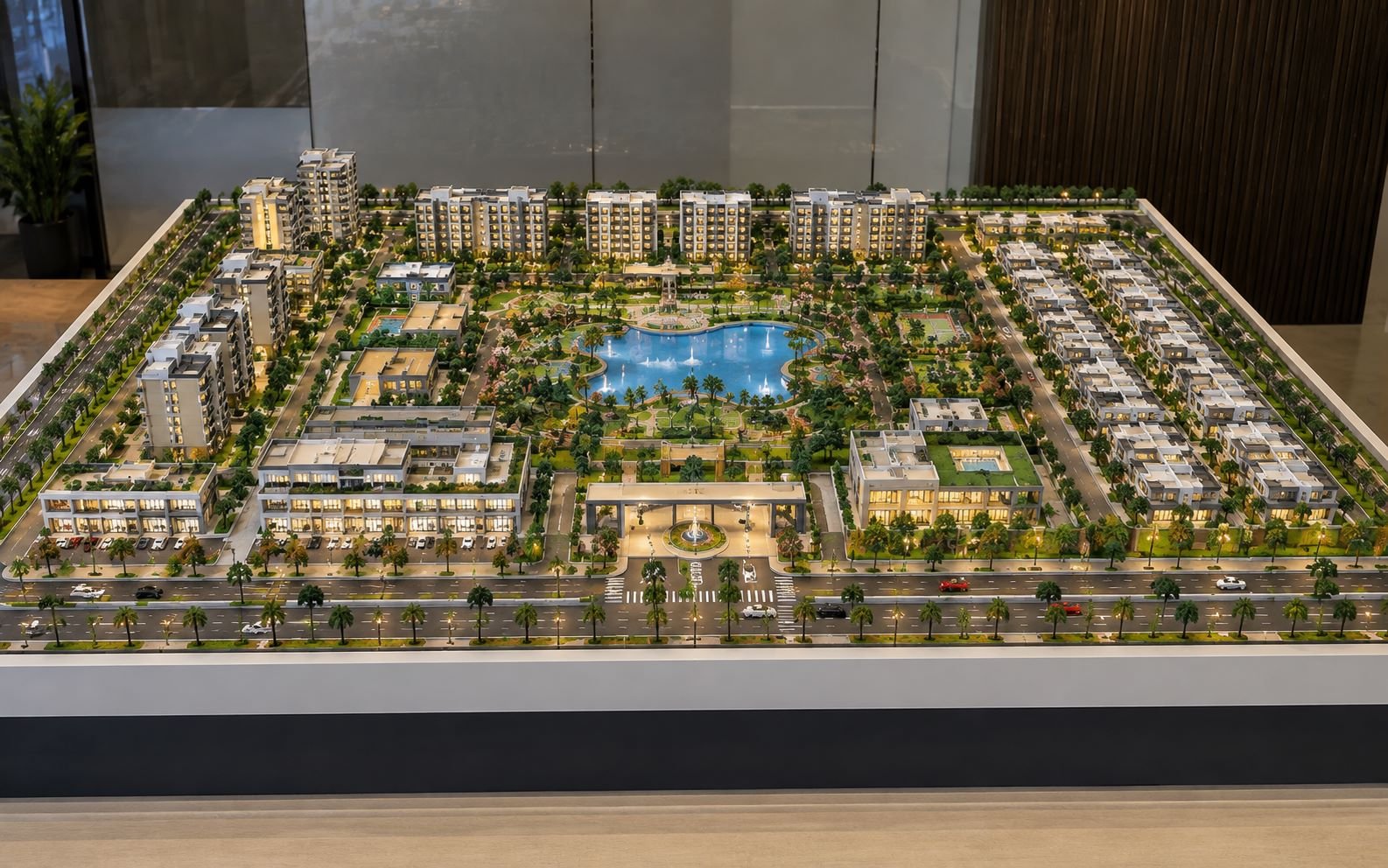
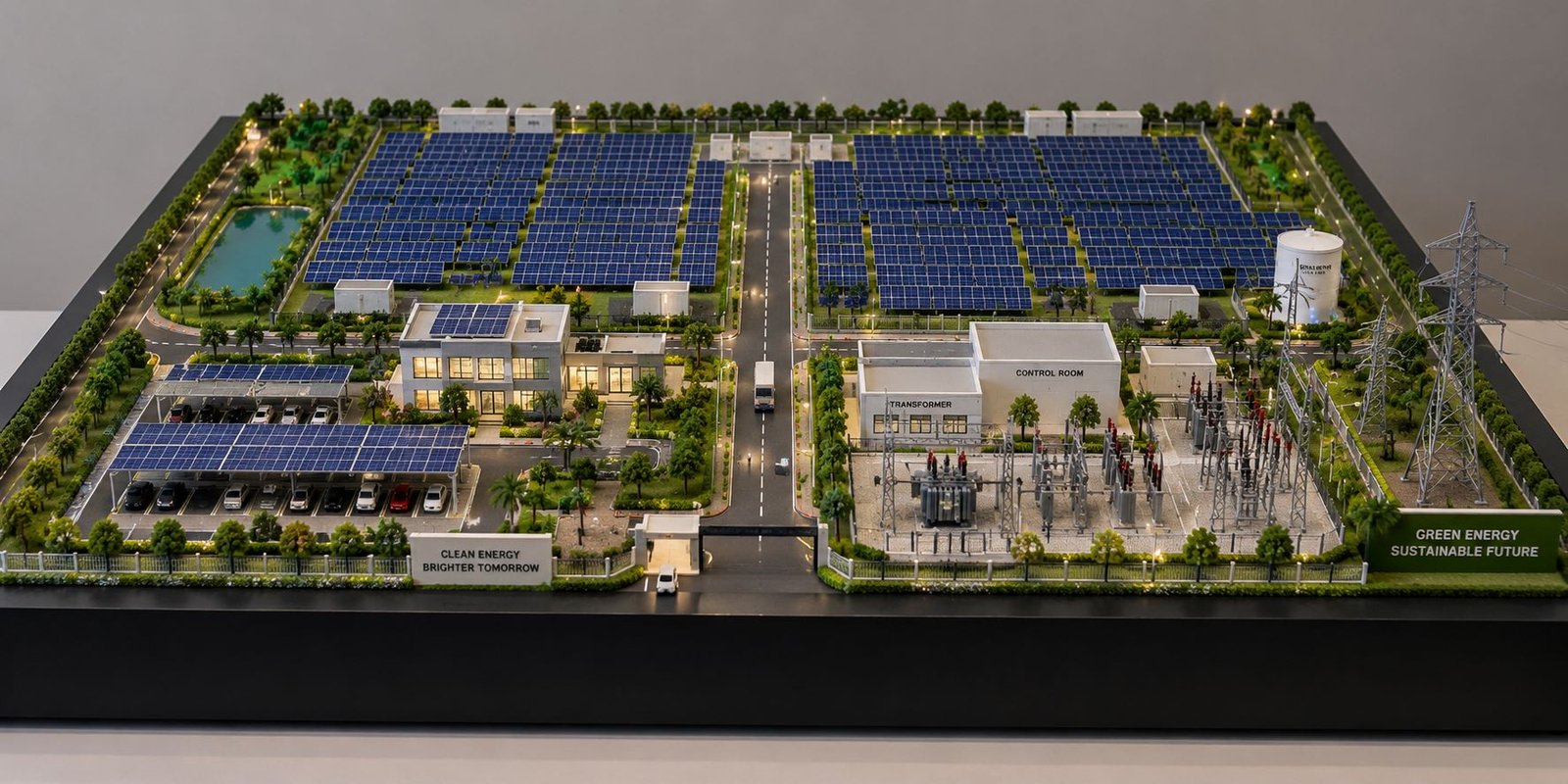
The featured model shows a large solar energy facility with a well-organized layout. First, the main solar panel fields cover a large part of the site. Then, internal roads divide the panel areas and connect different sections.
In addition, the model includes a solar parking structure. The project also shows a control building, transformer area, electrical substation, transmission towers, water storage, green spaces, access roads, and supporting facilities.
As a result, the model gives a complete view of the solar power plant rather than showing only the solar panels.
A detailed Engineering Model can help explain this type of large renewable energy project. It can also support project presentations, design reviews, client meetings, exhibitions, and technical displays.
Understanding the Solar Power Plant Model
A solar power plant model shows the complete physical layout of a solar energy project.
Instead of focusing only on the panels, the model presents the full development. Therefore, viewers can see the generation area, roads, buildings, electrical systems, parking, landscape, and transmission facilities together.
The main generation zone contains a large number of solar panels. These panels follow an organized layout across the site.
At the same time, internal roads divide the solar field. These roads also provide access to different parts of the plant.
Main Elements of the Model
The complete model includes:
- Solar panel fields
- Internal access roads
- Control room
- Transformer area
- Electrical substation
- Power transmission towers
- Parking area
- Solar carport structure
- Water storage
- Green spaces
- Security and boundary areas
- Site entrance
- Supporting buildings
By showing all these elements together, an Industrial Scale Model gives viewers a better understanding of the project layout. In addition, it shows how the main solar generation area connects with the supporting infrastructure.
Large-Scale Solar Panel Arrangement
The solar panel field forms the main part of the development.
The model shows hundreds of miniature panels across the main project area. The panels follow clear rows and blocks. Therefore, viewers can easily see the scale of the solar generation zone.
The panel fields do not appear randomly. Instead, each group follows a planned arrangement. Internal roads separate the different blocks and provide access between them.
This layout makes the large solar field easier to understand. When viewers look at the model from above, they can see the full arrangement of the panel areas.
Furthermore, the electrical facilities appear near the central and outer parts of the development. This creates a clear connection between the solar generation area and the electrical section.
As a result, a Solar Farm Scale Model can show both the size and organization of a solar power plant.
Solar Panel Rows and Site Organization
The arrangement of solar panels has an important role in the project layout.
The model uses many uniform panel blocks to create separate generation zones. Each zone connects with the internal road network.
From the front, viewers can see the solar panel fields divided by roads. These roads also connect the panel areas with the electrical section.
Meanwhile, the upper view gives a wider understanding of the complete solar generation area.
This organization is also important in Solar Engineering Models. The solar generation area, roads, buildings, electrical equipment, and transmission systems need to work together within the site plan.
Therefore, a physical model can show these relationships in one clear view.
Internal Roads and Access Planning
Roads form an important part of a solar power plant.
The featured model includes a central access road that passes through the development. It connects several key areas of the project.
In addition, smaller roads run around the solar panel fields and along the site boundary.
These roads provide access for vehicles and support movement within the plant. They can also support maintenance and inspection activities around the solar field and electrical areas.
At the same time, the road network divides the large solar field into clear sections. This makes the overall project easier to understand.
For an Engineering Scale Model, internal movement is an important part of the complete site plan. Therefore, the road network needs to appear clearly within the model.
Solar Parking Structure
One of the notable features of the model is the parking area with solar panels above the parking spaces.
This feature shows another way to use solar energy within a development.
The solar carport serves two purposes. First, it provides a covered parking area. Second, it provides space for a solar panel installation.
The model shows several vehicles below the solar roof structure. Therefore, viewers can quickly understand the purpose of this area.
In addition, the solar parking structure adds variety to the project. It shows that solar panels can form part of different areas within a planned development.
A Solar Energy Model can therefore show more than a large solar field. It can also explain other possible solar applications.
Control Room and Project Operations
The control room is another important part of the solar power plant model.
A large solar facility needs a dedicated control area for plant operations. The model shows the control building near the main electrical section.
Its location helps viewers understand the link between power generation and electrical infrastructure.
A Power Plant Model can use the control room to explain the operational side of the facility.
Furthermore, the control building creates a clear difference from the large solar panel fields. The building adds another important part to the overall project layout.
As a result, viewers can understand that the solar plant includes several connected facilities rather than only a collection of solar panels.
Transformer Area
The transformer area forms an important part of the electrical section.
The model places the transformer zone near the main electrical infrastructure. The separate area creates a clear division between electrical equipment and other project facilities.
This helps explain the movement from solar power generation toward electrical distribution.
In a Solar Power Plant Engineering Model, the transformer section helps viewers understand this important part of the power system.
Furthermore, its separate position makes the electrical area easy to identify within the complete project.
Power Grid and Electrical Substation
The electrical substation is one of the most detailed areas in the model.
The substation contains electrical equipment that supports the connection with the power grid.
Transmission towers stand close to the substation. Therefore, the model creates a clear visual link between the solar plant and the wider power network.
The model shows the movement from the solar generation area toward the electrical distribution section.
This makes the substation an important feature of an Electrical Engineering Model.
In addition, the electrical equipment creates a strong contrast with the large solar panel fields. This helps viewers identify the different sections of the plant more easily.
Transmission Towers and Power Distribution
Transmission towers form another important part of the project.
The model places these towers near the edge of the development. They represent the connection between the solar plant and the wider power distribution network.
The towers also add height to the model. In contrast, the solar panel fields remain low and spread across large areas.
Therefore, viewers can easily see the difference between the generation area and the transmission section.
A Power Infrastructure Model can use this type of layout to explain the relationship between solar generation, electrical distribution, and the power grid.
Green Spaces and Landscape Planning
The model also includes green areas throughout the development.
Trees, landscaped strips, planted zones, and open green spaces appear around different parts of the project.
These areas create visual separation between the main facilities. For example, green spaces help separate the roads from the solar panel fields.
Similarly, they create a clear difference between the electrical equipment, control building, and other project areas.
In addition, the landscape areas improve the overall presentation of the site. They show that the project includes open areas along with its technical facilities.
Therefore, a Solar Plant Scale Model can present both technical infrastructure and overall site organization.
Water Storage and Supporting Infrastructure
The model includes a water storage facility along one side of the development.
This feature represents another supporting facility within the project.
The water storage sits within the landscaped section and remains separate from the main electrical equipment.
As a result, viewers can identify another function within the solar power plant.
The model therefore goes beyond solar generation and electrical infrastructure. It presents a wider view of the complete project site.
For a Solar Energy Plant Scale Model, such supporting features can help create a more complete representation of the development.
Boundary and Security Planning
The complete development sits within a rectangular site.
A clearly defined boundary surrounds the solar power plant. The model also includes an entrance to the project.
The boundary separates the main development from the surrounding area. At the same time, it helps viewers understand the full extent of the project.
This clear division improves the presentation of an Industrial Scale Model.
Furthermore, the rectangular site makes the complete project easy to understand from different viewing angles.
Lighting and Night-Time Presentation
The model includes miniature lights across several areas.
Lights appear along the internal roads, building facades, and site boundary.
In addition, the lighting highlights the solar panel fields at night. The electrical section and control building also receive visual attention.
As a result, the model creates a clear night-time presentation.
The lights also help separate the foreground, middle section, and background. Therefore, viewers can see more depth within the model.
For a Power Plant Model, miniature lighting can add another level of detail. It can also make the project easier to view during exhibitions and presentations.
Benefits of a Solar Power Plant Model
A detailed solar power plant model offers several benefits for project communication.
Clear Project Understanding
A three-dimensional model lets viewers see the complete development in one view.
They can identify the solar panel fields, internal roads, buildings, electrical equipment, parking area, landscape, and transmission towers.
Therefore, viewers can understand the overall site arrangement more easily.
Easier Technical Explanation
Engineering details can become difficult to explain through two-dimensional drawings.
However, a physical model provides a clear visual reference. Project teams can point to specific areas and explain their functions during meetings.
As a result, technical discussions can become easier to follow.
Better Infrastructure Presentation
The model brings several parts of the solar power plant into one presentation.
Solar panels, roads, electrical facilities, control buildings, parking areas, landscape zones, and transmission systems appear together.
Therefore, viewers can understand the wider infrastructure without looking at many separate drawings.
Improved Client Communication
A physical model can also help explain a project to people without a technical background.
Clients can see the complete layout and understand the relationship between different areas.
In addition, the model gives the project team a common visual reference during discussions.
Useful for Exhibitions
A detailed Solar Energy Scale Model can support project exhibitions and technical displays.
For example, the model can become a central display at engineering events, project openings, and infrastructure presentations.
It can also help visitors understand the project through a simple three-dimensional view.
Supports Design Review
Architects, engineers, planners, and project managers can use the model during design reviews.
They can study the relationship between different areas and discuss the overall arrangement.
Therefore, an engineering model can support both presentation and project discussion.
Engineering Model Applications
The solar plant model has several applications in engineering presentations.
An Engineering Model shows the physical relationship between different parts of a project. It also provides a clear overview of the complete development.
A solar power plant brings together several areas of engineering.
Electrical engineering covers the generation and transmission systems. Meanwhile, civil planning covers roads and site organization.
Architectural planning covers the building structures. In addition, landscape planning covers green spaces and open areas.
A physical model brings these different areas together.
Therefore, Engineering Model Making can support large infrastructure projects that involve several teams and planning areas.
Solar Energy and Sustainable Infrastructure Visualization
The model represents a renewable energy infrastructure project.
The large solar panel fields show the main electricity generation area.
Meanwhile, the electrical infrastructure shows the connection between the generation area and the power grid.
The green areas complete the wider project environment.
Together, these features create a clear view of a modern energy development.
Therefore, a Renewable Energy Model can help explain clean-energy projects, electricity generation facilities, and future infrastructure planning.
Why Detailed Scale Model Making Matters
The quality of an engineering model depends on how much project information it can show.
A simple model may focus only on the solar panel fields. However, a detailed model can show the complete plant.
The featured model includes roads, solar panel fields, parking canopy, control building, transformer area, substation, transmission towers, water storage, landscaping, vehicles, site boundary, and miniature lighting.
Each element adds useful information.
For example, the roads explain movement through the site. The solar panels show the main generation area.
Similarly, the transformer and substation show the electrical section. The transmission towers show the connection with the power grid.
At the same time, the landscape, water storage, vehicles, and boundary complete the site environment.
As a result, Solar Power Plant Model Making can provide a detailed view of the complete infrastructure project.
Solar Power Plant Model for Professional Presentations
A physical solar power plant model can become the main visual element of a professional presentation.
First, the presenter can explain the main solar panel fields.
Next, they can show the internal roads and access routes.
Then, they can explain the transformer and control facilities.
After that, they can move toward the electrical substation and transmission towers to explain the power grid connection.
The presenter can also explain the solar parking structure and its role within the development.
Finally, they can discuss the landscape areas, water storage, and supporting facilities.
Therefore, the model allows the presenter to follow a simple and clear sequence.
The physical model also gives the complete team one common visual reference during the presentation.
Complete Project Visualization
The main strength of the model comes from its complete project view.
The model does not focus on one individual part. Instead, it shows the complete solar power plant in one organized layout.
Viewers can begin with the solar panel fields.
Then, they can follow the internal roads that provide access across the development.
After that, they can move toward the electrical infrastructure and observe the transformer and substation.
Next, the transmission towers show the connection with the power grid.
The parking structure provides another example of solar use within the project.
Meanwhile, the landscape areas, water storage, and supporting facilities complete the development.
Therefore, the viewer can understand how the different parts connect within one complete project.
Conclusion
A detailed Solar Power Plant Model provides a complete three-dimensional view of a large renewable energy development.
The model brings together solar panel fields, internal roads, parking areas, control facilities, transformer zones, electrical substations, transmission towers, green spaces, water storage, and supporting infrastructure.
The large solar panel field forms the main generation area. Meanwhile, internal roads divide the panel fields and provide access across the site.
The solar parking structure shows another way to use solar panels within a development.
The control building represents the operational side of the plant. In addition, the transformer and substation areas explain the electrical infrastructure.
The transmission towers show the connection between the solar plant and the wider power grid.
Furthermore, green spaces, trees, landscaped roads, water storage, vehicles, site boundaries, and miniature lighting complete the physical environment.
Together, these features create a detailed Engineering Scale Model.
Solar Power Plant Model Making, Engineering Model Making, Industrial Model Making, Electrical Engineering Models, Power Infrastructure Models, Renewable Energy Models, and Scale Model Making can all support the presentation of large infrastructure projects.
A physical engineering model gives teams a clear way to explain complex project relationships.
It can help architects, engineers, planners, developers, consultants, and clients understand the complete development.
The featured model combines power generation, electrical infrastructure, transportation, parking, landscape planning, operational facilities, and power grid connections within one organized presentation.
Finally, a detailed Solar Energy Model and Engineering Scale Model can make a complex solar power plant easier to view, explain, and understand.