Industrial Automation Model Making: Factories and Engineering Models
Modern manufacturing facilities contain elements of automation, robotics, material handling, assembly, inspection, and carefully planned production areas. For companies, engineers, manufacturers, and project teams, explaining such a facility through drawings or photographs can sometimes be challenging. Therefore, a professionally developed industrial automation model provides clear three-dimensional representation of a factory, its equipment, production areas, and overall workflow.
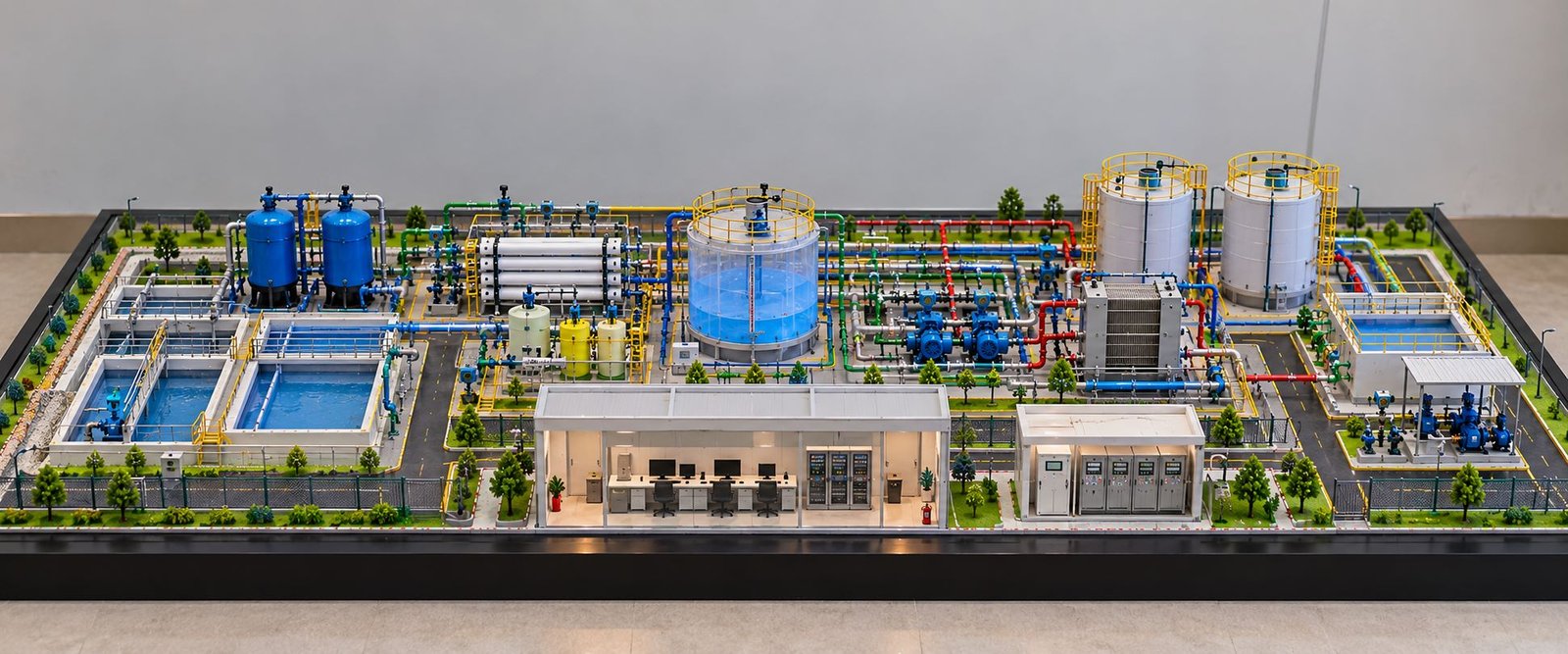
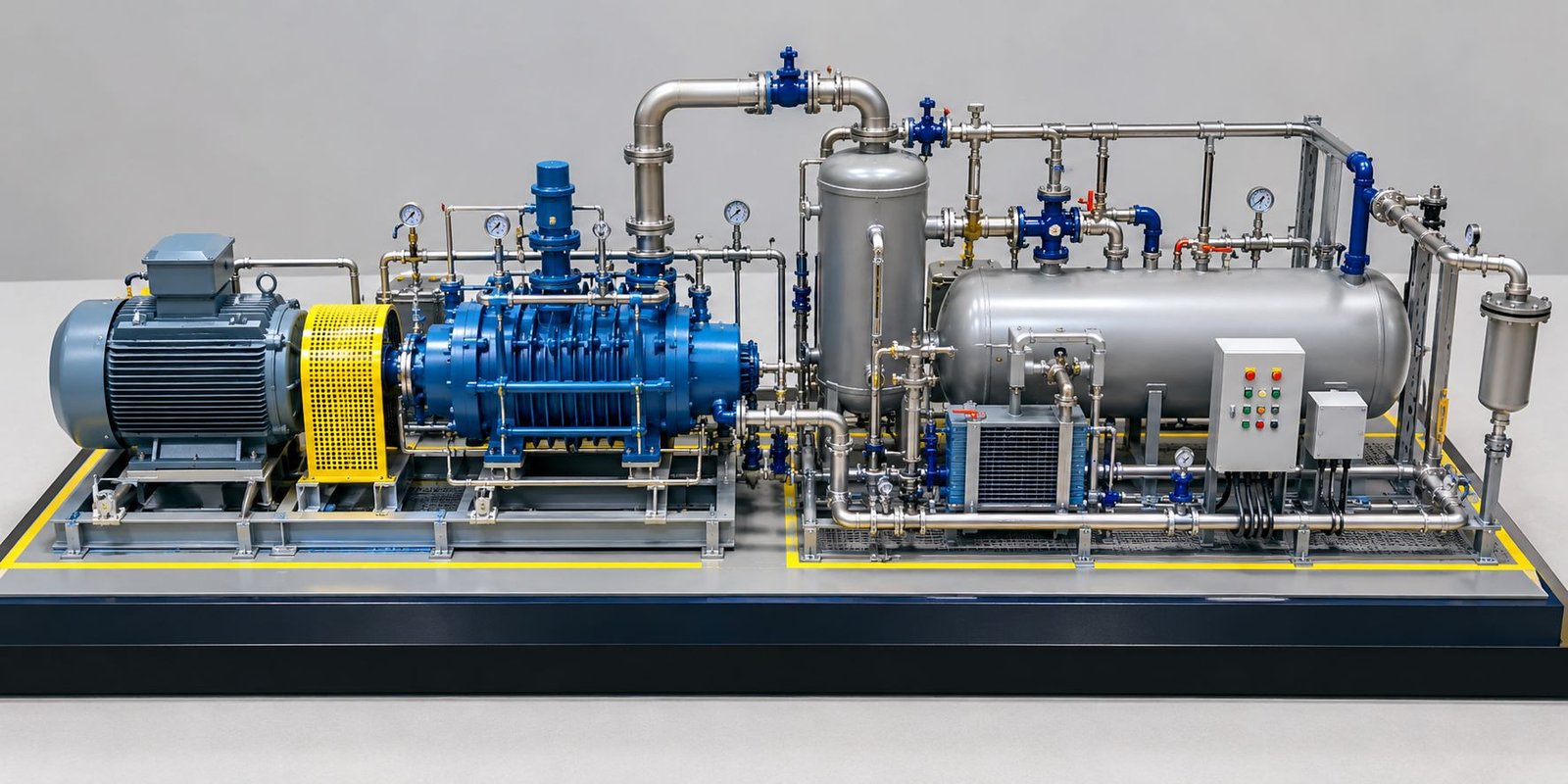
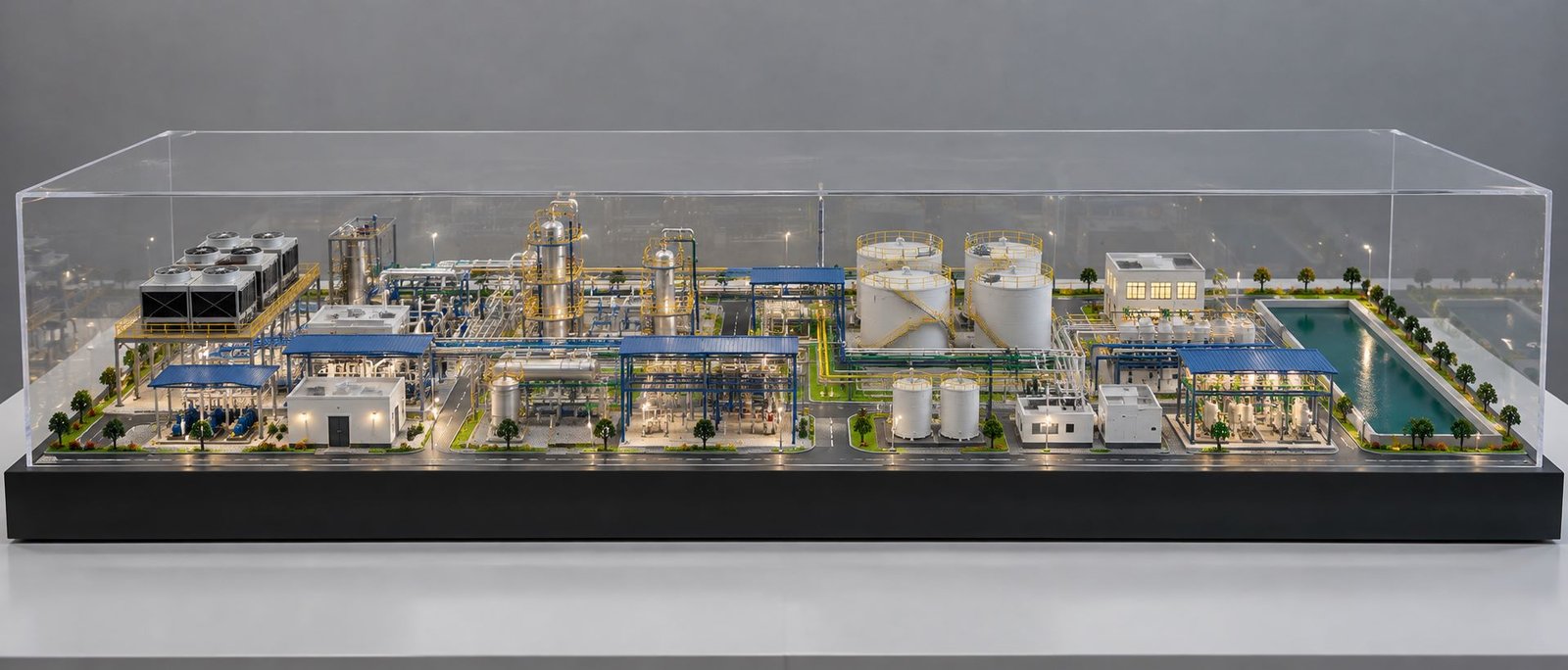
In addition, a detailed industrial model can represent miniature machinery, robotic workstations, conveyors, assembly areas, inspection zones, storage facilities, safety barriers, control sections, and supporting infrastructure. A professionally made factory model can provide value for corporate presentations, industrial exhibitions, engineering demonstrations, project visualization, and client presentations.
What Is Industrial Automation Model Making?
Industrial automation model making refers to the process of developing a scaled physical representation of an automated manufacturing facility or industrial production environment. The goal is to visually communicate the arrangement of equipment, factory infrastructure, production areas, and material movement in a clear three-dimensional way.
Unlike a conventional architectural model, an industrial engineering model focuses not only on the building structure but also on the relationship between machinery, production areas, material movement, and operational zones.
A Detailed Industrial Model Can Represent
- Production machinery
- Robotic work cells
- Conveyor systems
- Assembly stations
- Inspection areas
- Storage and material-handling zones
- Control areas
- Safety barriers
- Factory infrastructure
- Loading and dispatch areas
The level of detailing depends on the purpose of the model, selected scale, available design information, and final presentation requirements.
Industrial Technology Represented in a Factory Model
A modern factory model can represent several interconnected industrial systems rather than a single machine. The equipment included in the model can be selected according to an actual manufacturing process or industrial concept.
Robotic Automation
Robotic arms are an important part of many automated manufacturing environments. Depending on their application, industrial robots can perform material handling, pick-and-place operations, machine loading, assembly, packaging, welding, and other repetitive processes.
For example, a detailed robotic workstation can include a miniature robotic arm, gripper, fixture, conveyor interface, safety fencing, sensors, and supporting components.
These details help viewers understand how robotic equipment is positioned in a production environment and how it interacts with surrounding workstations.
Conveyor and Material Handling Systems
Conveyor systems demonstrate how components and products move between different workstations. In a manufacturing plant model, conveyors connect production areas and provide a clear representation of the material-flow process.
Depending on the application, the model can include belt conveyors, roller conveyors, transfer sections, loading points, and other miniature material-handling elements.
As a result, the material movement path helps viewers understand the production sequence rather than viewing individual machines as isolated equipment.
Assembly Workstations
Assembly stations represent areas where individual components are combined into a finished or semi-finished product.
For instance, a detailed production line model can include miniature fixtures, clamps, worktables, pneumatic mechanisms, robotic systems, conveyors, and operator areas.
The positioning of these stations can follow a client’s production workflow so that the physical model provides a meaningful representation of the manufacturing process.
Inspection and Testing Areas
Quality inspection is an important aspect of a manufacturing process. Depending on the industry, products may pass through visual inspection, measurement, testing, or automated checking before reaching the next production stage.
An industrial model can represent these areas with miniature inspection stations, cameras, testing fixtures, measurement equipment, and dedicated workspaces.
Furthermore, inspection areas help explain how quality control fits into the overall production workflow.
Control and Automation Infrastructure
Automation systems depend on electrical and control infrastructure that coordinates machinery and production processes.
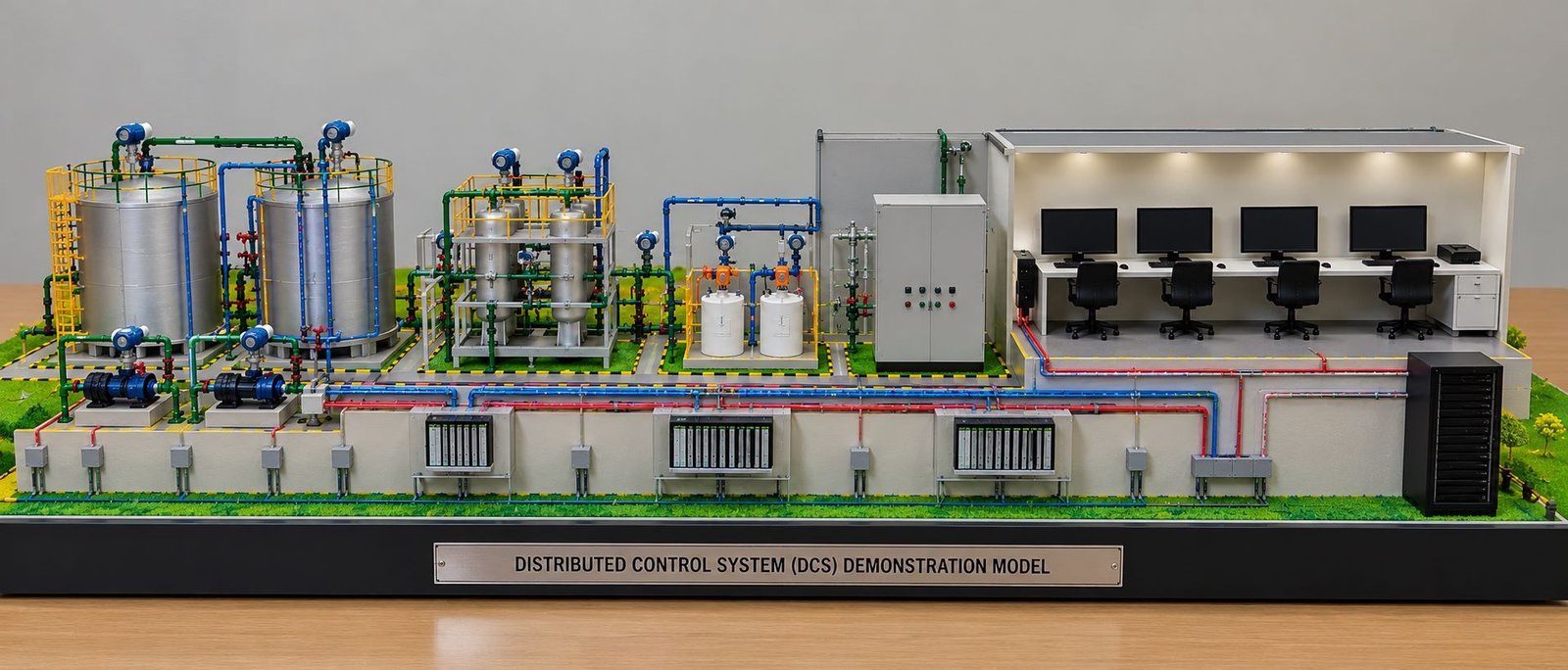
A conceptual automation engineering model may represent control panels, HMI stations, sensors, electrical cabinets, wiring routes, and supporting infrastructure.
These details add technical value to the model and help explain the relationship between production equipment and its control system.
How Are Industrial Models Made?
Professional industrial model making combines precision fabrication techniques and skilled manual craftsmanship. The exact process depends on the model dimensions, scale, materials, geometry, level of detailing, and final presentation requirements.
Model makers use appropriate model-making techniques and materials selected according to the design. Meanwhile, the industrial equipment represented in the factory model should not be confused with the fabrication methods used to create the physical scale model.
Laser Cutting
Laser cutting is widely used in professional model making for producing accurate components from sheet materials such as acrylic, MDF, plywood, and other compatible materials.
It can be used to create:
- Factory walls and partitions
- Platforms
- Machine panels
- Safety barriers
- Structural elements
- Signage
- Small architectural components
Additionally, laser cutting is particularly useful when multiple components require similar dimensions and clean edges.
3D Printing
3D printing helps produce detailed three-dimensional components that may be difficult to fabricate from flat sheets.
For an engineering model, it can be used for custom miniature components such as:
- Robotic arms
- Machine housings
- Fixtures
- Pipe fittings
- Mechanical details
- Equipment components
- Custom-designed parts
In particular, 3D printing is useful when the model contains complex shapes or unique components designed for a specific project.
Acrylic and MDF Fabrication
Acrylic and MDF are useful materials for different structural and visual elements of a physical model.
Acrylic can be used for transparent partitions, glazing, machine covers, display elements, and selected protective structures. Similarly, MDF can be used for platforms, walls, partitions, structural components, and other fabricated elements.
Material selection depends on required appearance, strength, thickness, scale, and finishing requirements.
PVC, Foam Board and Other Materials
PVC, foam board, and other lightweight model-making materials can be suitable for large structural elements, partitions, raised platforms, factory interiors, and supporting sections.
Using different materials for different components helps achieve an appropriate balance between durability, appearance, weight, and detailing.
Miniature Detailing and Hand Finishing
Digital fabrication is only part of professional model making. Hand assembly and finishing are often necessary for a realistic industrial appearance.
Depending on the project, model makers may add miniature cables, pipes, railings, signs, safety markings, lighting, storage racks, pallets, machine details, and other components.
Careful assembly, painting, alignment, wiring, and finishing can greatly improve the overall presentation of a detailed industrial engineering model.
Factory Layout and Production Flow
One of the major advantages of an industrial automation model is the ability to communicate the relationship between different production areas.
A Simplified Manufacturing Workflow
Material Entry → Material Handling → Processing → Robotic Transfer → Assembly → Inspection → Testing → Finished Product → Dispatch
The actual sequence depends on the industry, product, machinery, and manufacturing method. For a custom factory model, the layout can be developed from engineering drawings, CAD files, reference images, process layouts, or client-provided information.
Therefore, a well-planned layout helps viewers understand how materials and products move through the facility.
Importance of Scale and Detailing
Scale plays an important role in engineering model making. The selected scale should provide enough space for important machinery and technical details while keeping the overall model practical for display and transportation.
A Professional Model Maker Considers
- Overall model dimensions
- Machine proportions
- Factory structure
- Equipment spacing
- Viewing angles
- Material thickness
- Production flow
- Lighting
- Display requirements
- Transportation requirements
For a wide-format factory model, a wider footprint with controlled height provides better visibility of multiple production areas while keeping the equipment clearly identifiable.
Safety Features in an Industrial Model
Safety features can add realism and communicate the planned separation between machinery, production areas, and pedestrian movement.
Depending on the project, an industrial model may include:
- Safety fencing
- Guard rails
- Marked walkways
- Machine enclosures
- Emergency exits
- Safety signs
- Hazard zones
- Controlled robotic work areas
Together, these features help viewers understand how different areas of a manufacturing facility are organized.
A physical model is a visual representation and does not replace professional factory safety assessment, engineering calculations, or compliance review.
Applications of Industrial Engineering Models
Professional industrial plant models can be used for a variety of business, engineering, educational, and presentation purposes.
Corporate Presentations
Manufacturing companies can use detailed models to present new factories, production concepts, facility expansions, or automation projects to management teams, clients, investors, and stakeholders.
Industrial Exhibitions
An industrial automation model can become an effective exhibition display by allowing visitors to see a complete manufacturing concept in one physical presentation.
Engineering Project Demonstration
Engineering and automation companies can use models to demonstrate equipment placement, production flow, factory planning, and automation concepts.
Educational Applications
Technical institutes and engineering education facilities can use physical models to explain manufacturing systems, robotics, material handling, automation, and production processes.
Factory Planning and Visualization
A physical factory model can help stakeholders visualize the relationship between production areas, machinery, storage, material movement, and supporting infrastructure during a facility development or expansion project.
Why Professional Industrial Model Making Matters
Creating a detailed factory model requires more than placing miniature equipment on a base. The model needs to maintain a logical relationship between scale, layout, materials, equipment, detailing, and presentation.
A professional industrial model maker can work from engineering drawings, CAD layouts, photographs, reference material, or conceptual designs to develop a physical three-dimensional representation.
Depending on the project, the finished model can include custom dimensions, miniature machinery, robotic systems, lighting, transparent elements, safety structures, moving components, detailed interiors, and other presentation features.
The fabrication approach can follow the project’s requirements by combining laser cutting, 3D printing, sheet-material fabrication, miniature components, precision assembly, painting, wiring, and hand finishing.
Conclusion
A professionally developed industrial automation model provides an effective way to visualize a modern manufacturing facility in three dimensions. By combining factory architecture with miniature production equipment, robotic systems, conveyors, assembly stations, inspection areas, control infrastructure, safety features, and material-flow routes, the model communicates a complex industrial concept clearly.
Furthermore, the physical model can use laser cutting, 3D printing, acrylic and MDF fabrication, PVC or foam-board construction, miniature components, precision assembly, painting, wiring, and manual finishing. The appropriate techniques and materials depend on the scale, design, level of detail, and purpose of the project.
For corporate presentations, industrial exhibitions, engineering demonstrations, factory visualization, educational displays, and client presentations, a professionally crafted factory model or engineering model can transform a complex manufacturing concept into a detailed and engaging physical presentation.