Modern Engineering Technology Demonstration Model for Integrated Industrial Systems
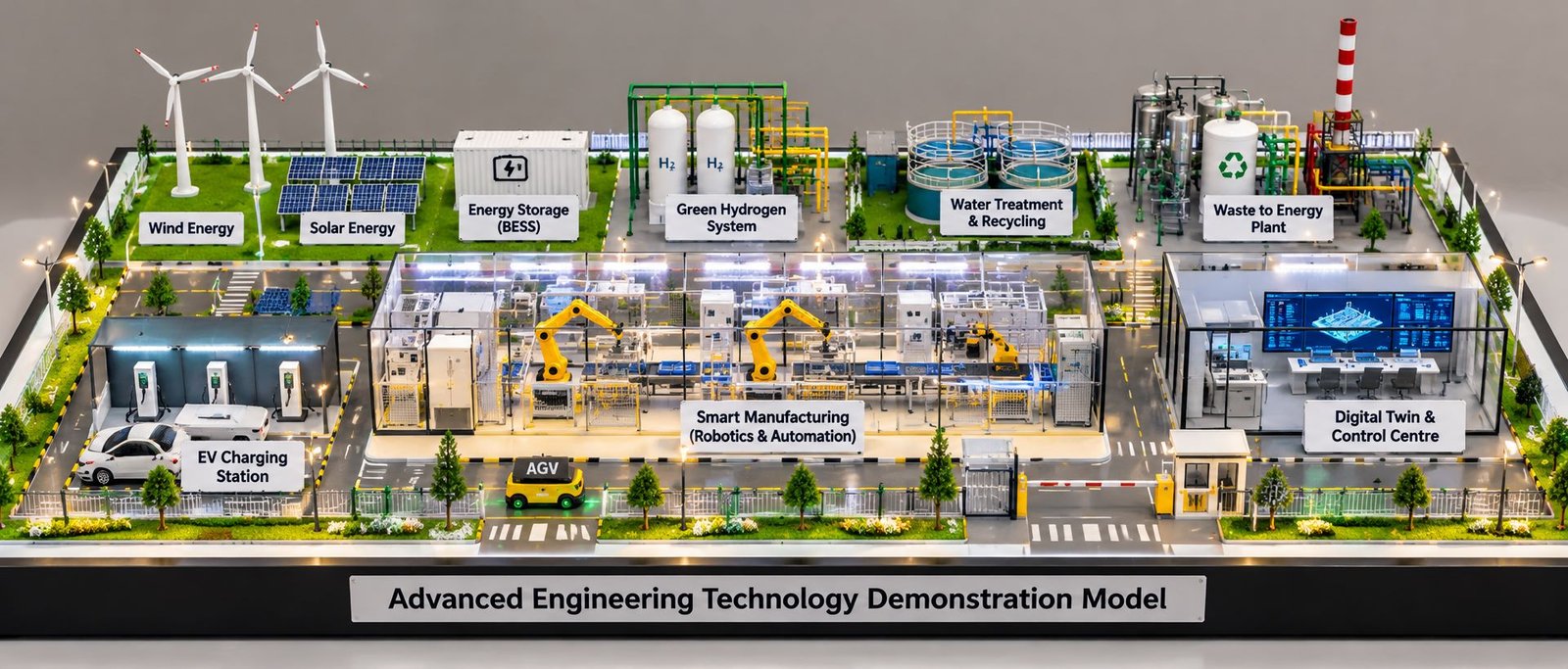
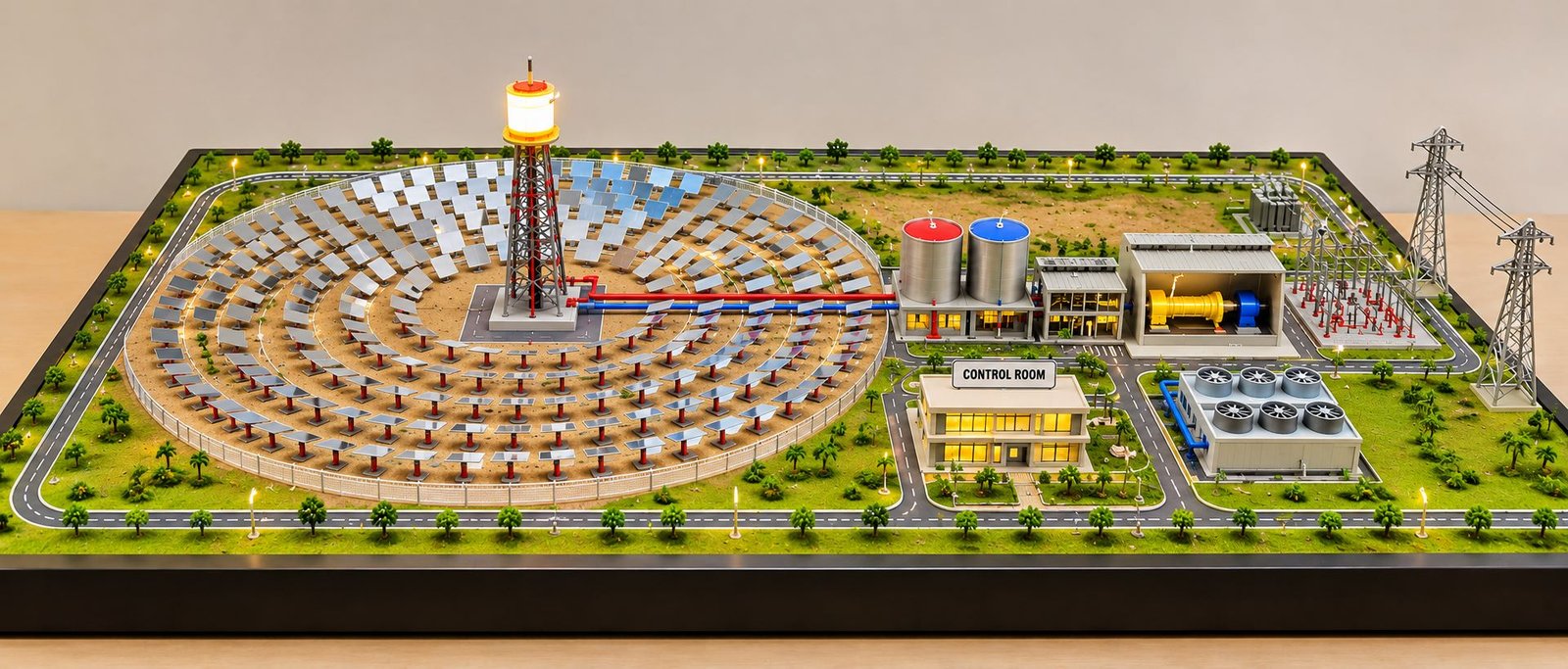
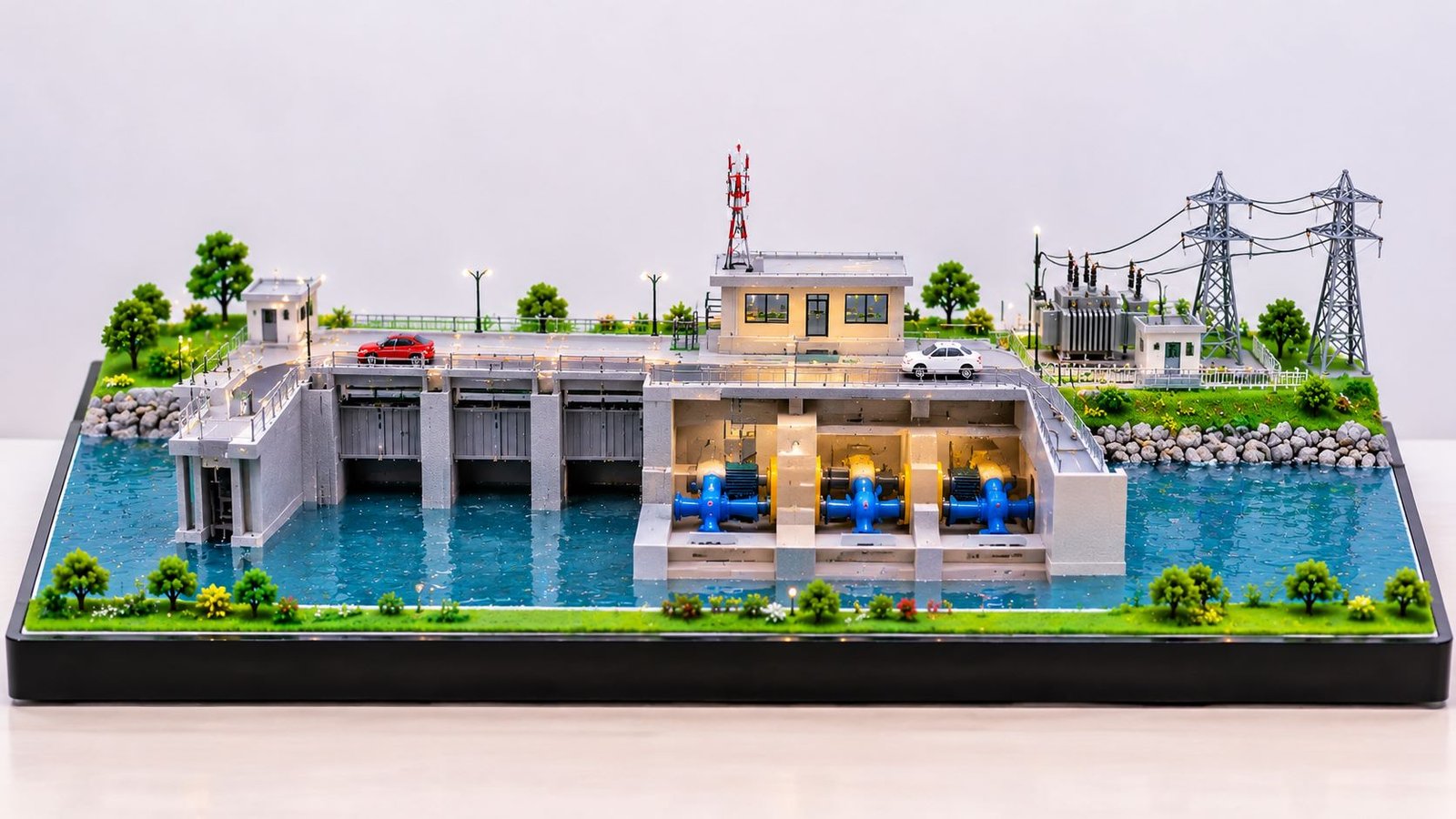
An Advanced Engineering Technology Demonstration Model presents modern engineering systems, industrial equipment and emerging technologies together on one physical platform. It helps explain how renewable energy, smart manufacturing, industrial automation, green hydrogen, battery storage and sustainable infrastructure can work together within an integrated project. Today, industries are adopting advanced engineering solutions to improve productivity, manage resources and support long-term development. However, explaining these complex systems through technical drawings and written documents can sometimes be difficult. Therefore, a detailed physical demonstration model provides an effective way to present engineering concepts in a clear three-dimensional format.
An Advanced Engineering Technology Demonstration Model can include solar power generation, wind turbines, battery energy storage, hydrogen production, automated manufacturing, water treatment, waste-to-energy facilities and electric vehicle charging infrastructure. Each section represents a particular technology, while the complete arrangement explains how different systems connect with one another.
Furthermore, these models are useful for engineering institutions, research centres, industrial companies, technology developers and infrastructure planners. They can support corporate presentations, technical exhibitions, academic projects and industrial demonstrations. As a result, viewers can understand the overall project arrangement without studying every engineering drawing.
Advanced Engineering Technology Demonstration Model Overview
An Advanced Engineering Technology Demonstration Model is a physical scale representation of modern engineering systems, equipment and supporting infrastructure. It combines selected technologies within a coordinated layout to explain their purpose, arrangement and relationship with other facilities.
Unlike a conventional model that focuses on one machine or structure, this type of presentation can include multiple engineering applications. For instance, a single platform may show a solar power plant connected with battery storage, a hydrogen production facility, an automated factory and an electric vehicle charging area.
Each section has its own function. However, the overall layout demonstrates how different technologies can contribute to a larger industrial or infrastructure project.
Purpose of Advanced Engineering Technology Models
The primary purpose is to convert technical information into a visual presentation that different audiences can understand. Engineers may use diagrams to explain processes, but a physical model provides a more direct view of equipment positions, site arrangements and system relationships.
An Advanced Engineering Technology model can demonstrate:
- The arrangement of industrial equipment and supporting infrastructure.
- Connections between renewable energy generation and storage.
- The basic concept of hydrogen production and storage.
- Automated manufacturing and material handling processes.
- Water treatment and industrial utility systems.
- Smart monitoring and digital control facilities.
- Sustainable engineering concepts for modern development.
In addition, a well-organised model provides a common visual reference for engineers, management teams, clients, students and other stakeholders.
Difference Between Conventional Engineering Models and Advanced Technology Models
A conventional engineering model generally represents a particular machine, building, industrial plant or technical process. Its purpose is to explain the design and arrangement of that specific subject.
In comparison, an integrated technology model can represent several related engineering systems together. Rather than showing individual equipment in isolation, it explains the relationship between different facilities.
For example, a standard solar power plant model may include solar modules, mounting structures, inverters and electrical connections. However, an integrated demonstration model can also include battery storage, an energy management building and an EV charging facility.
Consequently, this broader approach helps viewers understand the complete project concept.
Renewable Energy Systems in Advanced Engineering Technology Models
Renewable energy is an important part of modern engineering development. In particular, solar and wind power systems provide clear examples of alternative electricity generation. Therefore, they are commonly included in technology demonstration models.
Solar Power Generation in Advanced Engineering Technology
A solar power section can include photovoltaic panels arranged in rows on a dedicated platform. Additionally, the model may display mounting structures, inverter units, electrical distribution equipment and connecting cables.
The arrangement should explain the basic flow of electricity from the solar panels towards the supporting electrical system. Furthermore, details such as panel orientation, access pathways and equipment positions improve the overall presentation.
Depending on the project requirements, the solar section can represent a rooftop installation, ground-mounted solar farm or industrial solar facility.
Wind Energy Systems and Advanced Engineering Technology
Wind turbines provide another important renewable energy component. Similarly, a demonstration model can include miniature wind turbines positioned within a suitable open area.
Each turbine can be represented with a tower, nacelle, rotor hub and blades. Moreover, the placement should maintain proper spacing and visual balance.
The model can also show how wind-generated electricity connects with a power distribution or energy storage section. As a result, viewers can understand the role of wind energy within an integrated project.
Battery Storage for Advanced Engineering Technology Projects
Battery energy storage systems help manage electricity generated by renewable energy sources. They store electrical energy and make it available when required. Therefore, they form an important part of many modern energy projects.
A physical model may include battery containers, power conversion equipment, electrical cabinets and control units. These components can be arranged within a dedicated storage area.
In addition, the demonstration layout should explain the relationship between renewable energy generation, battery storage and electrical distribution.
Importance of Energy Storage in Advanced Engineering Technology
Renewable energy production can vary depending on weather and operating conditions. For this reason, energy storage helps balance electricity supply and demand.
A demonstration model can explain this relationship by placing the battery storage section between energy generation and consumption facilities. Consequently, viewers can understand the basic concept of energy management.
However, the actual arrangement should follow the selected project’s engineering concept because every energy system has different requirements.
Green Hydrogen and Advanced Engineering Technology
Green hydrogen is an emerging technology that uses renewable electricity to produce hydrogen through water electrolysis. Today, it is attracting interest in industrial applications, energy systems and selected transportation sectors.
An Advanced Engineering Technology model can represent the major stages of a green hydrogen facility. In particular, it can show the production area, storage infrastructure and associated utility equipment.
Hydrogen Production Using Advanced Engineering Technology
The production area may include an electrolyser building, water supply equipment, electrical connections and process control facilities.
The electrolyser represents the equipment that separates water into hydrogen and oxygen using electricity. Additionally, the model can show the supporting equipment around the production facility.
Hydrogen Storage Infrastructure
Hydrogen storage can be represented through miniature storage tanks, cylinders, protective structures and associated process equipment.
The layout may also include a dedicated safety zone, access pathways and connecting pipelines. As a result, the hydrogen section becomes easier to understand as part of a larger industrial facility.
Nevertheless, the model should follow the project’s technical concept and should not present illustrative equipment arrangements as a certified engineering design.
Smart Manufacturing and Advanced Engineering Technology
Industrial automation is transforming modern manufacturing facilities. Automated production equipment, robotic systems and intelligent material handling solutions help industries improve operational efficiency.
For this reason, smart manufacturing is an important part of an Advanced Engineering Technology presentation. It also demonstrates how modern factories use connected equipment and automated processes.
Smart Factory Equipment and Advanced Engineering Technology
A smart factory section can represent a modern manufacturing facility with production halls, assembly areas, equipment zones and material movement pathways.
The building layout should provide a clear view of the internal production arrangement wherever possible. Additionally, it may include miniature machines, assembly stations, robotic equipment and supporting utility infrastructure.
The production area should remain organised and visually accessible. Therefore, the position of each component should support the overall factory layout.
Robotic Manufacturing Systems
Industrial robots are widely used for welding, material handling, assembly, painting and inspection.
A physical model can include robotic arms positioned near miniature production stations. Their placement should explain the relationship between the robot, production equipment and working area.
For a more detailed presentation, different manufacturing zones can be identified through small signs or colour-coded floor markings. Moreover, miniature conveyor systems can demonstrate the movement of materials between production stages.
Automated Guided Vehicles
Automated Guided Vehicles, commonly known as AGVs, transport materials within industrial facilities.
A demonstration model may show miniature AGVs along marked routes between storage areas and manufacturing units. Even when the vehicles are static, their positions can explain the material handling concept.
In addition, the model can include loading points, transfer stations and warehouse access routes. Consequently, viewers can understand how automated transport supports factory operations.
Industrial Automation in Advanced Engineering Technology Projects
Modern industrial facilities use control systems to monitor equipment, production activities and operating conditions.
A demonstration layout can include a control centre with a building structure, monitoring screens and communication infrastructure. This section represents the role of operators and digital monitoring systems in coordinating industrial processes.
Industrial Monitoring with Advanced Engineering Technology
Digital twin technology uses digital representations of physical assets or processes. It can support monitoring, simulation and performance analysis.
A physical model can represent this concept through a central monitoring building connected visually to different industrial sections.
For example, the control centre may be positioned near the manufacturing area, energy section and utility infrastructure. Furthermore, connecting lines or visual indicators can explain the relationship between these facilities.
Water Treatment Systems for Advanced Engineering Technology
Water management is another important part of modern engineering infrastructure. Industrial facilities require water for processing, cooling, cleaning and other utility operations.
Therefore, water treatment and recycling facilities can form a separate section of the demonstration model. This area can also explain how industries manage water resources.
Water Treatment Plant
A miniature water treatment facility may include treatment tanks, filtration units, pumping equipment and connecting pipelines.
The layout should show the general sequence of treatment areas according to the selected project concept. In addition, the model can include service pathways and supporting equipment to make the facility more realistic.
Water Recycling and Reuse
Water recycling systems help reduce freshwater consumption by treating suitable wastewater for reuse.
A model can represent a recycling plant with collection tanks, treatment equipment and reuse connections. For example, treated water may be shown connecting to selected utility areas or landscaping systems.
This visual arrangement helps viewers understand the importance of water conservation in industrial development. Moreover, it demonstrates how water management can become part of an integrated engineering plan.
Industrial Utility Infrastructure
Utility systems support the operation of manufacturing plants and other engineering facilities.
A demonstration model may include:
- Water storage tanks.
- Pumping stations.
- Electrical distribution units.
- Utility pipelines.
- Cooling equipment.
- Compressed air systems.
- Drainage infrastructure.
- Maintenance access areas.
These elements should be positioned logically so that the model remains easy to read. Furthermore, their arrangement should match the intended project layout.
Waste-to-Energy and Sustainable Industrial Infrastructure
Waste management is an essential part of sustainable industrial planning. Waste-to-energy facilities demonstrate how selected waste materials can be processed to recover useful energy under suitable technical and environmental conditions.
An Advanced Engineering Technology presentation can represent the main facility buildings, waste receiving areas, processing sections and energy-related infrastructure. In this way, the model explains the overall concept of a waste-to-energy facility.
Waste Processing Facility
The waste processing section may include receiving platforms, sorting areas, processing buildings and material handling equipment.
Its layout should clearly distinguish the waste reception zone from the main processing facility. Additionally, suitable access roads and service areas can improve the presentation.
Energy Recovery Section
A waste-to-energy model may represent a boiler building, turbine hall, electrical equipment and supporting structures.
The exact components depend on the process being demonstrated. Therefore, the model should use the equipment arrangement relevant to the project.
Furthermore, the model can show the relationship between waste processing, energy recovery and the site’s electrical infrastructure.
Electric Vehicle Charging and Modern Transportation Systems
Electric vehicle infrastructure is becoming an important part of modern transportation and energy planning.
An integrated engineering demonstration model can include an EV charging area to explain how electric mobility infrastructure connects with power distribution systems.
EV Charging Stations
The charging section may include miniature charging points, parking spaces, electric vehicles and electrical cabinets.
The arrangement should allow viewers to understand vehicle access, charging locations and the relationship with the supporting power system. In addition, road markings and parking layouts can improve the overall appearance.
Integration with Renewable Energy
In selected project concepts, EV charging stations may connect visually with a solar power system or battery energy storage facility.
This arrangement can demonstrate how renewable electricity and energy storage may support electric vehicle charging. However, the actual electrical configuration depends on the project’s engineering design.
Infrastructure Planning and Site Development
A successful technology demonstration model requires more than individual equipment pieces. It also needs a properly planned site layout.
The arrangement of buildings, roads, service areas, utilities and open spaces affects how clearly viewers understand the project. Consequently, site planning is an important part of model development.
Roads and Internal Circulation
Internal roads provide access to industrial facilities, service buildings and equipment areas.
A model can include miniature roads, pedestrian pathways, loading zones and vehicle parking spaces. Moreover, the road layout should maintain suitable connections between different sections without making the baseboard overcrowded.
Landscaping and Open Areas
Landscaping improves the presentation and helps separate different functional zones.
Small trees, shrubs, green spaces and boundary treatments can be added wherever suitable. However, landscaping should not cover important engineering components or reduce the visibility of technical details.
Boundary and Security Infrastructure
Industrial and research facilities may require boundary walls, fencing, controlled entry gates and security buildings.
These features help communicate the overall site arrangement and provide a realistic appearance. In addition, they help viewers understand the separation between different operational zones.
Design and Planning of an Advanced Engineering Technology Model
The design process begins with understanding the project’s purpose. A model intended for an academic exhibition may require a different level of detail from one prepared for an industrial client or corporate presentation.
Therefore, the design team should identify the main objective before finalising the layout.
Understanding Project Requirements
The first design consideration is the subject being demonstrated.
The team should identify which technologies must appear on the model and how much information each section needs to communicate.
For example, a renewable energy demonstration project may require more space for solar panels, wind turbines and energy storage. In contrast, a smart manufacturing presentation may need larger production buildings, robotic systems and material handling areas.
Selecting the Right Model Scale
Scale selection affects the size, visibility and detailing of every component.
A larger scale provides more room for small equipment and architectural features. On the other hand, a smaller scale may be more suitable when the project contains several facilities within a limited display area.
The final scale should consider the overall dimensions, viewing distance and level of detail required. Consequently, scale selection should take place before detailed fabrication begins.
Preparing the Master Layout
The master layout defines the position of every major section.
It may include energy generation, industrial production, hydrogen infrastructure, water treatment, waste processing, transportation and control facilities.
Each zone should have a clear purpose. Moreover, the arrangement should allow viewers to follow the relationship between different systems.
Selecting Materials and Construction Methods
Different materials are suitable for different model components.
Acrylic sheets can be used for transparent enclosures and selected building elements. Similarly, PVC sheets, foam boards and other fabrication materials can support building structures and platforms.
Three-dimensional printing can produce complex equipment shapes, miniature machines and customised technical components. Meanwhile, laser cutting is useful for preparing accurate flat components, panels and structural elements.
The final material selection depends on the required finish, model scale, component geometry and display conditions. Therefore, the fabrication method should be selected according to the needs of each component.
3D Printing and Laser Cutting for Advanced Engineering Technology Models
Modern fabrication technologies have improved the way detailed physical models are produced.
3D printing and laser cutting allow model makers to create components with consistent dimensions and customised shapes. In addition, these methods support the production of specialised parts that may be difficult to fabricate through conventional methods.
Role of 3D Printing
Three-dimensional printing is useful for components that contain complex geometry.
It can produce miniature turbines, industrial machines, tanks, robotic equipment, pumps, technical enclosures and other customised parts.
The process also allows designers to revise component dimensions before final fabrication. As a result, it can support more accurate and consistent model development.
Role of Laser Cutting
Laser cutting supports the accurate production of flat components and selected structural elements.
It can be used for building walls, platforms, panels, machine enclosures, baseboard details and other model parts.
Furthermore, properly prepared cutting files help maintain consistent dimensions across repeated components. This is particularly useful when a model contains multiple similar buildings or equipment units.
Finishing and Detailing
After fabrication, components require suitable finishing.
Painting, surface treatment, assembly and detailing improve the overall appearance of the model. Additionally, small elements such as handrails, pipes, ladders, platforms, equipment supports and warning markings can make the demonstration more realistic.
However, the level of detailing should remain consistent with the selected scale. Otherwise, very small components may become difficult to identify.
Lighting and Visual Presentation for Engineering Demonstration Models
Lighting can improve the visibility of important areas and make a demonstration model more attractive.
LED lighting is commonly used to highlight buildings, roads, production areas and selected equipment. Therefore, lighting can support both the technical presentation and the overall display.
Functional Lighting Arrangement
Different lighting zones can represent different operational areas.
For example, streetlights may highlight internal roads, while selected building interiors can use subtle lighting to show activity areas.
Solar and energy sections may also include controlled lighting for presentation purposes. In addition, selected equipment can be highlighted to guide viewers towards important project features.
Avoiding Excessive Lighting
Lighting should support the technical presentation rather than distract viewers.
Too many bright lights can reduce visibility of small components. For this reason, the lighting arrangement should remain balanced and suitable for the model’s display environment.
Applications of Advanced Engineering Technology Demonstration Models
These models can support several professional and educational activities. Their usefulness depends on the project subject and the information that needs to be communicated.
Engineering Colleges and Technical Institutions
Engineering colleges can use demonstration models to explain practical applications of different engineering disciplines.
Students can observe how energy systems, manufacturing equipment and infrastructure components fit into a larger technical environment.
Furthermore, the model can support laboratory demonstrations, project exhibitions and academic presentations. As a result, it becomes a useful visual learning resource.
Research and Development Centres
Research organisations may use physical models to present new engineering concepts and technology integration ideas.
A demonstration model can help communicate the proposed arrangement of experimental systems, supporting infrastructure and related equipment.
In addition, it can provide a common visual reference during discussions between researchers, engineers and project teams.
Industrial Companies
Manufacturing companies can use these models during internal reviews, client meetings and technology presentations.
For example, a company planning an automated production facility may use a physical model to explain the proposed factory layout and material handling system.
Consequently, the model can help stakeholders understand the proposed arrangement before implementation.
Renewable Energy Developers
Renewable energy companies can present solar, wind, battery storage and related infrastructure through a combined physical model.
This approach helps communicate the relationship between different energy technologies. Moreover, it can support project presentations and technical exhibitions.
Infrastructure and Technology Exhibitions
Trade fairs and technical exhibitions often require visual displays that attract attention and communicate complex subjects.
A detailed model can become a central display element. In addition, it provides a convenient way for visitors to understand different engineering applications.
Government and Institutional Presentations
Government departments and institutions may use demonstration models to present infrastructure proposals, technology initiatives and development concepts.
The model can communicate the main project components in a compact and organised format. Therefore, it can support discussions where a clear visual explanation is important.
Benefits of Advanced Engineering Technology Demonstration Models
A physical model provides several advantages when compared with a presentation that relies only on text, diagrams or static photographs.
Clear Three-Dimensional Understanding
A physical model displays the relative position, size and arrangement of different components.
Viewers can observe the layout from different angles. As a result, complex infrastructure becomes easier to understand.
Better Project Communication
Engineering teams often need to explain technical concepts to clients, management teams, students and other stakeholders.
A well-organised demonstration model provides a shared visual reference during these discussions. Furthermore, it helps explain the relationship between separate project sections.
Improved Presentation Quality
Detailed equipment, realistic buildings, miniature roads and professional finishing improve the overall presentation.
Consequently, the model can help make a project proposal more engaging. It can also provide a physical display for exhibitions and meetings.
Easy Identification of Project Sections
When each functional area has a clear position, viewers can identify the main systems without searching through lengthy documents.
Labels, colour coding and visual separation can further improve understanding. Therefore, the overall layout should remain organised and uncluttered.
Support for Technical Learning
Students and trainees can use the model to understand the relationship between individual technologies.
It can also help explain how different engineering disciplines contribute to an integrated project. In particular, the combination of energy, manufacturing and utility sections can demonstrate the multidisciplinary nature of modern engineering.
Features of a Professionally Developed Advanced Engineering Technology Model
The quality of a model depends on its technical accuracy, fabrication quality, layout and visual presentation.
A professional model should combine these elements in a balanced manner.
Accurate Component Representation
Each miniature component should represent the intended equipment or facility.
Its shape, proportions and position should be suitable for the selected scale. Additionally, the components should reflect the reference drawings and project information supplied by the client.
Organised Functional Zones
The model should separate major sections while maintaining clear visual connections between them.
This arrangement makes the complete layout easier to understand. Moreover, it helps viewers identify the purpose of each area.
Strong and Well-Finished Baseboard
The baseboard provides structural support for the entire model.
A rectangular baseboard is often suitable for industrial and engineering presentations because it offers a clean boundary and organised layout.
Its dimensions should provide enough space for the required facilities without leaving unnecessary gaps. Furthermore, the baseboard finish should complement the model components.
Clear Labels and Identification
Small labels can identify important buildings, equipment and systems.
However, the text should remain readable without occupying too much display space. Therefore, labels should be placed carefully and used only where they add useful information.
Safe Transportation and Display
Large or detailed models may require protective packaging and a suitable transport arrangement.
The design should consider the final display location, access conditions and handling requirements. In addition, removable or protected sections may be considered when transportation requires special arrangements.
Why Choose PAL Design Models for Advanced Engineering Technology Projects?
PAL Design Models provides model-making services for architectural, industrial and engineering presentation requirements. The company focuses on developing physical scale models that help communicate project layouts, equipment arrangements and technical concepts.
For an Advanced Engineering Technology project, the design can be planned around the client’s specific requirements. For instance, the proposed model may include renewable energy systems, industrial automation, manufacturing infrastructure, hydrogen facilities, water treatment units and other selected technologies.
Customised Model Development
Every project has its own purpose, layout and presentation requirements.
Therefore, the model design should reflect the client’s actual concept rather than follow a fixed arrangement.
PAL Design Models can develop a customised layout based on project drawings, reference images, technical information and design instructions supplied by the client.
Detailed Model Fabrication
A professional engineering model requires careful fabrication of buildings, machinery, equipment and supporting infrastructure.
Different fabrication methods can be selected according to the shape, dimensions and detailing requirements of each component. Furthermore, suitable finishing helps maintain a consistent appearance across the complete model.
Integrated Engineering Presentation
When a project contains several technologies, their relationship should remain clear.
The model layout can organise the different sections into a single presentation platform while maintaining a suitable visual balance. As a result, viewers can understand the complete project without losing sight of individual components.
Support for Different Project Requirements
The model can be developed for corporate presentations, academic exhibitions, industrial displays, research projects, technical demonstrations and other professional applications.
Clients can discuss the required size, scale, materials, components and finishing before the design is finalised. In addition, project drawings and reference images can help establish the required level of detail.
Information Required Before Starting an Advanced Engineering Technology Model
Proper project information helps the model-making team understand the expected result.
Clients can share the available drawings and reference material so that the design can follow the intended engineering concept. Moreover, clear requirements can help the team plan the layout and fabrication process more effectively.
Useful information may include:
- Project layout or site plan.
- Equipment arrangement drawings.
- Reference photographs of machinery and facilities.
- Required model dimensions.
- Preferred model scale, if already decided.
- List of technologies to be included.
- Required labels and identification details.
- Lighting and presentation requirements.
- Final display location.
- Delivery and installation expectations.
If complete engineering drawings are not available, reference images and a basic project description can help establish the initial concept.
The final design should be reviewed before fabrication begins. Consequently, the team can identify necessary changes before producing the physical components.
Future of Advanced Engineering Technology Demonstration Models
Engineering technology will continue to develop as industries explore automation, renewable energy, digital monitoring and sustainable infrastructure.
As a result, physical demonstration models can also become more detailed and interactive. They can represent emerging technologies and explain how different systems may work together.
Integration of Smart Technologies
Future models may include sensors, controlled LED indicators, moving components and small electronic demonstrations.
These features can help explain selected operating concepts. Additionally, they can make technical presentations more engaging when used appropriately.
Interactive Demonstration Systems
Some projects may benefit from interactive controls that allow viewers to activate specific lighting zones or demonstrate selected processes.
The interaction should remain simple and directly connected to the model’s purpose. Otherwise, unnecessary electronic features may distract from the main engineering concept.
Sustainable Engineering Concepts
Renewable energy, energy storage, water recycling and resource management will remain important subjects for engineering presentations.
Physical models can bring these systems together and explain their role in sustainable development. Furthermore, they can help communicate the relationship between environmental considerations and industrial infrastructure.
Advanced Industrial Automation
Robotics, automated material handling, smart monitoring and digital manufacturing are likely to remain important areas of technical demonstration.
Models can present these technologies in a compact and understandable format. In particular, a combined smart factory layout can explain the role of automation in modern production environments.
Conclusion
An Advanced Engineering Technology Demonstration Model provides an effective way to present modern engineering systems through a detailed three-dimensional platform. It can combine renewable energy, battery storage, green hydrogen, smart manufacturing, industrial automation, water treatment, waste-to-energy and electric vehicle infrastructure within one coordinated layout.
The main strength of this model lies in its ability to explain the relationship between different technologies. Instead of presenting each facility separately, it shows how multiple engineering systems can form part of a larger project.
A carefully planned layout, suitable scale, accurate components, quality materials and professional finishing all contribute to the final result. In addition, optional lighting and interactive features can improve the demonstration experience when the project requires them.
PAL Design Models develops customised physical scale models for architectural, industrial and engineering presentation requirements. For companies, institutions and project developers planning a technology demonstration, a professionally fabricated model can provide a clear and engaging way to communicate complex engineering ideas.
To discuss an Advanced Engineering Technology Demonstration Model, share your project drawings, reference images and required model dimensions with PAL Design Models.
Website: https://paldesignmodels.com