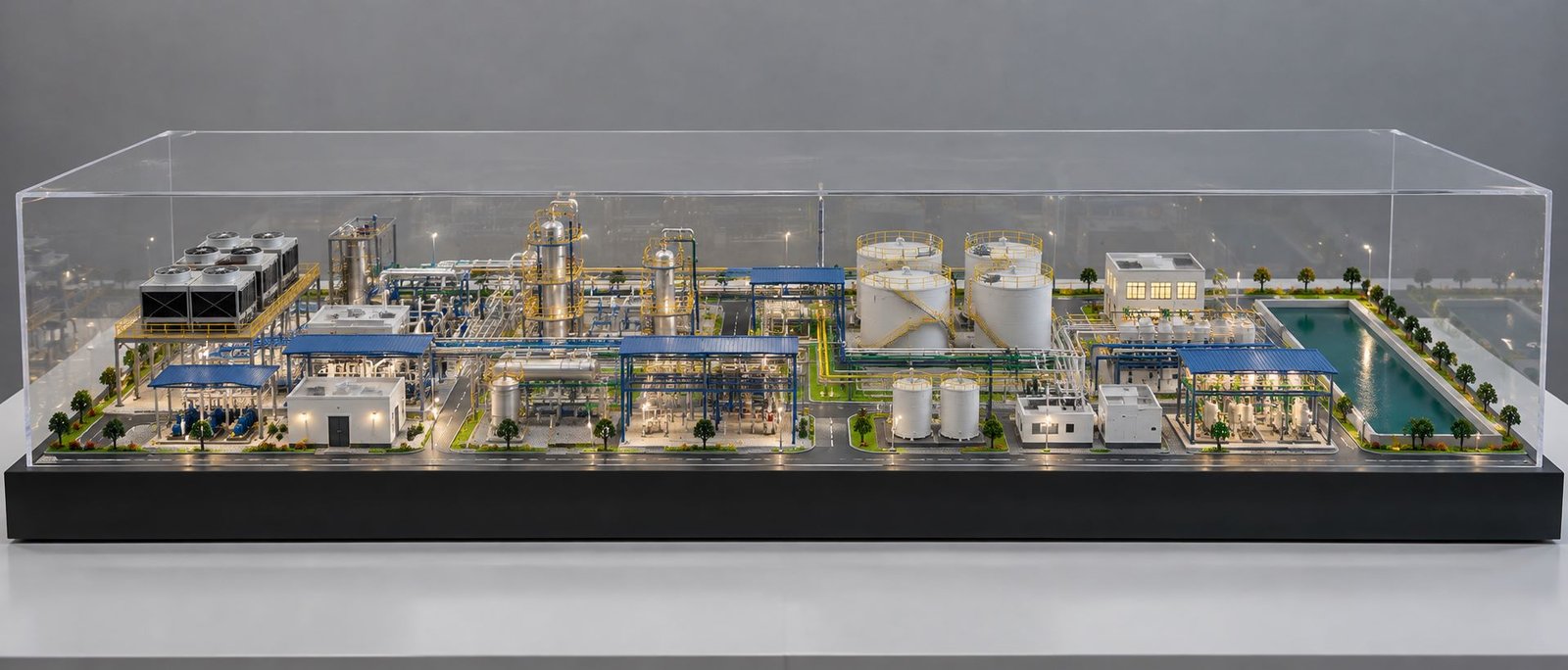
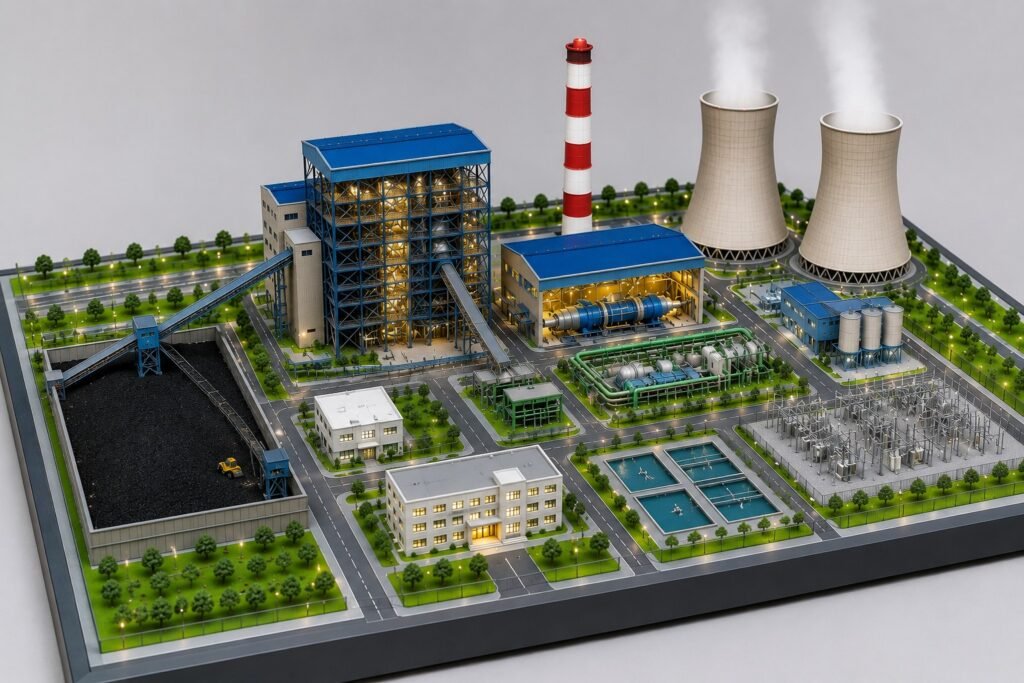
A thermal power plant is one of the most widely used methods for generating electricity by converting heat energy into electrical energy. It plays a crucial role in meeting the growing energy demands of industries, cities, and households. In modern engineering, thermal power plants are designed with advanced technologies to improve efficiency, reduce emissions, and ensure reliable power generation.
What is a Thermal Power Plant?
In a thermal power plant, fuel like coal, oil, and gas is combusted to generate heat. The generated heat is employed for converting water into steam, which powers the turbine that in turn drives the generator. The generator generates electricity. Thus, the whole procedure operates on the concept of energy conversion from heat to mechanical to electricity.
Main Components of a Thermal Power Plant
1. Boiler
The boiler is the heart of the plant where fuel is burned to generate heat. Water is heated in the boiler to produce high-pressure steam.
2. Steam Turbine
The high-pressure steam produced in the boiler is directed towards the turbine. The steam rotates the turbine blades, converting thermal energy into mechanical energy.
3. Generator
The turbine is connected to a generator. As the turbine rotates, it drives the generator to produce electricity.
4. Condenser
After passing through the turbine, the steam is cooled in the condenser and converted back into water. This water is reused in the boiler, making the system efficient.
5. Cooling System
Cooling towers or water bodies are used to remove excess heat from the system and maintain proper temperature.
6. Fuel Handling System
This system manages the supply, storage, and transportation of fuel such as coal to the boiler.
Working Principle of Thermal Power Plant
The working of a thermal power plant is based on the Rankine Cycle. The process includes:
- Heating water in the boiler to produce steam
- Expanding steam in the turbine to generate mechanical energy
- Converting mechanical energy into electrical energy using a generator
- Condensing steam back into water for reuse
This continuous cycle ensures efficient power generation.
Applications of Thermal Power Plants
Electricity Production: Major power source for industries and residential areas
Industrial Applications: Supplies energy to various industrial processes
Urban Services: Helps in transportation, lighting, and communication services
Advantages of Thermal Power Plants
- Reliable and continuous power supply
- Lower initial cost compared to some renewable sources
- Easy availability of fuel like coal
Challenges and Environmental Impact
- Air pollution due to emission of gases like CO₂ and SO₂
- High water consumption
- Dependency on fossil fuels
Modern Trends in Thermal Power Plants
1. Supercritical and Ultra-Supercritical Technology
Improves efficiency and reduces fuel consumption.
2. Pollution Control Systems
Use of electrostatic precipitators and scrubbers to reduce emissions.
3. Automation and Smart Monitoring
Integration of sensors and control systems for better performance and safety.
Conclusion
Thermal power plants continue to serve as one of the important means of electricity production around the world. Even in the face of environmental problems, the use of technological advancement in such power plants is increasing efficiency and making them environment friendly. It is important that an engineer understands how a thermal power plant works.